A cold shower is usually the first clue. Sometimes it starts earlier, with a tank that pops and rumbles every time it heats, or hot water that runs out halfway through the second shower. Water heater repair in Victorville often comes back to the same underlying cause, and knowing that cause helps you decide whether to fix the unit you have or replace it.
Call Victorville Plumbing Pros any time and an automated bilingual assistant takes your details in English or Spanish and routes them to a local plumber. Gas, electric, and tankless units are all covered, from a single part to a full, properly strapped replacement.
Why Water Heaters Wear Out Early on Hard Water
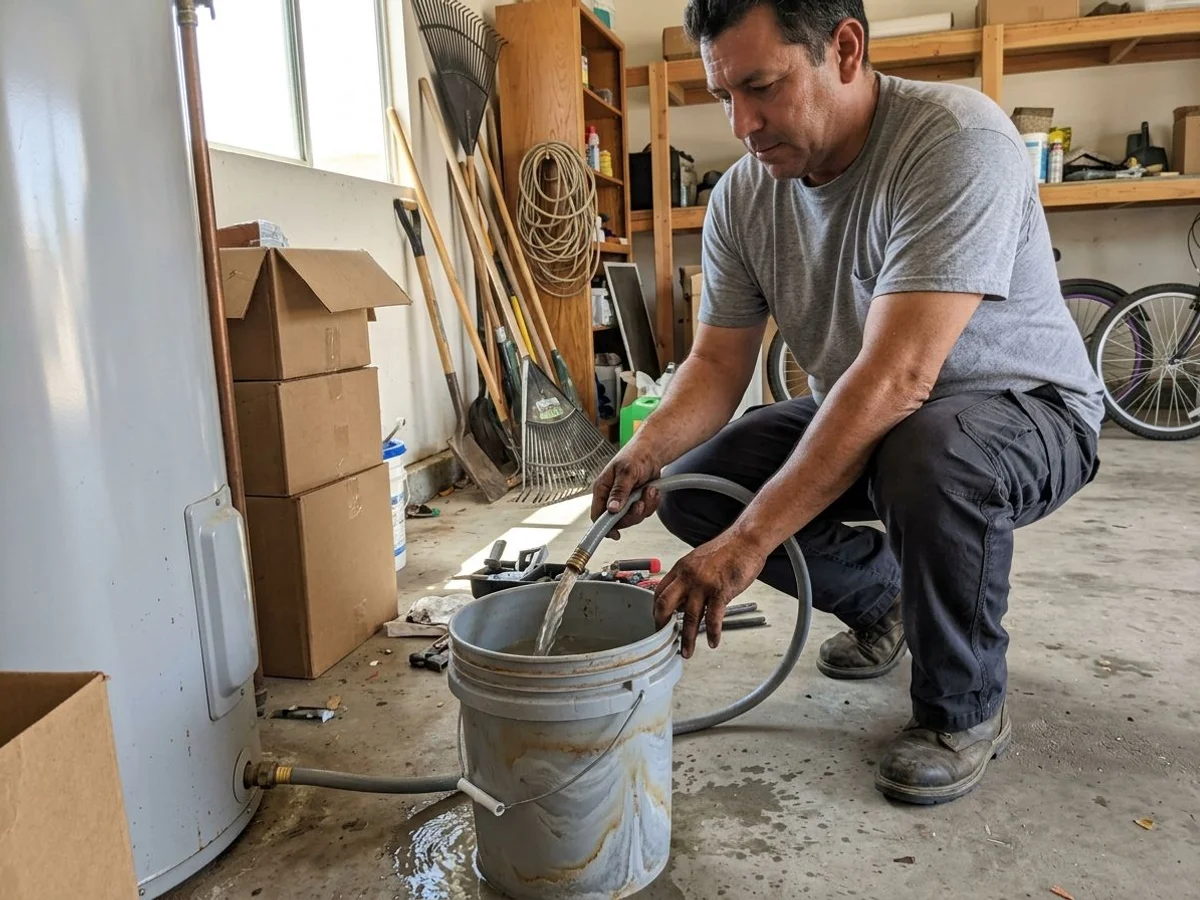
The water here comes from wells in the Mojave River basin, and it is hard. Every time a water heater warms that water, some of the dissolved minerals drop out as scale. In a tank, the scale settles on the bottom and builds into a crusty layer between the burner or lower element and the water.
That layer causes a chain of problems:
- The heater has to run longer to reach temperature, which wastes energy.
- Hot spots under the scale stress the tank’s steel bottom.
- The sacrificial anode rod gets used up faster, and then the tank itself starts to corrode.
- Sediment takes up space, so the tank holds less usable hot water.
For current hardness figures, check the Victorville Water District’s latest Consumer Confidence Report. Households in Hesperia, Apple Valley, and Adelanto are served by other water providers, so their water can differ. Either way, mineral scale is the biggest reason heaters fail before their time.
Reading the Warning Signs
Each symptom points somewhere specific:
- Popping or rumbling while heating. Water trapped under sediment boiling its way out. A clear sign of scale on the tank bottom.
- Running out of hot water sooner. Sediment is taking up volume, or a dip tube has failed and cold water is mixing at the top.
- Rusty water on the hot side only. Internal tank corrosion, often after the anode rod is fully consumed. A late-stage warning.
- No hot water at all. On gas units, often the pilot, thermocouple, or gas control. On electric units, often a tripped high-limit switch, a failed element, or a thermostat. Many of these are repairs, not replacements.
- Water at the base. A leaking fitting, a discharging relief valve, or a failed tank. Finding out which one matters before anything is replaced.
- Error codes on a tankless unit. Often a heat exchanger choked with scale after skipped descaling.
Repair or Replace? How the Decision Gets Made
The default is to find what failed. A thermostat, element, thermocouple, or relief valve is a part, and on a younger heater a part is the sensible fix.
Replacement makes more sense when the tank is near the end of its life and shows heavy scale, rusty hot water, or moisture coming from the tank body itself. A tank that is leaking from the body cannot be repaired. The plumber walks you through what they found so the decision is yours, not a sales script.
Tankless Units Need a Real Descaling Schedule
Tankless heaters work well, but they are less forgiving in hard water. Water moves through narrow passages in the heat exchanger at high temperature, which is exactly where scale builds fastest. Manufacturer maintenance intervals are usually based on average water, and the water here is not average.
Expect a descaling flush at least once a year, with heavier-use homes sometimes needing it more often. Skipping it costs efficiency first, then brings error codes, then shortens the unit’s life. A water softener upstream can stretch the time between descaling visits.
California Strapping and Other Install Requirements
When a replacement is the right call, sizing and installation matter more than the brand name on the box. The new heater should match how your household uses hot water: back-to-back showers, laundry, and the dishwasher running at the same time.
A proper California installation includes:
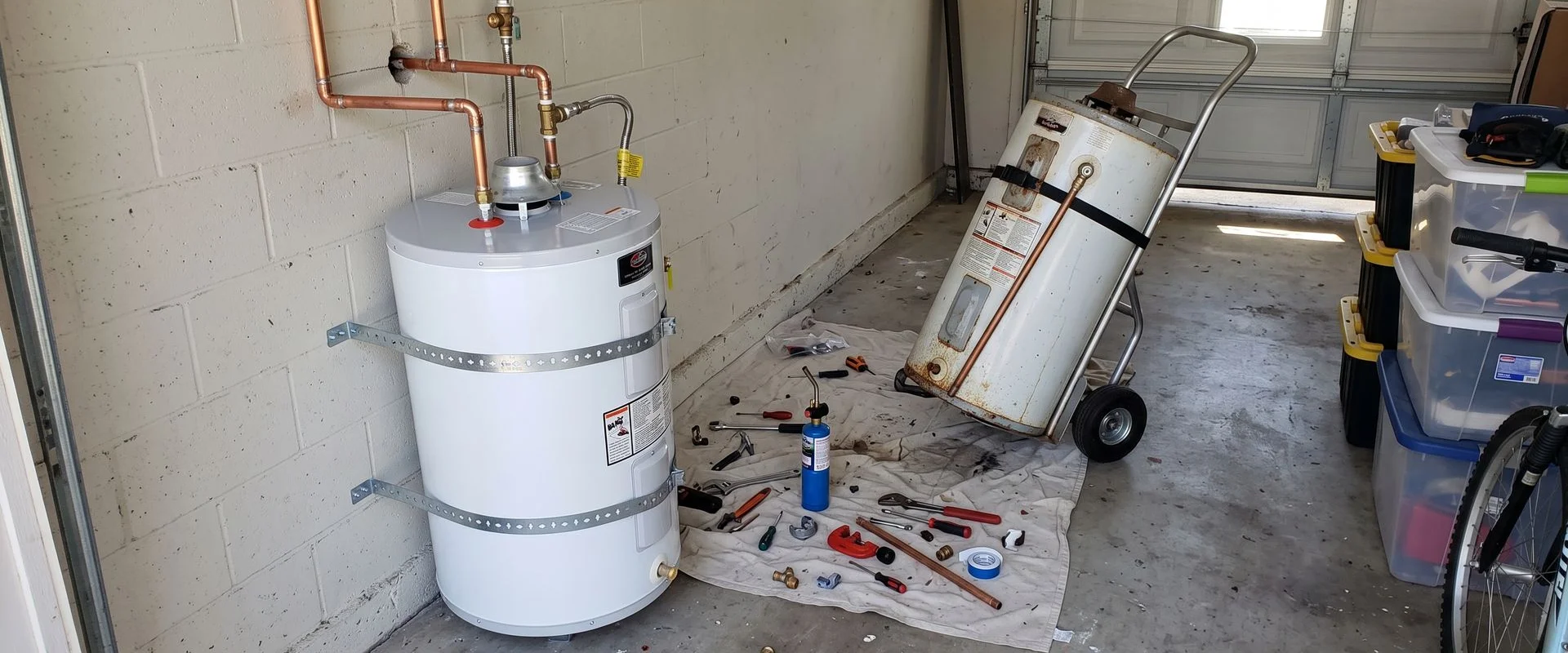
- Seismic strapping. California requires water heaters to be braced or strapped against earthquake movement. If your current heater is not strapped, that is worth fixing either way.
- An expansion tank where required. It absorbs pressure buildup in closed systems.
- Correct venting and connections. New flex connectors and a relief valve discharge line routed to a safe spot.
The old unit is hauled away, and you get a flushing and anode check routine so the new heater does not follow the old one’s path.
Seasonal Tips for High Desert Water Heaters
- Before winter: incoming water is colder, so the heater works harder. A flush before the cold season helps it keep up.
- Garage installs: if the heater is in an unheated garage, check that nearby supply lines are insulated against freezing nights.
- Summer: a good time to check the anode rod and relief valve before the next heavy-use season.
The water heater guides explain how scale damages tanks in more detail.
Hot Water Help in the Victor Valley
The same 24/7 line covers Victorville, Hesperia, Apple Valley, and Adelanto, plus Phelan and nearby areas. Request a free estimate for a repair or replacement, and ask about any service call fee when you call. If your tank is leaking right now, shut off the cold supply and the gas or breaker, then call 760-555-0100.