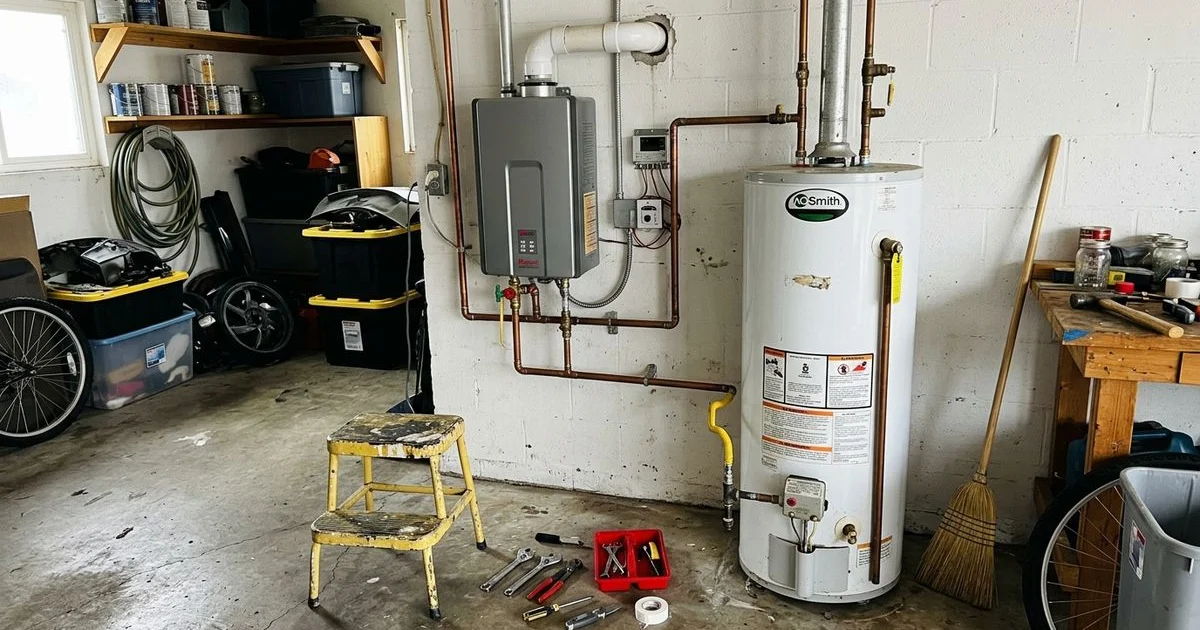
When a water heater dies, you usually have to choose its replacement quickly. The tank-or-tankless question deserves a few minutes even under pressure, because the right answer in Victorville isn’t always the one in the ads. Two local factors matter a lot: hard water and cold winter mornings.
How Each One Fails
Both types scale up in hard water. They just fail in different ways.
- A tank collects sediment on the bottom, loses efficiency gradually, and eventually corrodes through, usually at the bottom seam.
- A tankless unit builds scale inside a narrow heat exchanger, starts throwing error codes and swinging in temperature, and needs descaling or expensive parts.
Which failure you’d rather manage is a real part of the decision.
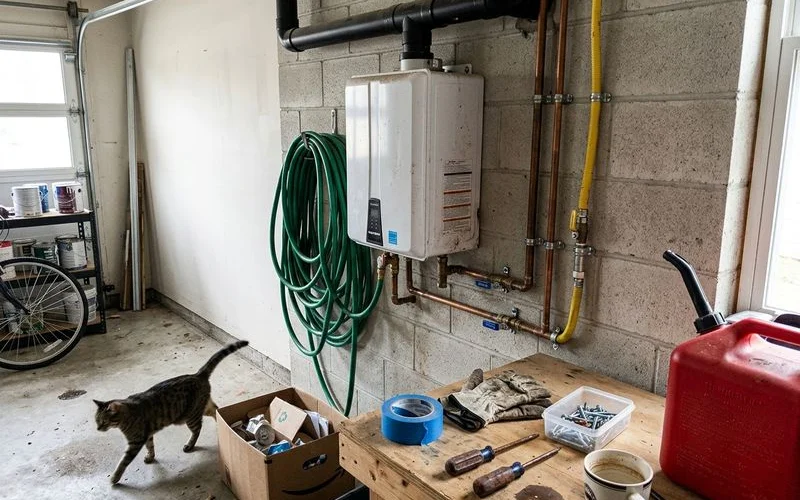
Side by Side
| Factor | Tank | Tankless |
|---|---|---|
| Upfront cost | Lower | Higher, especially if gas line or venting has to change |
| Install work | Usually a direct swap | May need a larger gas line, new venting, or electrical work |
| Hot water supply | Limited by tank size and recovery | Continuous, up to the rated flow |
| Energy use | Some standby loss keeping the tank hot | Heats only when a tap is open |
| Hard-water maintenance | Annual flush, anode checks | Regular descaling is mandatory |
| Winter performance | Recovery slows with colder inlet water | Flow drops if undersized for winter |
| Space | Floor space in garage or closet | Wall-mounted, frees floor space |
| Seismic strapping | Required in California | Mounted to the wall per manufacturer instructions |
| Freeze exposure | Indoors in most homes | Outdoor units need freeze protection |
The Winter Sizing Factor
A tankless heater’s capacity is stated as gallons per minute at a given temperature rise, meaning how many degrees it has to heat the incoming water. In the High Desert, winter nights can drop below freezing and incoming water gets colder. On those mornings the unit has to work harder, and an undersized one delivers less flow or lukewarm water.
Sizing should be based on winter conditions, with the number of fixtures you realistically run at once, not on a summer afternoon. That sometimes means a bigger unit than a brochure suggests.
When a Tank Is the Better Fit
- You need hot water back quickly and on a budget, without gas or venting changes.
- The household uses moderate hot water, with no long back-to-back shower lineups.
- You may sell within a few years, too soon to earn back the extra cost of tankless.
- You want forgiving maintenance. A tank that misses a flush still mostly works. A tankless unit that misses descaling starts to struggle.
Remember that any new tank in California must be strapped or braced against earthquakes, and the existing strapping should be checked when the unit is replaced.
When Tankless Is the Better Fit
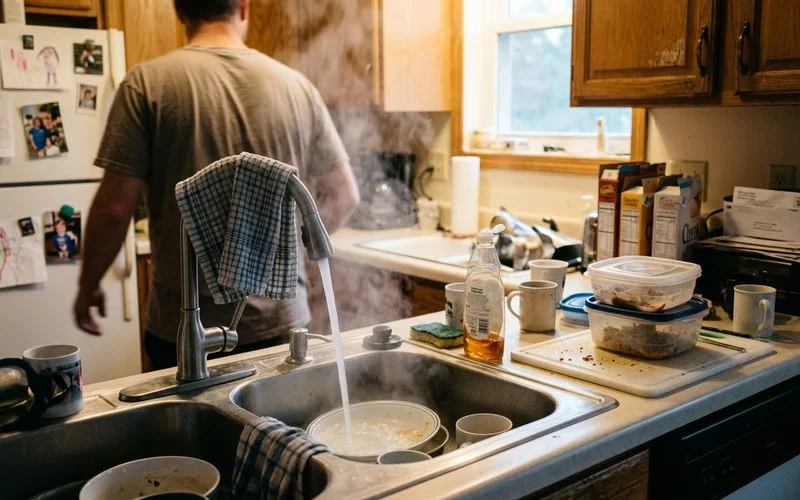
- A larger household runs out of hot water regularly.
- You plan to stay for many years, long enough for energy savings to add up.
- You’ll descale on schedule, or you already have or plan to add a softener.
- You want the floor space back.
The condition, stated plainly
In hard Victor Valley water, tankless works well with a descaling schedule and ideally a softener upstream. Without those, it underperforms and fails early. That’s not a flaw in the technology; it’s what scale does to narrow passages. See tankless descaling frequency for realistic intervals.
A Quick Way to Decide
Answer these honestly:
- How many people live here, and do morning showers overlap?
- How long do you plan to stay?
- Will someone actually schedule descaling?
- Is there a softener, or will you add one?
- Can the existing gas line and venting support a tankless unit?
Mostly short-term, light-use, or “probably won’t descale” answers point to a tank. Long-term, heavy-use, and “softener plus a maintenance plan” answers point to tankless.
Victorville Plumbing Pros answers 24/7 through a bilingual automated assistant that routes your request to a local plumber for water heater repair and replacement. Request a free estimate for either option, and ask about any service call fee when you call.