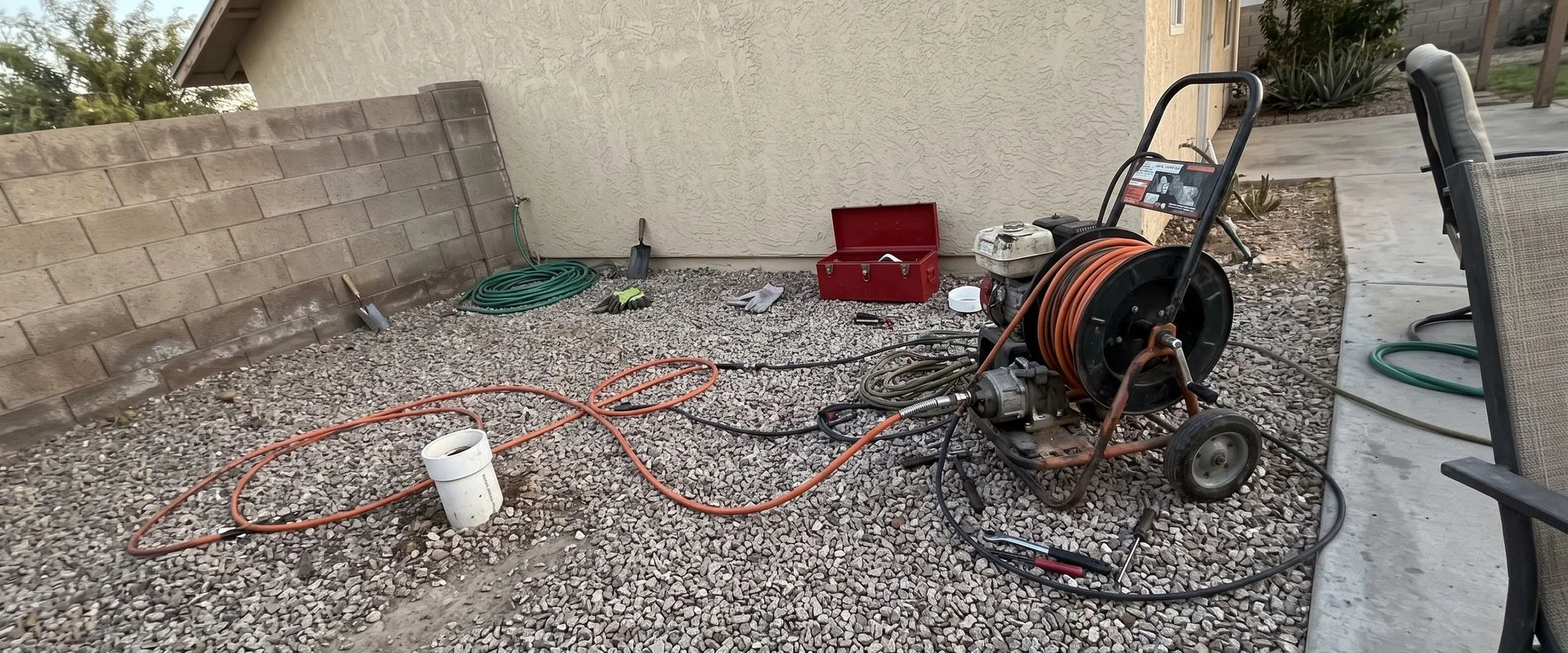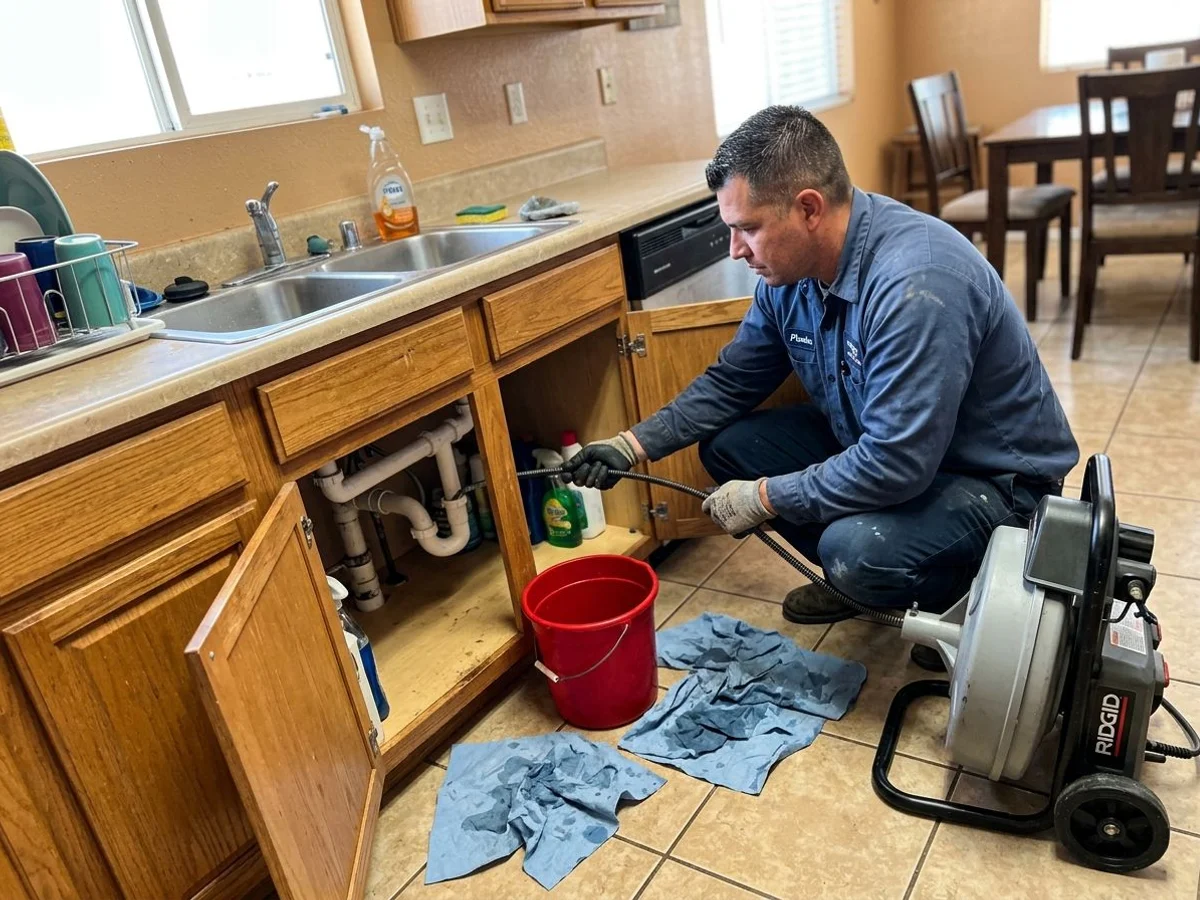
A slow drain is easy to ignore until the day it stops completely. The shower fills to your ankles, the kitchen sink holds a gray pool after dinner, or worse, flushing a toilet sends water up the tub drain. Drain cleaning in Victorville should fix the problem you have today and also tell you why it happened, so you are not dealing with the same clog next month.
When you call Victorville Plumbing Pros, an automated bilingual assistant takes your details at any hour, in English or Spanish, and routes the job to a local plumber. Here is how clogs get diagnosed and cleared, and when a clearing alone is not enough.
Why the Same Drain Keeps Backing Up
Start with the frustrating case: the drain was cleared, it worked for a while, and now it is slow again. That pattern almost always means something inside the pipe keeps catching debris.
The usual causes:
- A belly. Part of the line has sagged and holds standing water and sludge.
- An offset joint. Two pipe sections have shifted apart, leaving a lip that snags waste.
- Cracks or breaks. Damaged pipe catches paper and lets soil and roots in.
- Root intrusion. Roots find a loose joint and grow inside the line. Landscaping that gets watered heavily in a dry climate is especially eager to find moisture.
- Heavy buildup on the walls. Grease and hard-water scale narrow the pipe until it closes with very little help.
Clearing the line again resets the clock but does not fix any of these. A camera inspection shows which one you are dealing with.
Branch Line or Main Line?
Before choosing a method, the plumber needs to know where the blockage is. You can often tell from the symptoms:
- One fixture is slow. A single sink, tub, or shower draining slowly points to a clog in that branch line, often hair, soap, or food waste.
- Several fixtures act up together. Gurgling toilets, slow tubs, and backing-up floor drains at the same time point to the main sewer line.
- Water comes up somewhere else. If running the washer floods a shower drain, or flushing pushes water into the tub, the blockage is downstream of everything in the house.
If it is the main line, stop running water and call. Every flush or load of laundry adds to the backup.
Cabling or Hydro Jetting: Matching the Tool to the Clog
Cabling feeds a rotating cable through the line to break up the blockage. It is the right tool for an ordinary clog of hair, paper, or a single food blockage, and it gets water moving quickly.
Hydro jetting sends high-pressure water through a specialized nozzle to scour the full inside of the pipe. It is the better tool for grease that coats the walls, mineral scale, and root masses. Because Mojave River basin groundwater is hard, scale mixing with soap and lint inside kitchen and laundry drains is a common reason lines narrow over time.
Jetting is not right for every pipe. If a line is already cracked or collapsing, high pressure can make it worse. When a pipe’s condition is unknown, the camera goes in first.
Seeing Inside the Pipe
A self-leveling camera runs from the cleanout into the line and shows its real condition on screen: the pipe material, cracks, sags, shifted joints, roots, and buildup.
The camera head carries a small transmitter called a sonde. The plumber tracks its signal from above ground with a locator and marks the problem spot, so if a repair is needed, digging happens in one place instead of a long trench through the yard or driveway.
You see the footage. Sometimes it shows the line is in good shape and the clog was a one-off. That is a perfectly good result too.
Common Mistakes That Make Clogs Worse
- Pouring grease down the kitchen sink. It goes down warm and hardens on the pipe walls. Wipe pans into the trash first.
- Repeated chemical drain cleaner. It rarely clears a real blockage and can be hard on older pipes and fixture seals.
- “Flushable” wipes. They do not break down the way toilet paper does and they snag at joints.
- Waiting on a gurgling main line. Gurgling and slow drains throughout the house are early warnings. Calling early is easier than cleaning up a backup.
- Skipping the camera on a repeat clog. Paying for the same clearing over and over usually costs more than finding the real cause.
When Clearing Is Not the Answer
If the camera shows a failed section, a permanent repair is the next conversation. There are two general paths:
| Repair Method | How It Works | Property Impact |
|---|---|---|
| Trenchless lining | A resin-saturated liner is cured inside the old pipe, creating a new pipe within it. | Minimal digging, which helps when the line runs under a driveway or landscaping. |
| Excavation and replacement | The damaged section is dug up and replaced with new pipe. | More disruption, but sometimes the only option for a fully collapsed or badly offset line. |
The plumber will explain which option fits your line and why. Sometimes the honest answer is that a good jetting will hold for now. Our drain cleaning guides cover cabling versus jetting and trenchless versus dig-and-replace in more detail.
Drain Help Across the High Desert
The same 24/7 number covers Victorville, Hesperia, Apple Valley, and Adelanto, plus Phelan and nearby areas. Request a free estimate for non-emergency drain work, and ask about any service call fee when you call. If sewage is coming up a drain right now, stop using water and call 760-555-0100.