Water heaters rarely fail without warning. Most give months of signs before the tank lets go, and in hard water those signs tend to show up earlier in the heater’s life. Here’s how to read them, ranked by how quickly you should act.
Act Now
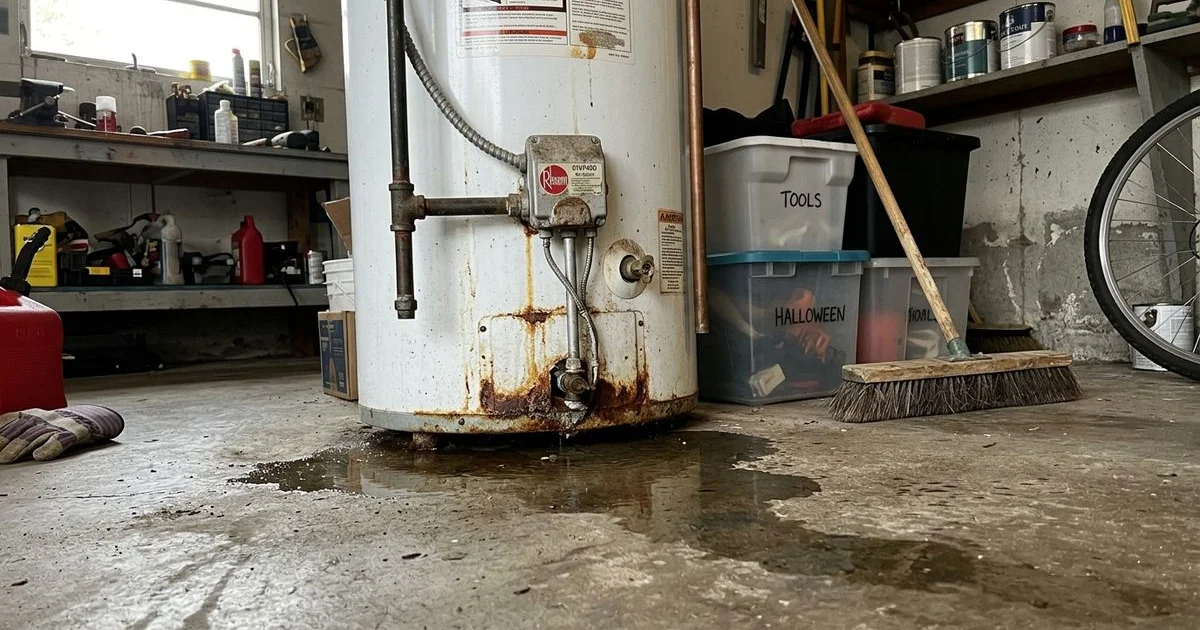
Water at the base. Check where it’s coming from. A loose fitting, condensation, or the temperature and pressure (T&P) relief valve discharging are all fixable. Water seeping from the tank body itself isn’t. If you can’t tell, treat it as a tank leak: close the cold inlet valve on top, turn the gas to “pilot” or switch off the breaker, and call.
A T&P valve that’s discharging. This valve opens when temperature or pressure inside the tank gets too high. Never cap it or plug its pipe. A valve that drips needs to be looked at, either because the valve has failed or because system pressure is too high.
A gas smell near the heater. Leave the area, don’t touch switches, and call your gas utility from outside.
Act This Month
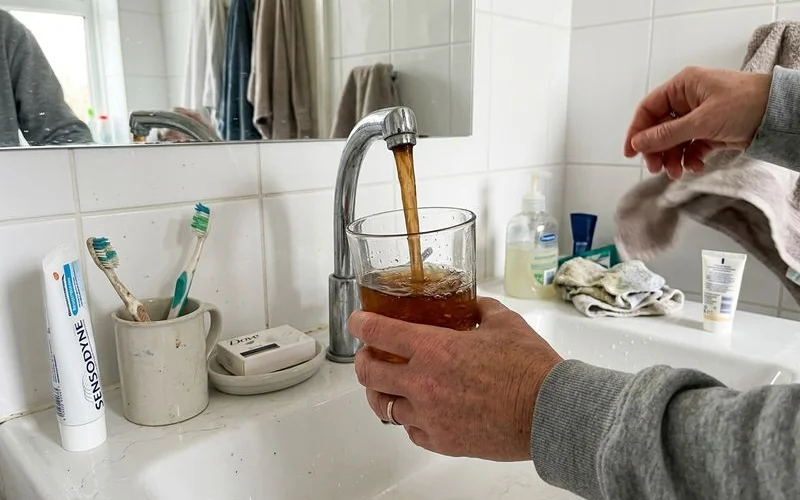
Rust in the hot water only. Run cold at a sink; if it’s clear and the hot side is tinted, the rust is coming from inside the tank. That usually means the sacrificial anode rod is gone and the steel is corroding.
Popping or rumbling during heating. Water trapped under a sediment layer on the tank bottom is flashing to steam. In Victorville’s hard water this layer builds faster than in softer-water areas. Caught early, a flush often helps.
A missing or loose earthquake strap. California requires water heaters to be braced or strapped against earthquake movement. A tank that can tip can break its gas or water connections. That isn’t a sign of failure, but it’s a safety fix worth doing right away.
Keep Watching
Hot water runs out sooner. Sediment takes up space in the tank and slows recovery. A broken dip tube can cause the same symptom and is a simple repair, so rule it out before deciding the heater is done.
A gas or electric bill creeping up with no change in use. Longer burn cycles to heat through scale use more energy.
Inconsistent temperature. Often a thermostat or sediment problem.
Check the Age
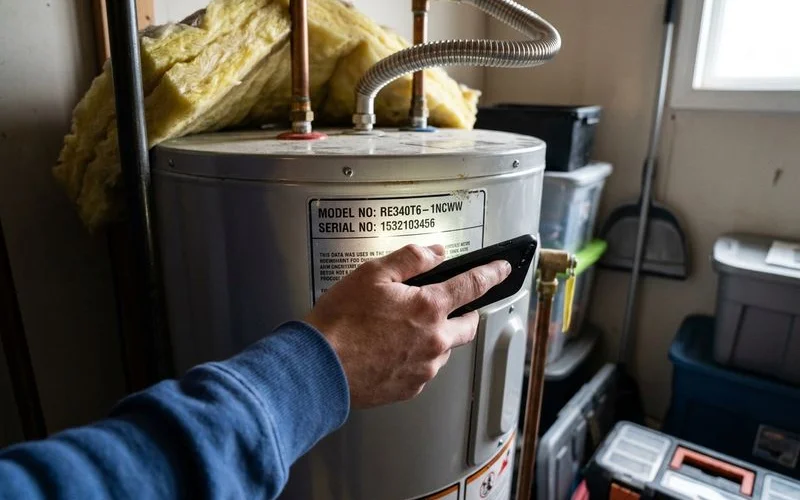
The data plate on the side of the tank lists the model and serial number, and most manufacturers build the manufacture date into the serial. A plumber can decode it if it isn’t obvious. Rated service life assumes average water and regular maintenance. With hard High Desert water and no annual flushing, real-world life is often shorter. A heater past its rated age that’s showing any of the signs above is running on borrowed time.
Repair or Replace? A Quick Sort
| Symptom | Usually a repair | Usually a replacement |
|---|---|---|
| No hot water, no leak | Pilot, thermocouple, gas control, element, thermostat | |
| Not enough hot water, younger tank | Dip tube or sediment flush | |
| Dripping T&P valve | Valve or expansion tank | |
| Popping, younger tank | Flush and anode check | |
| Water leaking from the tank body | Yes | |
| Rust in hot water on an older tank | Usually | |
| Heavy scale and past rated life | Usually |
The full decision process is in our guide on repair vs replacement.
Why planned beats emergency
A planned replacement happens on a day you choose, with the unit you picked, installed and strapped to code. An emergency replacement happens after the tank has emptied onto the garage floor, with whatever unit is available. The difference includes the cleanup, not just the plumbing.
Slowing Down the Next Failure
If your heater is still sound, three habits buy it time: flush it once a year, check the anode rod every few years, and think about treating the water upstream. Victorville Plumbing Pros answers 24/7 through a bilingual automated assistant that routes calls to a local plumber for water heater repair. You can request a free estimate and ask about any service call fee when you call.