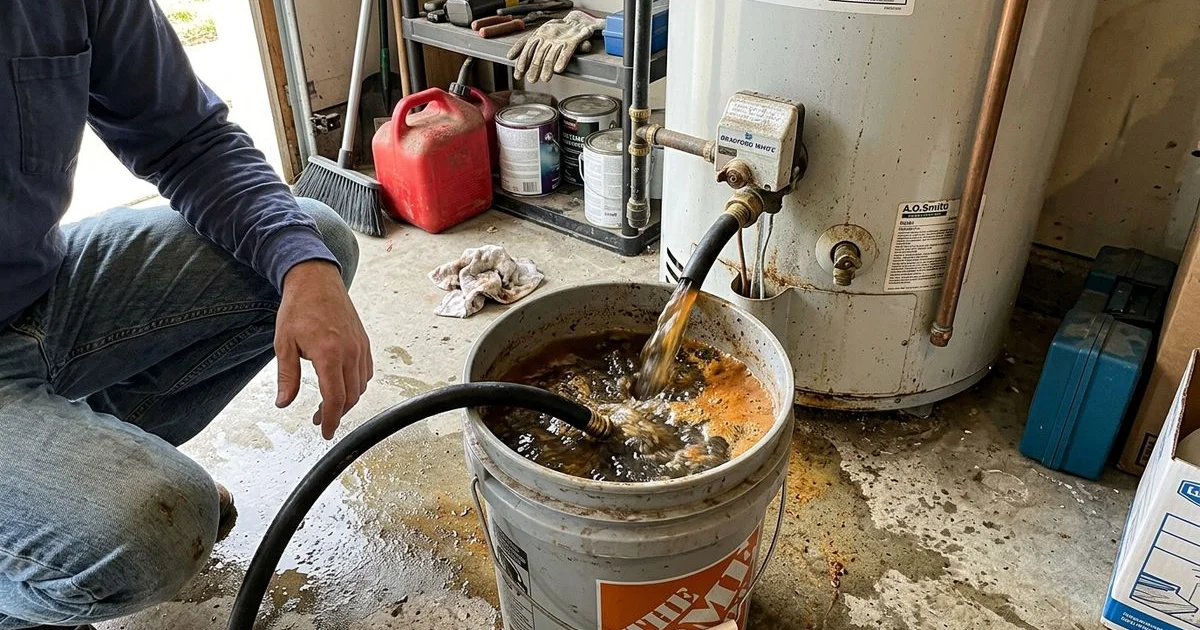
If your water heater gave out well before the age on the label, you’re in good company. In Victorville it’s common, and it isn’t bad luck or a bad brand. It’s what hard water does inside a steel tank over time, and most of it can be slowed down.
The Water Going Into the Tank
The Victorville Water District supplies groundwater from wells in the Mojave River basin, and that water is hard. The district’s current Consumer Confidence Report lists the official figure. Hesperia, Apple Valley, and Adelanto use other providers. Hardness is dissolved calcium and magnesium. It isn’t a health issue, but it’s the starting point for nearly every early water heater failure.
The Failure Chain, Step by Step
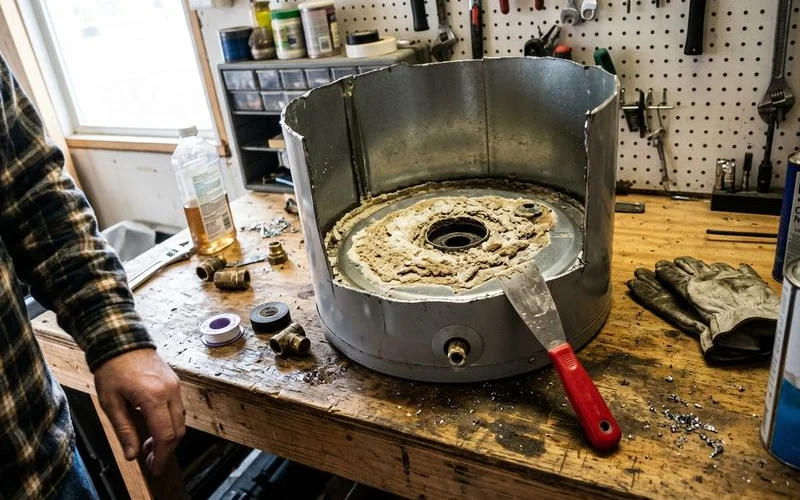
- Minerals drop out. Heating water lowers how much mineral it can hold, so some comes out and settles on the tank bottom, right over the gas burner or around the lower electric element.
- Sediment hardens. Over months the loose layer bakes into a crust. Steel moves heat into water well; scale doesn’t.
- The tank bottom overheats. Heat can’t get through the crust fast enough, so the steel underneath runs hotter than it was designed for.
- The anode gets used up. The sacrificial anode rod corrodes in place of the tank. Hard water and heat speed that up.
- The steel corrodes. With the anode gone and the bottom running hot, corrosion moves quickly from the inside, where you can’t see it.
- The tank leaks. Usually at the bottom seam, often with little warning.
That’s why heaters here can fall well short of their rated life. It isn’t normal wear. It’s years of overheating under a layer of scale.
High Desert Factors That Add Stress
Cold winter mornings. Winter nights can drop below freezing, and incoming water gets colder. The heater has to raise the temperature more and burns longer to do it, which puts extra heat stress on the same scaled tank bottom.
Big temperature swings in the garage. Many heaters sit in garages that get hot in summer and cold in winter. A heat pump water heater in particular loses efficiency when the space around it is cold.
Earthquake strapping. California requires water heaters to be braced or strapped against earthquake movement. A tank that shifts during shaking can strain or break its water and gas connections. It’s not a scale issue, but it is a reason heaters fail or get damaged, and it’s easy to check.
Warning Signs, in the Order They Usually Appear
| Stage | What you notice | What it means |
|---|---|---|
| Early | Popping or rumbling while heating | Sediment layer has formed; a flush often helps |
| Early | Hot water runs out sooner | Sediment taking up space, slower recovery (or a broken dip tube) |
| Middle | Energy bill creeping up | Longer burn cycles through scale |
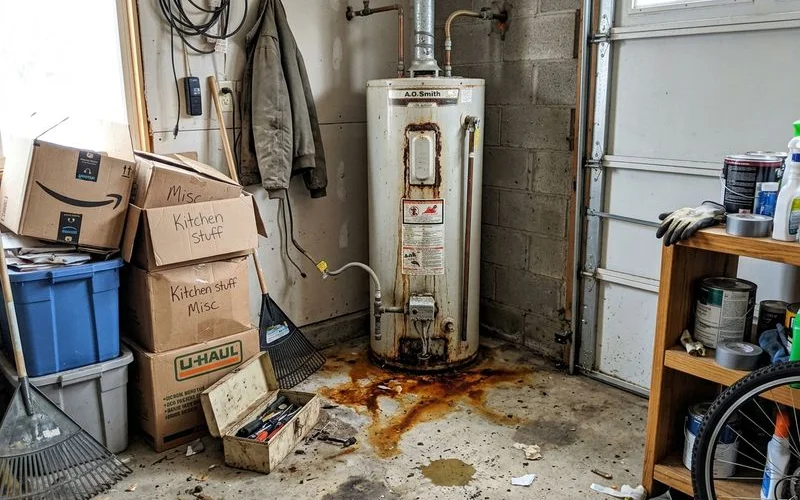
| Late | Rust in the hot water only | Internal corrosion; the anode is likely gone |
| Late | Moisture at the base | Could be a fitting or the T&P valve, or the tank itself |
For more on the noise, see our guide on water heater popping and rumbling sounds.
What “rated life” assumes
Manufacturer life estimates assume average water and routine maintenance. In hard water with no flushing, neither is true, and the clock runs faster.
What Actually Extends Heater Life
| Habit | How often | What it prevents |
|---|---|---|
| Flush the tank | Once a year | Sediment hardening into a fixed layer |
| Check the anode rod | Every two to three years to start | Corrosion once the rod is gone |
| Descale tankless units | At least yearly with untreated water | Heat exchanger scaling and error codes |
| Soften the water upstream | Ongoing | Scale forming in the first place |
| Check strapping | When you flush | Damage from earthquake movement |
When it’s time to replace, size the new heater for your real household demand. An undersized tank runs harder and scales faster. And if the last heater died from scale, think about treating the water before the new one goes in. Our water softeners and reverse osmosis page explains the options.
When It’s Already Too Late
If the tank is leaking now, close the cold inlet, turn the gas to pilot or switch off the breaker, and call. Victorville Plumbing Pros answers 24/7 through a bilingual automated assistant that routes calls to a local plumber for water heater repair and replacement. You can request a free estimate, and ask about any service call fee when you call.