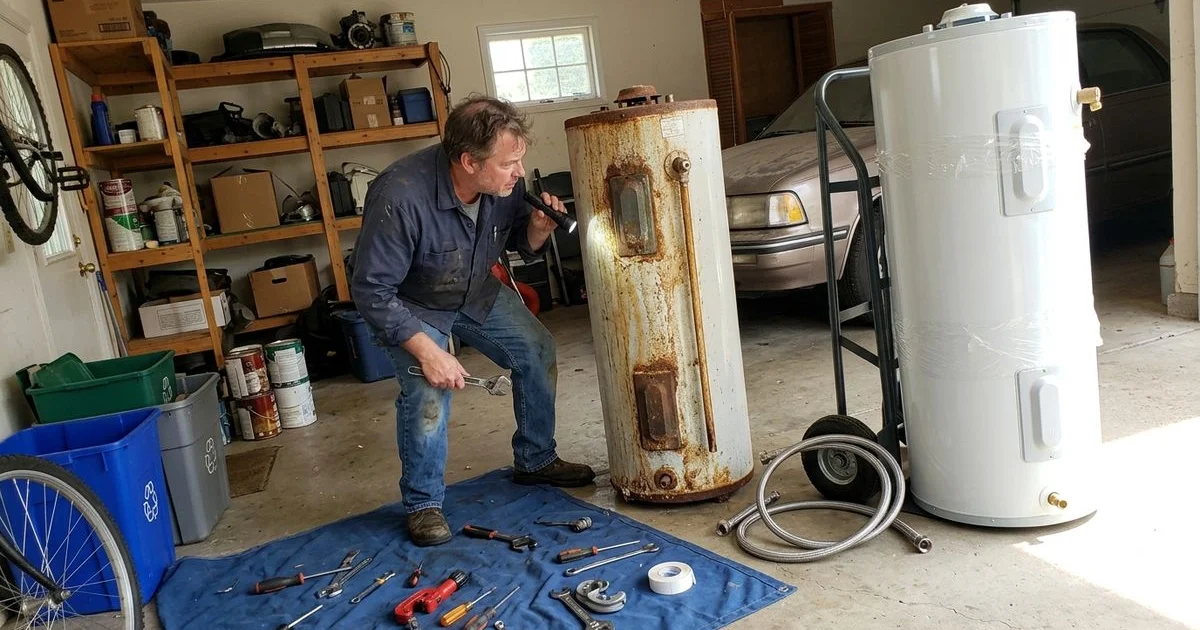
A cold shower or a puddle in the garage forces a quick decision: fix the heater you have, or buy a new one. The right call is usually clearer than it feels at that moment. It comes down to one question: is the tank itself sound?
The One-Line Rule
If the tank is leaking or rusting inside, replace it. If a part has failed on a sound tank, repair it. Most real situations fall clearly on one side. The rest of this guide is for the borderline cases.
Repair Signals vs Replace Signals
| Signal | Points to repair | Points to replace |
|---|---|---|
| No hot water, no leak | Thermocouple, pilot, gas control, element, thermostat | |
| Water too hot or not hot enough | Thermostat | |
| Not enough hot water on a younger tank | Dip tube, sediment flush | |
| Dripping T&P valve | Valve or system pressure, expansion tank | |
| Popping on a younger tank | Flush and anode check | |
| Water leaking from the tank body | Yes, not repairable | |
| Rust in the hot water only | Usually, internal corrosion | |
| Past rated life with heavy scale | Usually | |
| Drain valve solid with mineral | Often, the tank can’t be maintained | |
| Second significant repair in a year | Usually |
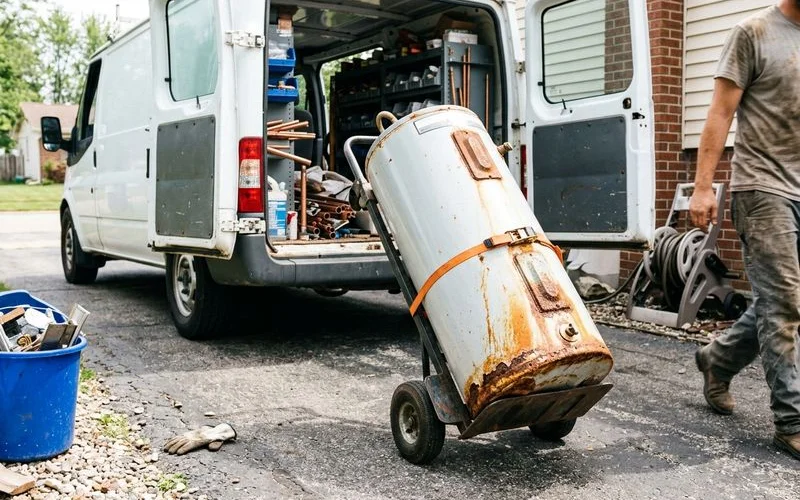
A leaking tank shell is the clearest case. Steel that has rusted through in one place is thin everywhere, and patches don’t hold.
The Half-Cost Rule, Adjusted for Hard Water
A common rule of thumb: when a repair approaches half the cost of a new installed heater, replacement usually wins. In Victorville, apply two adjustments.
- Remaining life. A repair on a heater with years left is an investment. The same repair on a heater near the end of its life is basically a down payment on the replacement you’re about to buy.
- Hard water. Victorville’s groundwater from the Mojave River basin is hard (the Victorville Water District’s Consumer Confidence Report lists the current figure). Unless the tank has been flushed regularly, assume it has less life left than the label suggests.
Planned beats emergency
A planned replacement happens on a day you choose, with a unit you picked, installed and strapped properly. An emergency replacement happens after the tank has emptied onto the floor, with whatever unit is available. When a heater is clearly near the end, choosing the timing is worth a lot.
What Gets Checked on a Diagnostic Visit
- Age from the data plate
- Sediment, seen in a test drain from the valve at the bottom
- Anode rod condition, which shows how much protection the steel has left
- Corrosion at fittings and the bottom seam
- T&P valve and discharge pipe, the heater’s main safety device
- Venting and combustion air on gas units, for safe exhaust
- Earthquake strapping, required in California under Health and Safety Code section 19211
- Expansion tank, often needed on closed systems with a pressure regulator
You should get the condition and both options explained before deciding.
If You’re Replacing
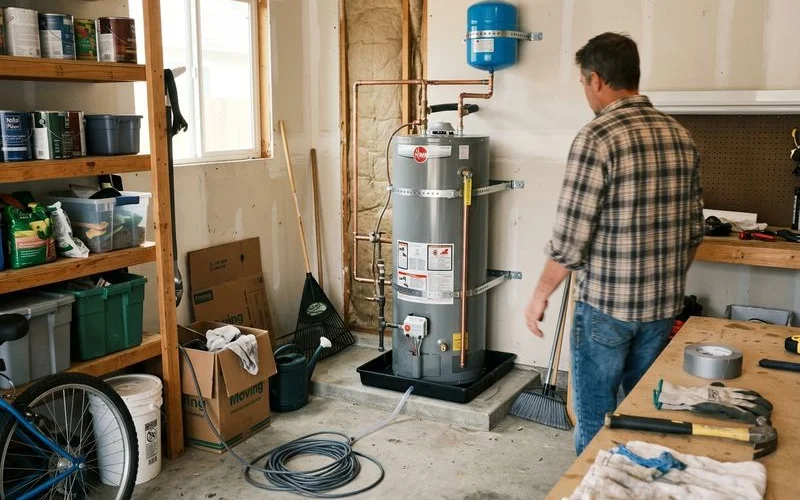
Three decisions are worth making up front:
Tank or tankless. It’s a real financial choice in hard water. Our tank vs tankless guide lays out the trade-offs, including winter sizing in the High Desert.
Water treatment. If the old heater died from scale, putting a new one on the same untreated water starts the same clock over. A softener upstream is worth considering at the same time.
Code items. Strapping, venting, the T&P discharge, an expansion tank if needed, and whether a permit is required for your job. Ask about each one so the estimates you compare actually include the same work.
Next Step
Victorville Plumbing Pros answers 24/7 through a bilingual automated assistant that routes calls to a local plumber for water heater repair and replacement. Request a free estimate for both options, and ask about any service call fee when you call.