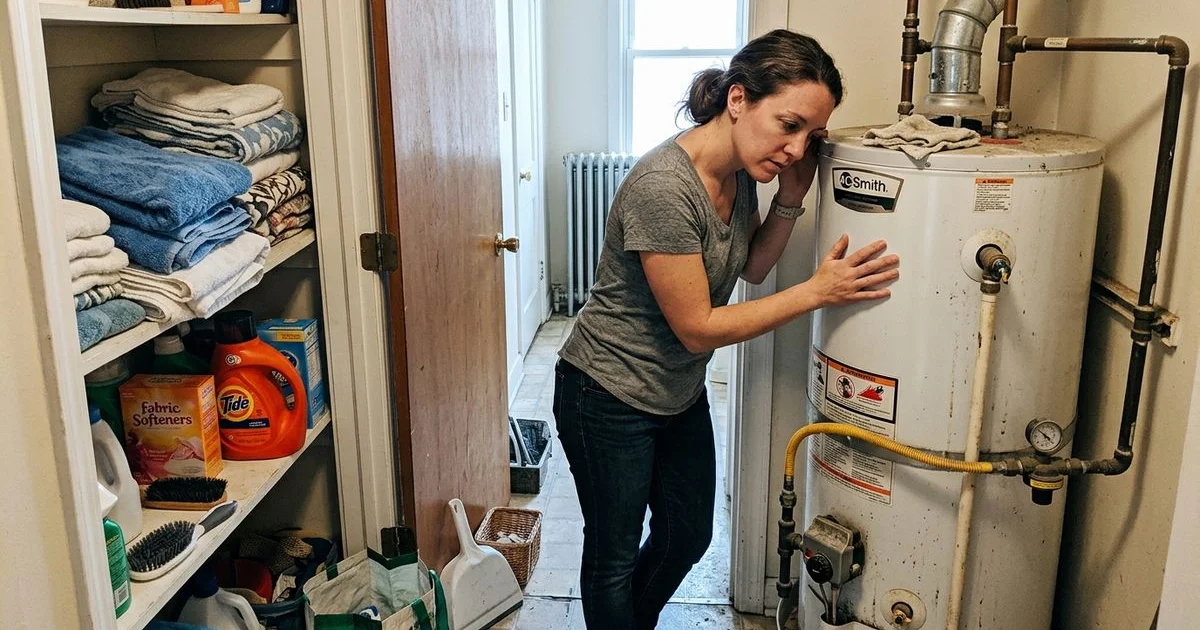
It sounds like popcorn, a percolating coffee pot, or someone tapping on the tank with a hammer. If your water heater makes noise every time it heats, there’s almost always a simple explanation, and it’s usually at the bottom of the tank.
What’s Making the Popping Sound
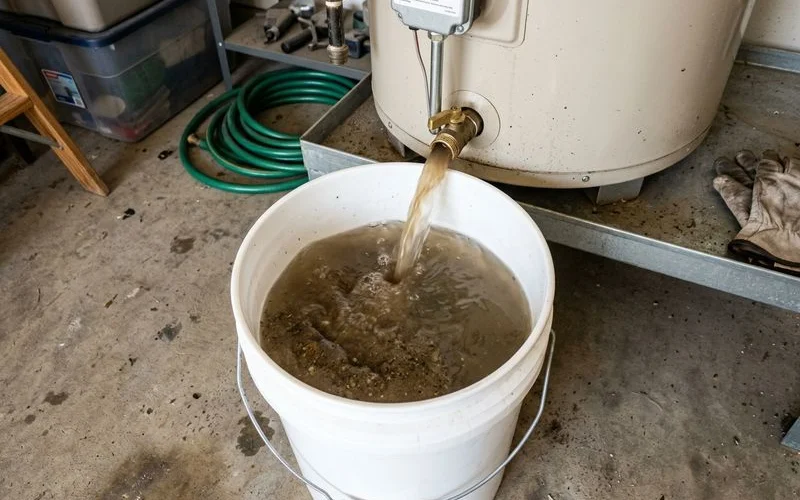
When water heats, some of the dissolved minerals come out and settle on the tank floor. Over months and years that layer gets thicker and harder. Small pockets of water get trapped underneath it, right against the hot steel. When the burner fires (or the lower element in an electric unit), that trapped water flashes to steam and bursts up through the crust. Each pop is one of those bursts.
Rumbling is the same thing on a bigger scale, or the hardened layer shifting as the tank expands and contracts. A clean tank doesn’t make either sound.
Why It Starts Early in Hard Water
Victorville’s groundwater from the Mojave River basin is hard. You’ll find the current figure in the Victorville Water District’s Consumer Confidence Report, or in your own provider’s report if you’re in Hesperia, Apple Valley, or Adelanto. Every heating cycle drops minerals, so in hard water the sediment layer builds faster. A tank that would take many years to get noisy in soft water can start popping while it’s still fairly young here.
A Quick Noise Decoder
Not every sound is sediment. Use this to sort them out:
| Sound | Most likely cause | What to do |
|---|---|---|
| Popping or crackling while heating | Sediment on the tank bottom | Schedule a flush and anode check |
| Deep rumble | Heavier or hardened sediment | Flush soon; ask about the tank’s condition |
| Hiss or sizzle | Water dripping on the burner, or the relief valve | Look for moisture; call if it’s the T&P valve |
| High whistle or screech | Water forced through a partly closed valve | Make sure the inlet valve is fully open |
| Ticking or tapping | Pipes expanding and contracting | Usually normal |
| Low hum (electric) | A slightly loose element vibrating | Usually harmless |
Sediment popping is easy to recognize once you’ve heard it: irregular, percussive, and only while the heater is actually running.
What Happens If You Ignore It
The noise isn’t the problem. It’s a symptom. Here’s what that sediment is doing:
- Overheating the tank bottom. Heat can’t get through the crust into the water, so the steel underneath runs hotter than it was built for.
- Speeding up corrosion. Hot steel corrodes faster, especially once the anode rod is used up.
- Raising energy use. Longer burn cycles to heat the same amount of water.
- Slowing recovery. You run out of hot water sooner.
Where it ends
A popping water heater that’s ignored doesn’t stay a noisy water heater. It usually becomes a leaking one, at the bottom seam, without much warning, onto whatever is stored next to it in the garage.
Flush or Replace?
A flush is worth trying when:
- The heater is fairly young
- The noise is new
- The hot water runs clear (no rust)
- The base is dry
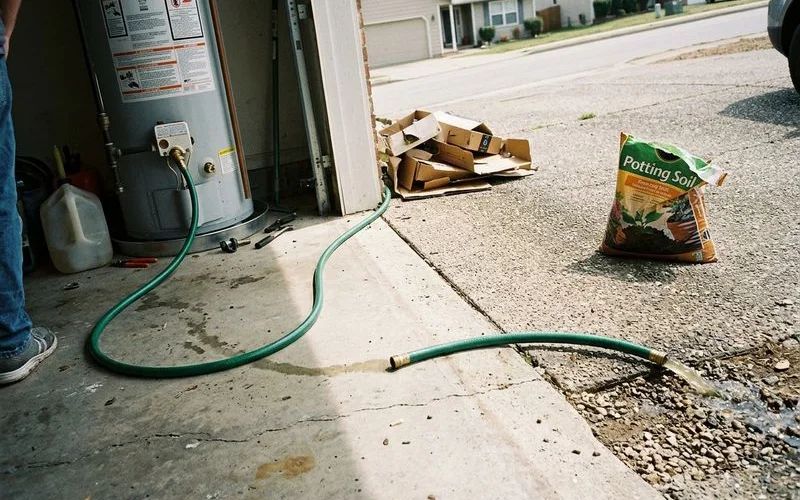
Draining the loose sediment before it hardens often quiets the tank and brings recovery back.
A flush helps less when the tank has gone many years without one. Hardened sediment may clog the drain valve and won’t flush out. It’s still worth a try, with realistic expectations.
Start planning a replacement when the heater is past its rated life, the hot water is rusty, the drain valve is solid with mineral, or there’s moisture at the base. Our full explainer on why water heaters fail early here shows how sediment, heat, and the anode rod work together.
Set Up an Annual Routine
A yearly flush plus an anode rod check every few years is the simplest way to get full life out of a heater in hard water. Check the earthquake strapping while you’re there. California requires water heaters to be braced or strapped, and straps can loosen over time.
Victorville Plumbing Pros answers 24/7 through a bilingual automated assistant that routes your request to a local plumber for water heater repair. You can request a free estimate and ask about any service call fee when you call.