A water bill that suddenly jumps. A patch of tile that feels warm under bare feet. The faint sound of water running when every faucet in the house is off. These are the quiet signs of a hidden leak, and in a slab-foundation home they are often the only signs for weeks.
Slab leak repair in Victorville starts with finding the leak precisely, without tearing up floors to look for it. Call Victorville Plumbing Pros at any hour and an automated bilingual assistant takes your details in English or Spanish and routes them to a local plumber who handles leak detection, slab leaks, sewer gas problems, and repiping.
Signs You Have a Slab Leak
Many newer tract subdivisions around town are built on concrete slabs, with water lines running under or through the concrete. When one of those lines fails, the water spreads underneath, out of sight. Watch for:
- A higher water bill with no change in how you use water.
- A warm spot on the floor, which usually means a hot-water line is leaking.
- Running water sounds when every fixture is off.
- Damp or lifting flooring, cracked tile, or moisture at the base of interior walls.
- Dampness along exterior walls or unexplained wet spots in the yard near the foundation.
- Low pressure at fixtures that used to be strong.
Any one of these is worth checking. Two or more together is a strong signal.
Run the Meter Test Before Anything Else
You can do a simple check yourself. Turn off every faucet, shower, toilet, irrigation timer, and appliance that uses water. Then find your water meter and look at the low-flow indicator, usually a small triangle or dial.
If it is still moving with everything off, water is escaping somewhere. Write down the reading, wait an hour without using water, and check again. That gives the plumber useful information before they arrive, and it tells you whether you are dealing with a leak or just higher usage.
Locating a Leak Without Tearing Up the Floor
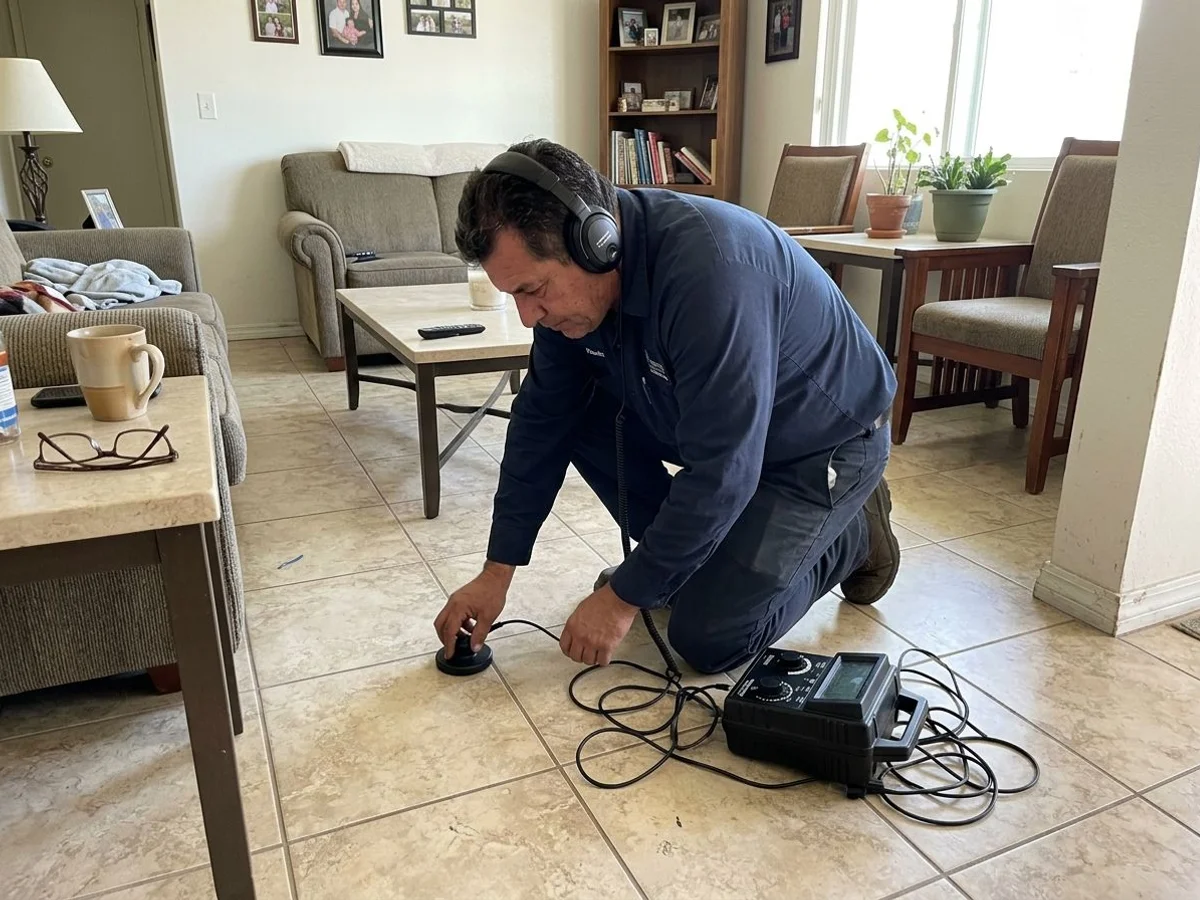
Guesswork is expensive. The search always starts by confirming the leak and which side it is on: a pressure test on the supply lines tells the plumber whether the problem is in the water supply or the drain system.
Then three tools narrow it down:
| Detection Method | How It Works | Best For |
|---|---|---|
| Acoustic listening | Amplifies the sound of pressurized water escaping a pipe. | Leaks under concrete slabs and hard flooring. |
| Thermal imaging | Shows surface temperature differences caused by escaping water. | Hot-water line leaks under tile or laminate. |
| Electronic line tracing | Follows a signal along the pipe’s path. | Mapping buried lines before any cut is made. |
Concrete or drywall is opened only at the located spot. One small access cut is very different from tearing up a hallway of tile on a hunch.
Spot Repair, Reroute, or Repipe?
Once the leak is found, there are usually three ways forward:
- Spot repair. Open the slab at the leak, fix that section, and close it up. Often the right choice for a single leak in an otherwise healthy line.
- Reroute. Abandon the leaking line under the slab and run a new one through the walls or attic. Often smarter if that line has leaked before or shows widespread corrosion.
- Repipe. Replace the supply system entirely. The right call when the pipe material itself is failing throughout the home.
Each option differs in disruption and long-term value. All three get explained so the decision is yours.
Tracking Down a Sewer Gas Smell
A sewer smell inside the home means gas is escaping the drain system somewhere it should not. These problems rarely leave a wet spot, so they are hard to find by eye.
Smoke testing solves that. Non-toxic fog is pushed through the drain and vent system at low pressure, and it shows up wherever the system is open to the living space. Common finds include:
- A dry or missing P-trap under a sink that rarely gets used.
- An unsealed vent pipe penetration behind drywall.
- A cracked drain line inside a wall.
- A failed toilet wax ring or a damaged closet flange.
Missing traps are a surprisingly common find in newer construction, where a step was skipped during the build and nobody noticed for years.
Signs the Whole System Needs Repiping
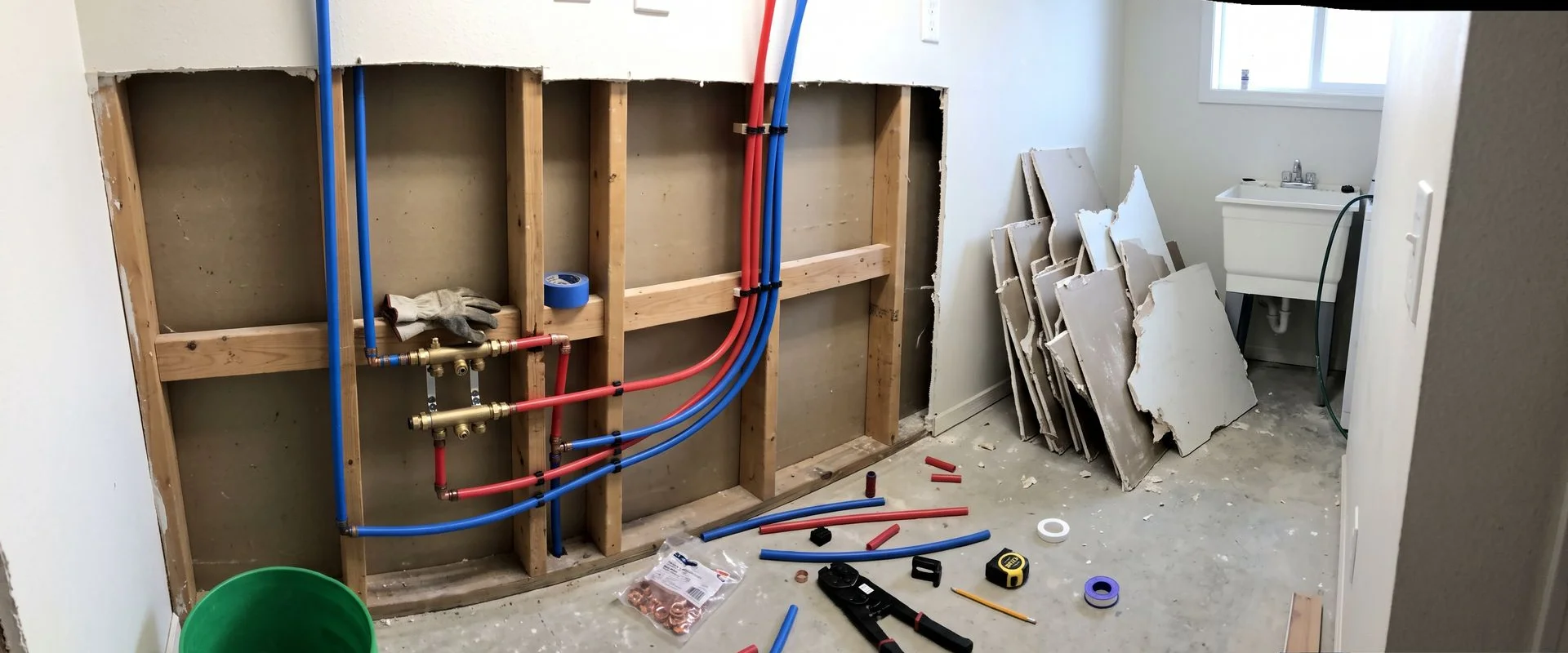
At some point, patching stops making sense. Low pressure at every fixture, rusty water on the first draw of the morning, or pinhole leaks popping up in different rooms all point to pipe material that is wearing out. Older galvanized steel, polybutylene, and heavily corroded copper are the usual candidates.
PEX is often the practical choice for a repipe. It is flexible, needs fewer wall openings, and does not pit the way copper can after years of hard water. Copper still works well where the layout favors rigid pipe. Every new connection is pressure tested and the meter rechecked before walls are closed. The leak and repiping guides explain how to tell which situation you are facing.
Leak Detection Across the Victor Valley
The same 24/7 number covers Victorville, Hesperia, Apple Valley, and Adelanto, plus Phelan and nearby areas. Request a free estimate for leak detection or repiping, and ask about any service call fee when you call 760-555-0100.