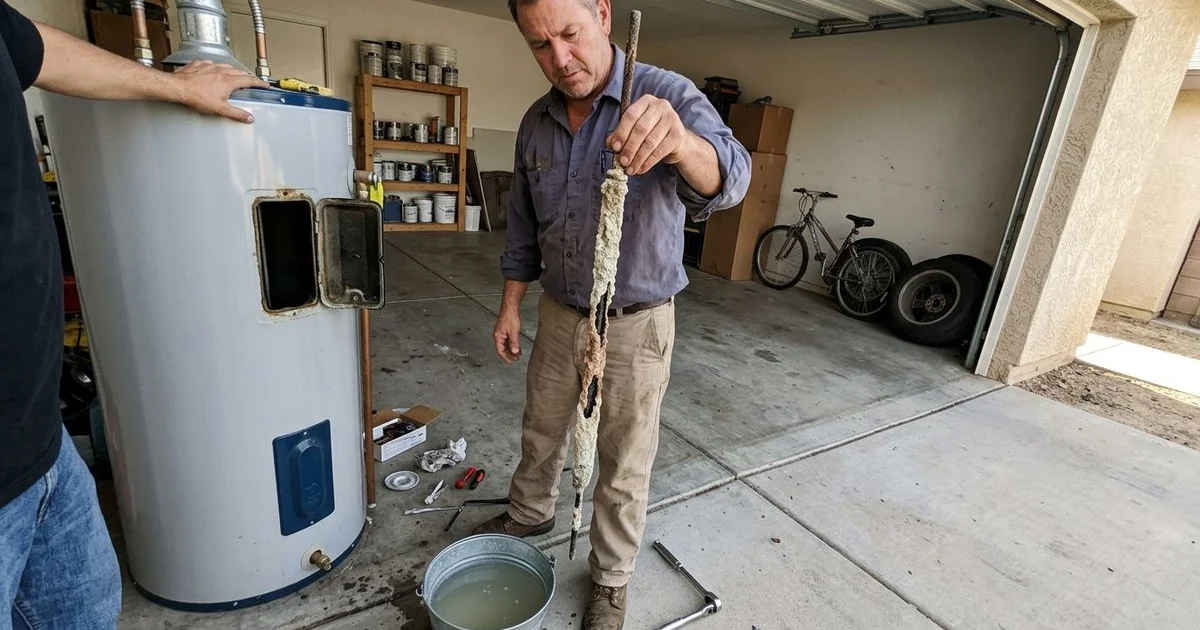
Most homeowners have never heard of the part that decides how long their water heater lasts. It sits inside the tank, it never makes a sound, and nothing on the outside of the heater tells you when it’s gone. In hard water like the Victor Valley’s, that part gets used up faster than the manual suggests. Knowing when to replace it is one of the few water heater decisions you get to make on your own schedule.
A Rod That Is Supposed to Rust
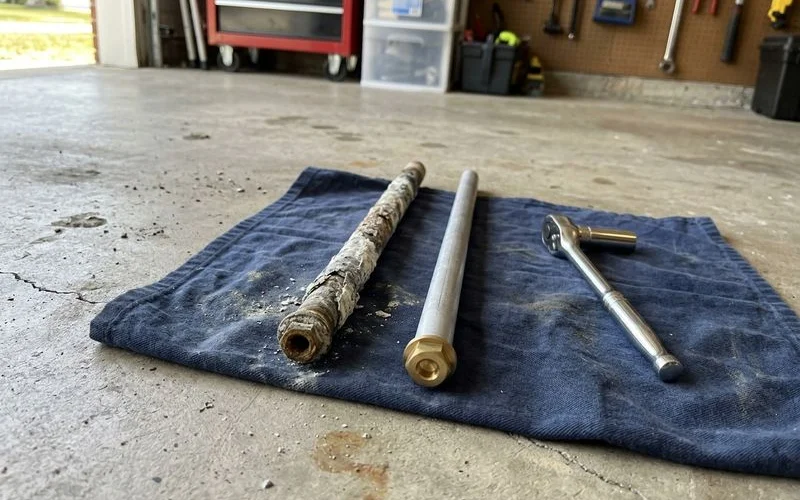
A conventional tank water heater is a steel cylinder lined with glass. The lining is never perfect. Small gaps form at welds and fittings during manufacturing, and water reaches the bare steel there. To protect those spots, manufacturers screw a long metal rod into the top of the tank. That rod is made of magnesium or an aluminum alloy, metals that corrode more readily than steel.
Because of that difference, the corrosion goes after the rod first. As long as there is rod left, the tank walls are largely spared. When the rod is used up, the steel takes the hit, and a leak at the bottom seam is usually the end result.
Four Questions That Decide Whether a Swap Makes Sense
Before paying for an anode replacement, run through these. They separate a smart repair from money spent on a tank that is already finished.
- Is the tank dry at the base? If the tank itself is weeping water, the steel has already failed. A new rod cannot reverse that.
- Does the hot water run clear? Rust in the hot water only, with clear cold water, usually means the tank is corroding inside. Replacing the rod at that stage rarely buys much time.
- How old is the heater? A rod swap on a younger tank protects years of remaining life. On a tank near the end of its rated life, the same work is harder to justify.
- Will the old rod come out? Rods that have never been touched can seize in the fitting. Removing a stuck one takes leverage and someone to hold the tank steady, which is why many people leave it to a plumber.
If the first two answers are good and the heater still has life left, replacing the rod is usually one of the best-value jobs you can do on a water heater.
Why Hard Water Shortens the Rod’s Life
Victorville’s groundwater comes from wells in the Mojave River basin, and it is hard. For the current hardness figure, check the Victorville Water District’s latest Consumer Confidence Report; Hesperia, Apple Valley and Adelanto have their own providers and can differ. Dissolved minerals make water conduct electricity better, which speeds up the reaction that uses up the rod. The same minerals also settle as scale on the tank bottom, which makes the steel run hotter. Hot steel corrodes faster.
Put those two effects together and a factory rod can be spent well before the heater reaches its rated life. Our guide on why water heaters fail early here explains how the rod and the scale problems feed each other.
Choosing the Replacement Material
| Rod type | Good fit for | Trade-off |
|---|---|---|
| Magnesium | Owners who want the strongest tank protection | Wears away fastest in hard water, needs more frequent checks |
| Aluminum-zinc | Very hard water, or hot water that smells like rotten eggs | Slightly less aggressive protection |
| Powered (impressed current) | Owners who want to stop checking the rod | Higher upfront cost, needs a power outlet nearby |
A rotten-egg smell from the hot taps only is a common reason to switch. It comes from a reaction between bacteria in the water and a magnesium rod. Changing to aluminum-zinc or a powered rod usually stops it.
What a Spent Rod Looks Like
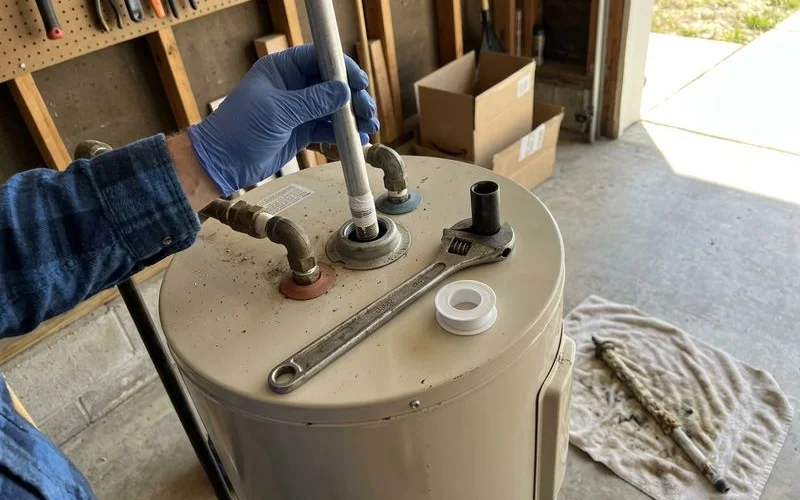
The only way to know a rod’s condition is to pull it out and look. Plan on replacing it if:
- It’s worn to roughly a quarter of its original thickness
- The steel core wire is visible along a long stretch
- It’s caked in scale and heavily pitted
A rod with plenty of metal left can go back in. Note what you found and use it to set the next check.
Do it with the flush
The tank already has to be shut down and partly drained for an annual sediment flush. Checking the anode on that same visit means one shutdown instead of two, and it puts the two biggest drivers of early failure on the same calendar.
The Cost Logic Without the Guesswork
A rod and the labor to change it cost a small fraction of a new water heater, and a new heater in California also has to be strapped against earthquakes and installed to code. If a rod swap gets a sound tank to the end of its rated life instead of a leak a few years early, it pays for itself. If the tank is already leaking or rusting inside, skip the rod and plan the replacement. You can request a free estimate for either job, and ask about any service call fee when you call.
Victorville Plumbing Pros takes calls 24/7 through a bilingual automated assistant that records the details and routes them to a local plumber for water heater service, anywhere in the Victor Valley.