Sized for hard water

Water Softener Victorville: Whole-Home Softeners & Reverse Osmosis for Hard Water

Water softener Victorville homes use to fight hard Mojave River basin water, plus under-sink reverse osmosis and whole-house filtration, sized to your tested hardness and household use.

Answered 24/7 English & Spanish Free estimate request All of the Victor Valley
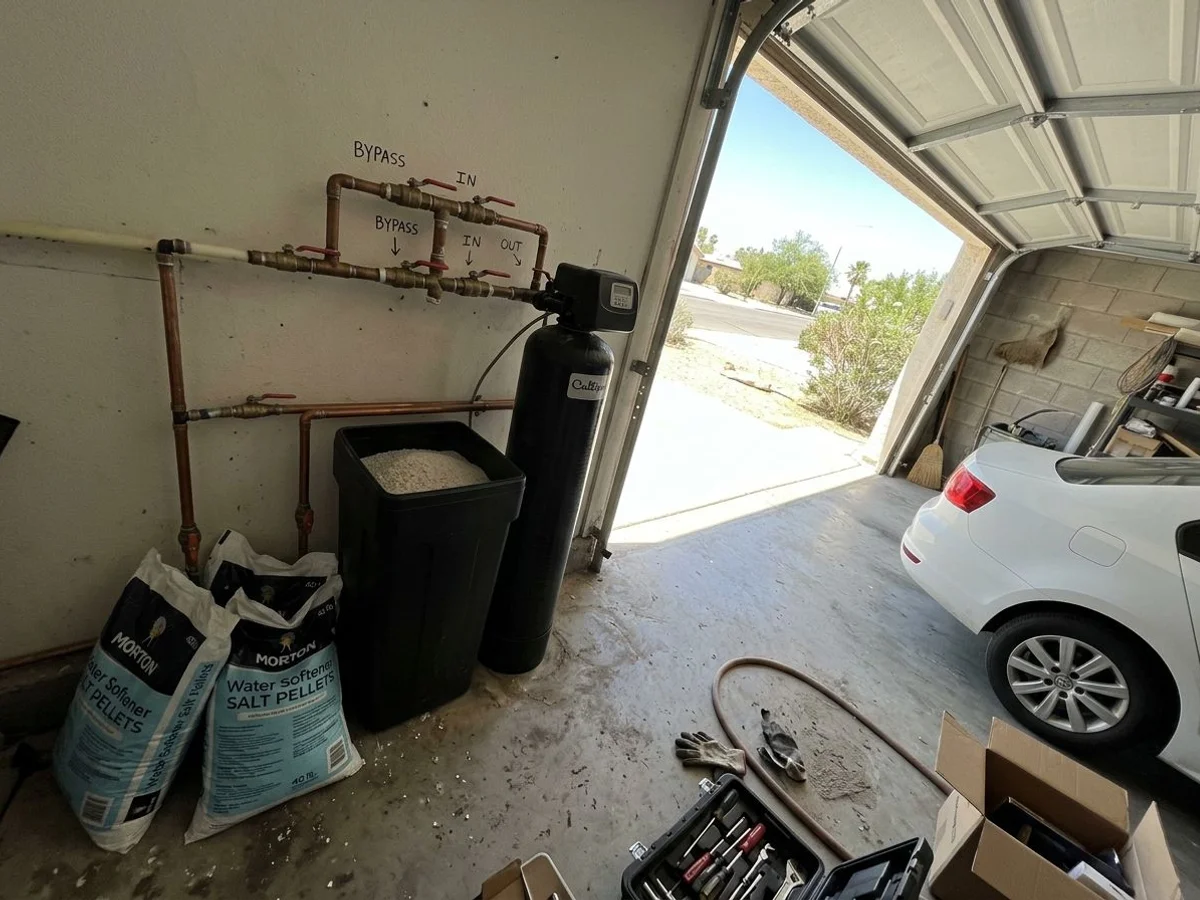
Whole-home water softener and brine tank installed beside the main line in a Victorville garage
Serving the whole Victor Valley
Answered 24/7
Nights, weekends, holidays
Free estimate request
No obligation to proceed
Se habla español
Atendemos en español

White crust on the shower head. Spots on every glass from the dishwasher. A faucet cartridge that needed replacing years earlier than it should have. These are the everyday signs of hard water, and they are the reason a water softener in Victorville is usually treated as maintenance rather than an upgrade.

When you call Victorville Plumbing Pros, an automated bilingual assistant takes your details in English or Spanish, at any hour, and routes them to a local plumber. Whole-home softeners, under-sink reverse osmosis, and whole-house filtration are all available, and every recommendation starts with testing your water.

Softener, RO, Filter, or Conditioner: Which One Does What?

These four systems get lumped together, but each solves a different problem. Knowing the difference keeps you from paying twice for the same thing or buying something that does not fix your issue.

Ion-exchange water softener. Swaps calcium and magnesium for sodium on a resin bed, then recharges itself with brine. This is the only option here that actually removes hardness, which is what protects your water heater, supply lines, and fixtures.

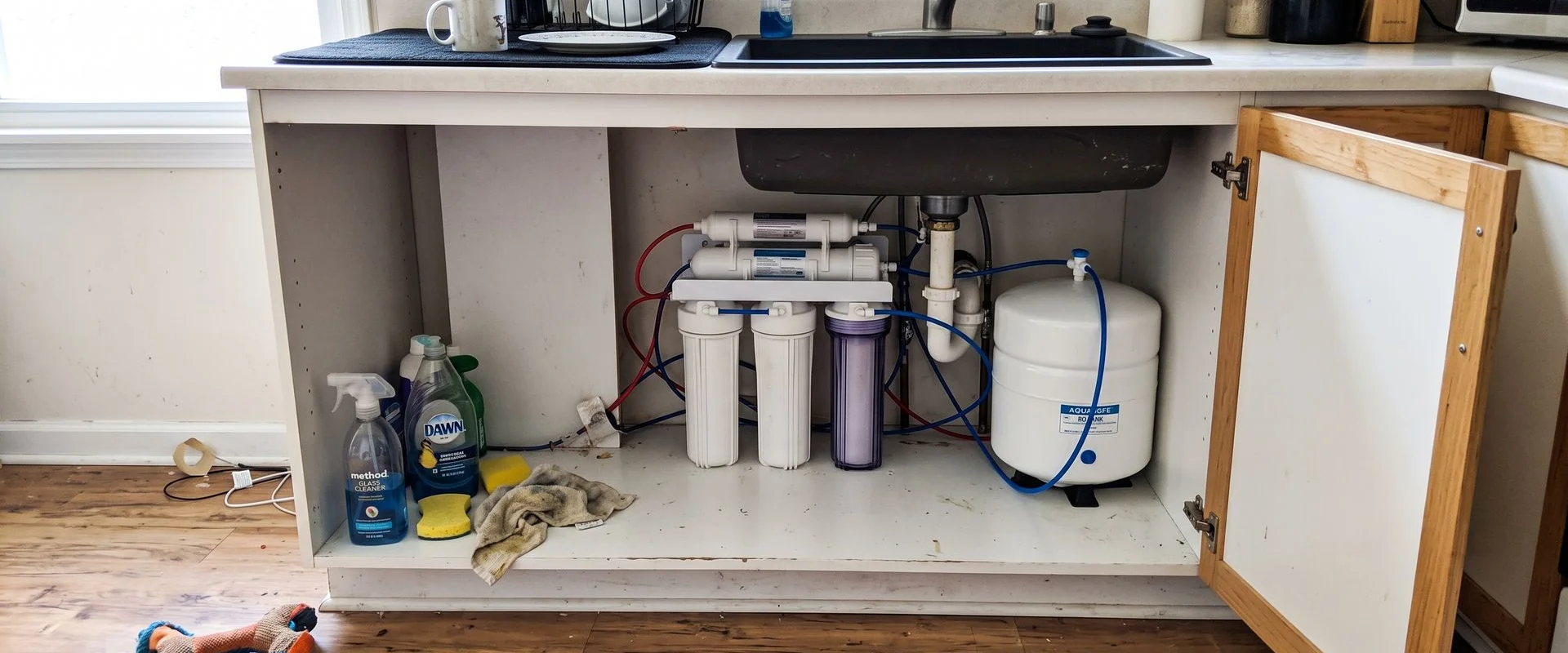
Under-sink reverse osmosis. Pushes water through a semi-permeable membrane to reduce dissolved solids at one drinking tap. It improves taste for drinking and cooking but does nothing for the rest of the plumbing.

Whole-house filtration. Sediment and carbon stages that reduce grit, chlorine taste, and odor at every fixture. Useful for general water quality, but not a hardness solution.

Salt-free conditioner. Changes the form of the minerals so scale is less likely to stick. It does not remove hardness. In hard water, it is a compromise, not an equal to softening.

Many households end up with a softener protecting the plumbing and an RO tap for drinking water. That covers both problems without overlap.

Hard Water and Your Plumbing

The Victorville Water District supplies groundwater from wells in the Mojave River basin, and that water is hard. Published hardness figures vary by source, so check the district’s current Consumer Confidence Report for the latest numbers. Hesperia, Apple Valley, and Adelanto use other water providers, and their water can differ.

Hardness is not a health issue. It is a plumbing and appliance issue, and it adds up:

  • Scale collects on the bottom of water heater tanks and inside tankless heat exchangers.
  • Faucet cartridges and valve seats wear faster as minerals grind against sealing surfaces.
  • Shower heads and aerators clog with white buildup.
  • Old shutoff valves stiffen and become hard to close in an emergency.

In many of the newer slab-foundation homes around town, the water heater is the most expensive thing hard water attacks, and it is often the first to fail.

Sizing a Softener Without Guesswork

Sizing comes down to simple math done with real numbers:

  1. Test the hardness at your tap. A city average is a starting point, not a measurement of your home.
  2. Estimate daily water use. Based on how many people live in the home and how they use water.
  3. Multiply them. That gives the daily grain load the softener has to remove.
  4. Pick a capacity. Choose one that handles that load with a reasonable gap between regenerations.

An undersized unit regenerates constantly, burns through salt, and wears out its resin early. An oversized one costs more than it needs to. With hard water, getting this right matters more than the brand name.

Common Mistakes When Buying Water Treatment

  • Buying by brand instead of capacity. A well-known name on an undersized unit still fails early.
  • Expecting a filter to fix hardness. Carbon and sediment filters do not remove calcium and magnesium.
  • Treating salt-free as the same as softening. It is not, especially in hard water.
  • Burying the brine tank. If you cannot reach it easily with a heavy bag of salt, refills get skipped.
  • Skipping the bypass valve. Without one, servicing the softener means shutting off water to the whole house.

Installation and Upkeep

The softener goes on the main line with a bypass valve so the house can run on untreated water during service. The drain line gets a proper air gap to meet plumbing standards. Many homes keep an outdoor hose bib on the unsoftened side for landscaping.

After installation, you will learn how often to add salt, what the control valve display means, and when the resin should be checked. RO systems get a filter and membrane change schedule too. Systems installed by someone else can be serviced as well.

What You Notice After Treatment

Some changes show up right away: less crust on fixtures, clearer glassware, and soap that lathers with less effort. The bigger changes happen out of sight. Your water heater stops building a thick scale layer, faucet cartridges last longer, and tankless units can go longer between descaling visits.

The water treatment guides go deeper on hardness and sizing.

Water Treatment Across the Service Area

The same line covers Victorville, Hesperia, Apple Valley, and Adelanto, plus Phelan and nearby areas. Since providers differ, testing at your tap matters wherever you live. Request a free estimate and ask about any service call fee when you call 760-555-0100.
The difference

Why choose us for water treatment

Sizing comes first

With hard water, getting the grain capacity right matters more than the brand. A poorly sized unit either works too hard or costs more than it should.

Your water gets tested

Hardness is measured at your fixture and shown to you before anything is recommended.

Maintenance, not a gadget

Untreated hard water scales fixtures, stiffens valves, and wears out water heaters. Treatment is framed as protection for the plumbing you already own.

Clear about what each system does

A softener protects the plumbing. RO improves drinking water. You will hear if you only need one.

Proper install details

Bypass valve, drain line air gap, and connections done to local plumbing standards.

Connected to the rest of the house

Water treatment advice comes in the context of your water heater and fixtures, which is where hard water does its damage.

Step by step

How our water treatment work goes

  1. 01

    Test at your tap

    Hardness is tested at your fixture instead of assumed. Different water providers and older supply lines can change what shows up at the tap.

  2. 02

    Size by grain capacity

    Measured hardness times daily water use. An undersized softener regenerates too often, burns salt, and wears out its resin early.

  3. 03

    Install with a bypass

    Plumbed into the main with a bypass valve, a drain line with a proper air gap, and a brine tank you can actually reach with a bag of salt.

  4. 04

    Learn the upkeep

    Salt refills, what the valve display means, when the resin needs a check, and when RO filters and membranes get changed.

Get a free estimate before anything is scheduled

Call and describe the problem. We triage it over the phone, quote it honestly, and there are never surprises when the truck shows up.

Side by side

How we compare

Feature Typical provider Victorville Plumbing Pros
Sizing One model for every home Grain capacity matched to tested hardness and use
Hardness Assumed from a city average Tested at your tap and shown to you
Salt-free systems Sold as the same as softening Explained honestly: conditioning is not removal
Drinking water RO bundled with everything RO only where it solves a real problem
After install A manual on the counter Salt and filter routine walked through with you
On the job

Our water treatment work

Click any photo to enlarge.

Common questions

Water Treatment FAQs

How hard is the water in Victorville?

It is hard. The Victorville Water District supplies groundwater from wells in the Mojave River basin, and published hardness figures vary by source. For the current numbers, check the district's latest Consumer Confidence Report. If you live in Hesperia, Apple Valley, or Adelanto, your water comes from a different provider and can differ.

Is hard water a health problem?

No. Hardness is a plumbing and appliance problem, not a health problem. It leaves scale in water heaters, on fixtures, and inside valves, which is why softening is mostly about protecting the plumbing.

Do I really need a water softener?

In hard water, a softener works more like preventive maintenance than a luxury. It slows the scale that shortens water heater life and wears out faucet cartridges and valves. The question is usually whether the equipment you are protecting is worth more than the softener, and in many homes it is.

What size softener does my home need?

It depends on your measured hardness and how much water your household uses each day. Multiply the two to get the daily grain load, then choose a capacity that handles it without regenerating constantly. That is why the water gets tested first.

What is the difference between a softener and reverse osmosis?

A softener removes hardness minerals for the whole house, which protects pipes, the water heater, and fixtures. Reverse osmosis treats drinking water at one tap, reducing dissolved solids and improving taste. They solve different problems, and many homes use both.

Do salt-free conditioners work in hard water?

They change how scale forms so it sticks less, but they do not remove hardness. In hard water, a salt-based ion-exchange softener gives stronger protection for the water heater and fixtures. If salt is not an option for your household, you will get a straight answer on what a conditioner can and cannot do.

Will softened water hurt my garden?

Softened water carries some sodium, so many homes leave an outdoor hose bib on the unsoftened side for landscaping. For drinking and cooking, a reverse osmosis tap is a common pairing.

How often do I need to add salt?

Harder water means more salt use. Many households top up the brine tank every few weeks. You will get a sense of your schedule at install so the first refill is not a surprise.

Can whole-house filtration replace a softener?

No. Sediment and carbon filtration handle grit, chlorine taste, and odor, but they do nothing for hardness. If scale is the problem, filtration alone will not fix it.

Can you service a softener or RO system someone else installed?

Yes. Resin problems, valve issues, brine tank troubles, and RO filter or membrane changes on existing systems can all be handled. Request a free estimate and ask about any service call fee when you call.

Still have a question?

Call and describe it. We triage over the phone before anyone is dispatched.

Call 760-555-0100
Free tool

Try our Water Usage Calculator

Estimate your monthly water usage and see how much hard water and older fixtures could be costing you in the Victor Valley.

Use the calculator
Plumber loading tools into a service van at dusk in Victorville
Answered 24/7, English & Spanish

Need water treatment in the Victor Valley?

Call and describe what is happening. Your call is answered in English or Spanish at any hour, and the estimate is free.

Free estimate request All of the Victor Valley Se habla español
760-555-0100