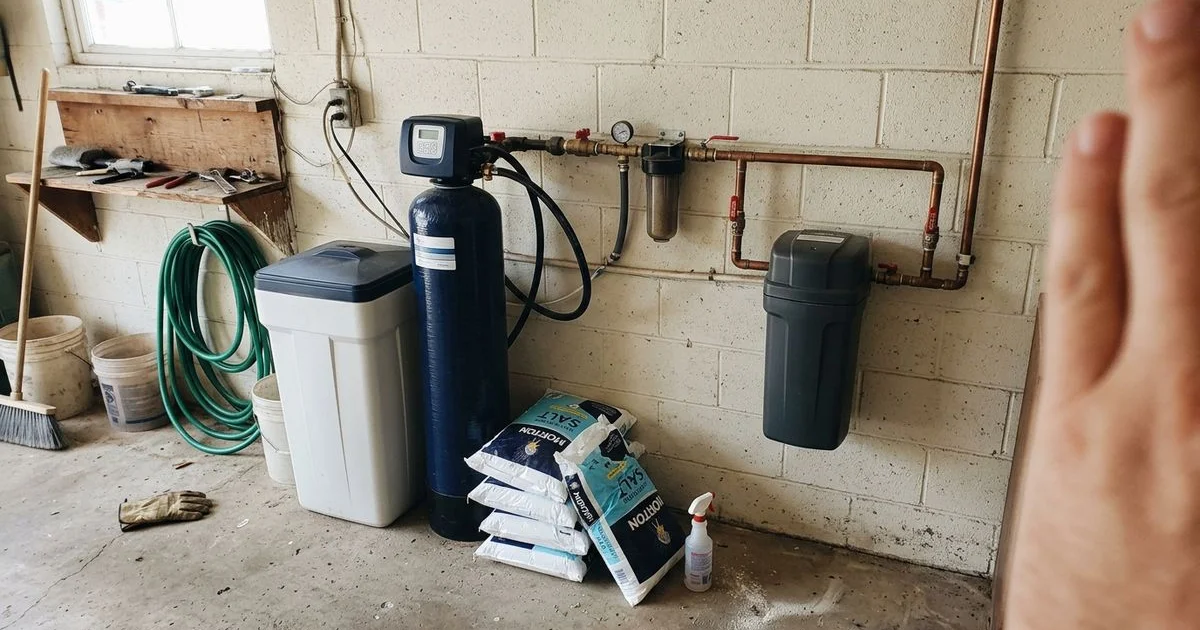
Both products are sold as fixes for hard water, often side by side and sometimes under the same “softener” label. They work in completely different ways, and that difference decides how much protection your water heater actually gets.
Two Different Mechanisms
Salt-based softener (ion exchange)
Water flows through a tank of resin beads. The beads grab calcium and magnesium and release sodium in their place. When the beads are full, the unit regenerates: it rinses them with salt brine from a second tank and sends the hardness down the drain. Water coming out of a working softener tests close to zero hardness. The minerals are gone.
Salt-free conditioner (scale inhibitor)
Water flows through a media cartridge, most commonly a process called template-assisted crystallization. The media turns dissolved hardness into tiny, stable crystals that are less likely to stick to pipe walls and heating surfaces. The minerals are still in the water, and a hardness test reads about the same as before. What changes is how they behave.
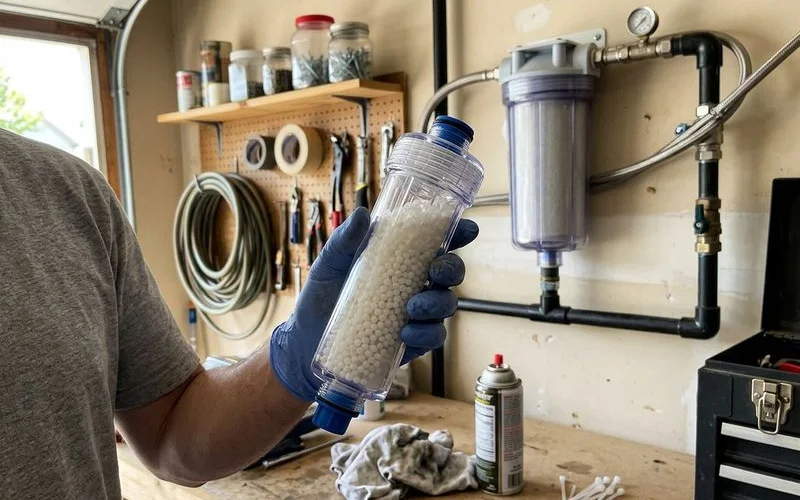
Nearly every difference below comes back to that one point: one removes hardness, the other manages it.
Side by Side
| Criterion | Salt-based softener | Salt-free conditioner |
|---|---|---|
| Removes hardness | Yes | No |
| Hardness test after treatment | Near zero | About the same |
| Water heater protection | Strong | Partial |
| Existing scale | Gradually reduced | Not removed |
| Soap and detergent use | Noticeably less | About the same |
| “Slick” feel of the water | Yes | No |
| Ongoing upkeep | Salt every few weeks, occasional service | Media change every few years |
| Needs a drain | Yes, for regeneration | No |
| Space | Resin tank plus brine tank | Compact, one housing |
| Water used for regeneration | Some | None |
Why Hard Water Tips the Balance
Victorville’s groundwater from the Mojave River basin is hard. Check the Victorville Water District’s current Consumer Confidence Report for the figure, or your own provider’s report if you live in Hesperia, Apple Valley, or Adelanto. The harder the water, the more mineral a conditioner has to manage, and the more its results fall behind those of a softener.
In moderately hard water, a conditioner can do a reasonable job. In hard water, the gap gets bigger. If you’re treating water because hard water already killed a water heater, or because you just installed a tankless unit, it makes sense to pick the option that removes the minerals.
The straight recommendation
If protecting the water heater is the goal, use the system that removes hardness. If salt truly isn’t workable for your household, a conditioner is better than nothing, as long as you know what it will and won’t do.
When Salt-Free Is the Right Call
Practical limits
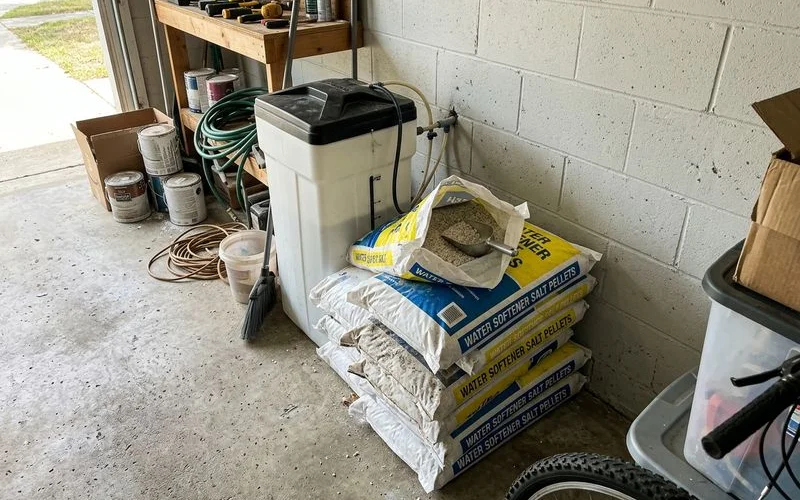
- No one in the house can lift salt bags, and delivery isn’t an option
- A doctor has set a strict sodium limit (the sodium a softener adds is small, but a medical restriction is a restriction)
- There’s no room for two tanks
Plumbing and local limits
- No suitable drain near where the water comes in
- A local rule on brine discharge; some California communities restrict it, so ask whether one applies to your address
- A small household with light hot-water use, where less is at stake either way
The Upkeep Reality
Salt-based. Expect to add salt every few weeks. Hard water and bigger households use more. The control valve needs an occasional check, and the resin lasts many years if the unit is sized correctly. An undersized unit regenerates too often and wears out its resin sooner. Our guide to softener sizing explains how to get that right. Put the brine tank somewhere you can reach with a heavy bag without moving the car, because a tank that’s hard to get to tends not to get filled.
Salt-free. Replace the media every few years and that’s about it. There’s no salt, no regeneration schedule, and no drain. If low maintenance matters most to you, that’s a legitimate reason to choose it, as long as you know you’re giving up actual hardness removal.
Getting the Right Fit
The best choice depends on your measured hardness, your household, your space, and your drain access. Victorville Plumbing Pros takes calls 24/7 through a bilingual automated assistant that routes requests to a local plumber for water softeners and reverse osmosis. Request a free estimate, and ask about any service call fee when you call.