Water treatment gets confusing fast, partly because so many products are sold as fixes for “bad water.” It helps to start from the other direction: what problem are you actually seeing? Each of these three systems solves one kind of problem well and does very little for the others.
What Each System Actually Does
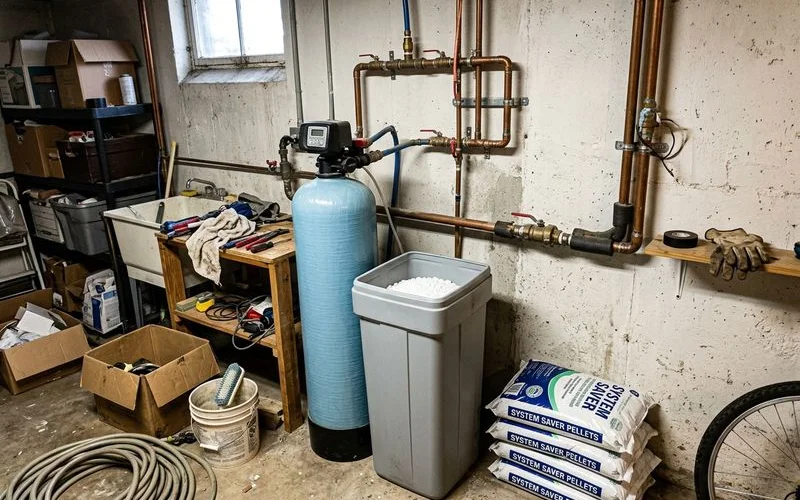
Ion-exchange softener. Installed where water enters the house. Resin beads trade calcium and magnesium for sodium, and the unit regenerates with brine. It’s the only one of the three that removes hardness from all the water in the house.
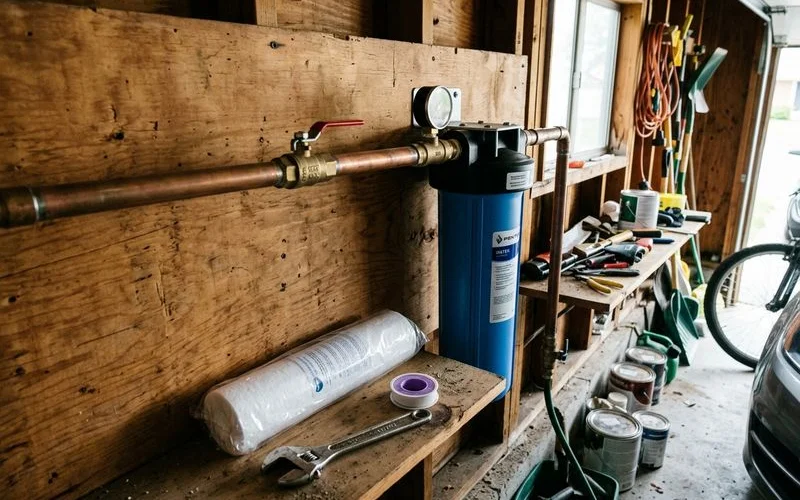
Whole-house filtration. Cartridge housings on the main line with sediment and carbon media. They reduce grit, chlorine taste, and odors at every fixture. They don’t touch hardness.
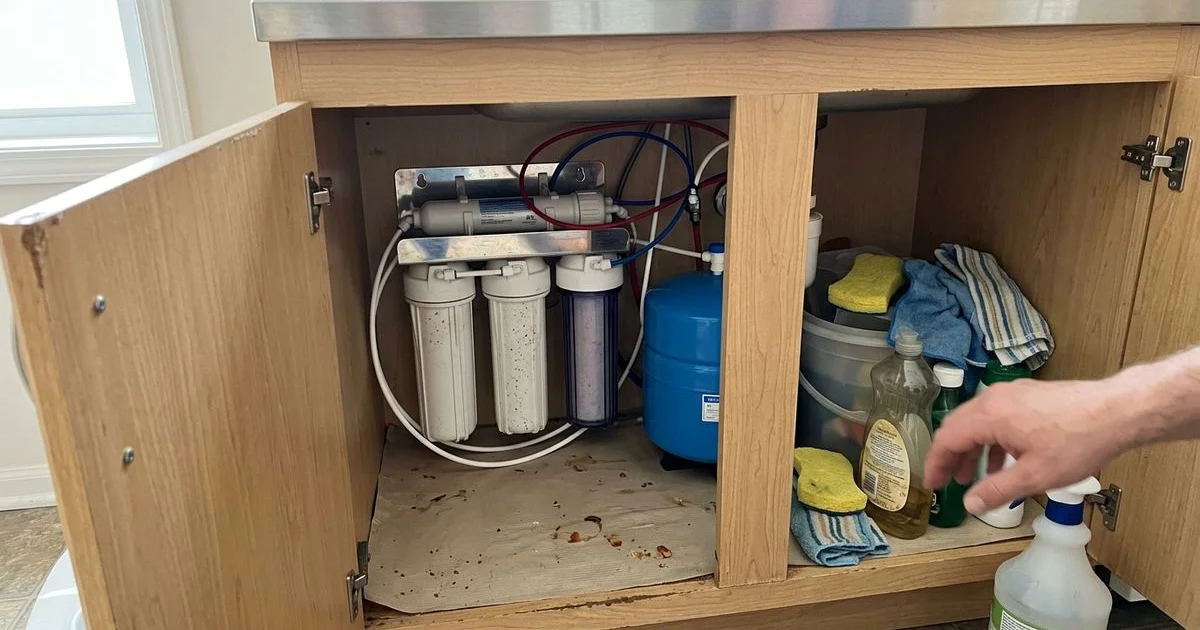
Reverse osmosis (RO). Usually under the kitchen sink with its own faucet. Pressure pushes water through a membrane that rejects most dissolved solids, and the treated water collects slowly in a small tank. Great drinking water at one tap, and no effect on the rest of the plumbing.
Side by Side
| Criterion | Softener | Whole-house filter | Reverse osmosis |
|---|---|---|---|
| Removes hardness | Yes, whole house | No | Yes, one tap only |
| Protects water heater | Yes | No | No |
| Protects faucets and valves | Yes | Sediment only | No |
| Improves drinking taste | A little | Somewhat | Substantially |
| Removes chlorine taste | No | Yes | Yes, at its tap |
| Coverage | Whole house | Whole house | One faucet |
| Routine upkeep | Salt every few weeks | Cartridge changes | Filter and membrane changes |
| Needs a drain | Yes | No | Yes, under the sink |
Match the Symptom to the System
| What you’re seeing | The real issue | The system |
|---|---|---|
| White crust on fixtures, heaters failing early, stiff valves | Hardness | Softener |
| Tap water tastes flat or off, buying bottled water | Dissolved solids, taste | RO at the kitchen |
| Grit in aerators, chlorine smell in the shower | Sediment, chlorine | Whole-house filter |
| All of the above | More than one problem | Softener plus RO; add a filter only if sediment is a real complaint |
Victorville’s groundwater comes from the Mojave River basin and is hard, so the first row applies to most homes. The current hardness figure is in the Victorville Water District’s Consumer Confidence Report; Hesperia, Apple Valley, and Adelanto have their own providers.
Installing Them in the Right Order
When systems are combined, order matters:
- Sediment filter first, so grit doesn’t foul the equipment after it.
- Softener next, on the main line, protecting everything after it.
- RO last, under the sink, fed with softened water.
Softened water going into an RO unit helps its membrane last longer, because hardness fouls RO membranes. Many homes also leave an outdoor hose bib or the irrigation line on unsoftened water. Plants don’t need it, and it saves salt.
If budget allows only one
Pick the problem that’s costing you money right now. In hard water, that’s usually scale on the water heater and fixtures. A pitcher filter can cover drinking water for a while. A water heater building up scale can’t wait.
Where Salt-Free Conditioners Fit
Salt-free conditioners are often sold next to softeners. They change how hardness minerals behave so less scale sticks, but they don’t remove the minerals. In hard water that’s a partial measure. Our guide on salt-based vs salt-free explains when a conditioner is a reasonable choice.
Common Mix-Ups
- Have a softener, but still don’t like the taste? You need an RO tap, not a bigger softener.
- Have RO, but the water heater still scales up? RO only treats one faucet. You need whole-house softening.
- Bought a whole-house filter for white crust? Filters don’t remove hardness. The crust will keep coming back.
Getting the Right Answer
The right setup starts with a test at your tap and a look at what you’re trying to protect. Victorville Plumbing Pros answers 24/7 through a bilingual automated assistant that routes requests to a local plumber for water softeners and reverse osmosis. Request a free estimate, and ask about any service call fee when you call.