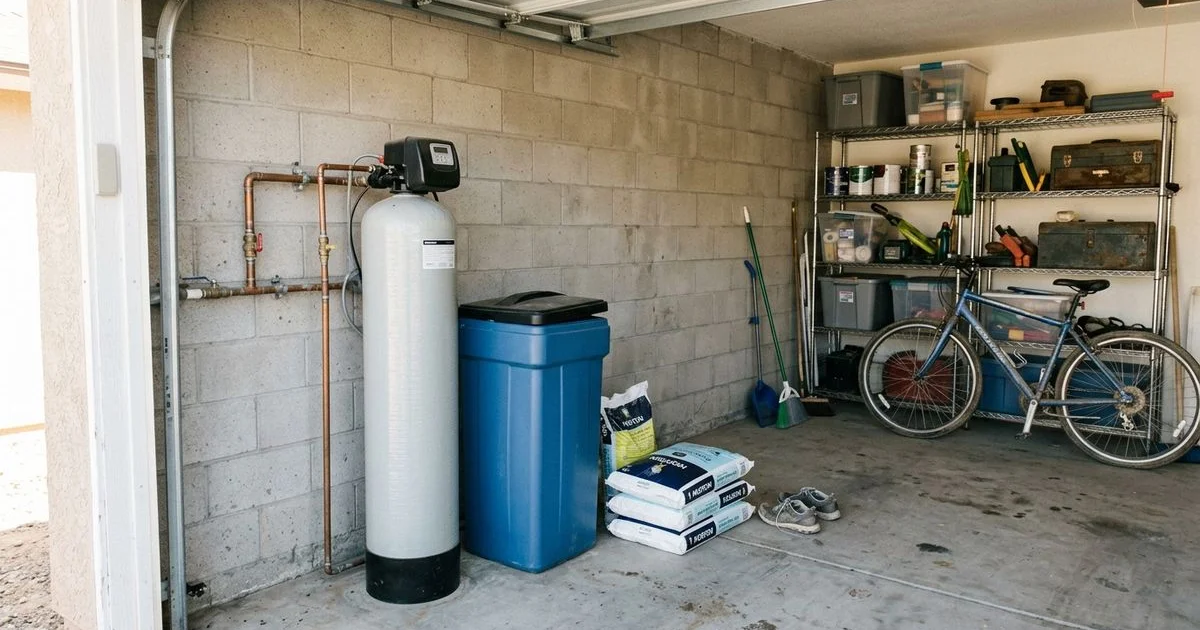
With softeners, the right size matters more than the brand name, especially with hard water. An undersized unit runs out of capacity between cycles, lets hard water through, and wears out its resin early. An oversized one costs more up front, can use more salt per cycle, and leaves resin sitting unused. Getting it right takes a few numbers you can find yourself.
The Sizing Formula
People × gallons per person per day × hardness (grains per gallon) = grains removed per day
Grains per day × days between regenerations = capacity needed
Then choose a softener whose usable capacity, at the salt setting it will actually run, comfortably covers that number. Most softeners don’t deliver their full rated capacity efficiently, so it’s normal to size above the bare result.
Getting Your Three Inputs
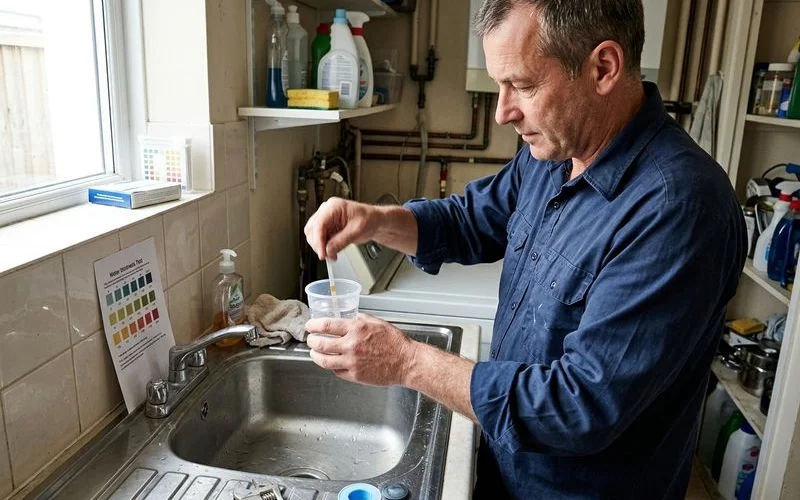
1. Hardness. Victorville’s groundwater from the Mojave River basin is hard. Get the current figure from the Victorville Water District’s Consumer Confidence Report. If it’s listed in mg/L or ppm, divide by 17.1 to get grains per gallon. Hesperia, Apple Valley, and Adelanto are served by other providers, so use the report for your address. A test at your own tap is best, because that’s the water the softener will actually treat. If your water has noticeable iron, the plumber may add a little extra capacity for it.
2. Daily use. A common planning range is about 75 to 100 gallons per person per day indoors. Use the higher end for long showers, frequent laundry, or a big household. Use the lower end for a small household that travels often.
3. Days between regenerations. A target of a few days works well for most homes. It keeps the resin active without regenerating every night.
Factors That Push the Size Up or Down
| Pushes capacity up | Pushes capacity down |
|---|---|
| Five or more people | One or two people |
| Long or frequent showers | Short showers, low-flow fixtures |
| Daily laundry | Occupants away often |
| A tankless water heater you want to protect | Outdoor lines left unsoftened |
| Higher measured hardness at your tap | A vacation or seasonal home |
| Iron in the water |
Most home softeners come in a handful of standard capacity sizes. Your result points to one of them. Twin-tank units make sense for very large or high-use households that can’t have any downtime during regeneration.
The tell
If your softener regenerates every single night, it’s almost certainly undersized for your household. That’s worth checking on any unit that came with a house you bought.
Who Needs a Careful Sizing, and Who Can Keep It Simple
Size carefully if:
- You have a tankless water heater, which is very sensitive to scale
- You’ve already replaced a water heater early
- The household is large, or growing
- You’re replacing an existing softener that never seemed to keep up
A simpler estimate is usually fine if:
- It’s a one- or two-person home with modest use
- You’re adding a softener mainly for fixtures and glassware, not to protect a tankless unit
Metered vs Timer Control Valves
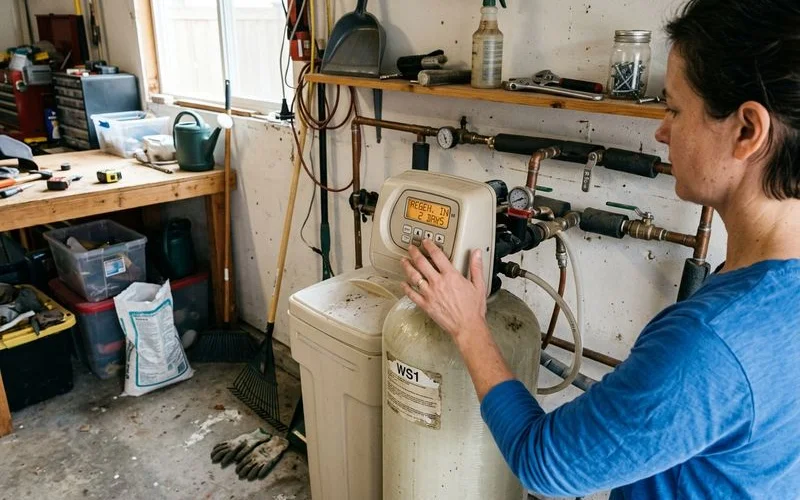
- Metered (demand) valves regenerate based on the water actually used. They adjust automatically to heavy weeks and light weeks.
- Timer valves regenerate on a fixed schedule. They can run short during heavy use and waste salt during light use.
For most households, a metered valve is the better match. Regeneration usually runs overnight, when the house is briefly on untreated bypass water.
Planning for Salt and Placement
Hard water means more salt per gallon treated. Most households top up the brine tank every few weeks. Put the tank somewhere you can reach with a heavy bag without moving the car, near a drain and a power outlet. A tank that’s easy to reach is a tank that gets filled.
If you’re still weighing whether treatment pays off at all, see is a water softener worth it.
Getting a Sizing Done
Victorville Plumbing Pros answers 24/7 through a bilingual automated assistant that routes requests to a local plumber for water softeners and reverse osmosis. Ask for a hardness test at your tap with the estimate. You can request a free estimate, and ask about any service call fee when you call.