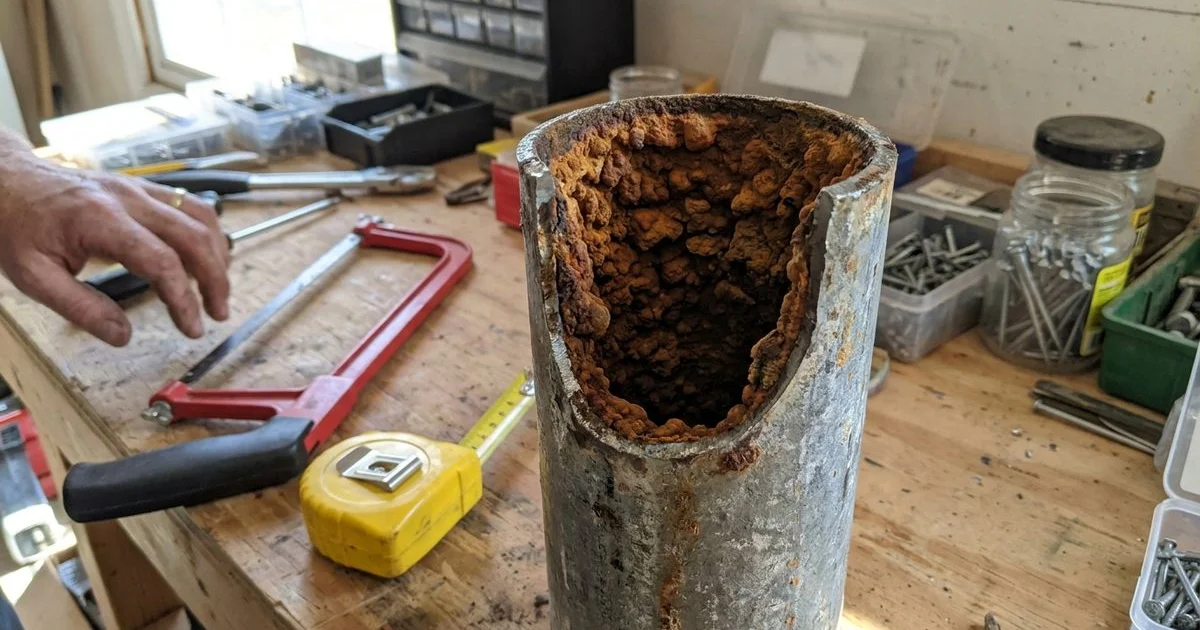
Most Victorville houses are newer tract homes, and plenty of them have supply piping in good shape. Not all of them, though. Older homes may still have original galvanized steel. Some houses from the 1980s and early 1990s were plumbed with gray polybutylene, a material known for failing at the fittings. And copper that has carried hard water for decades can develop pinholes. The question is the same in all three cases: does this house need a repair, or a new supply system?
Symptoms of a System That’s Worn Out
A single fixture problem is a fixture repair. The signs below point to the piping as a whole.
- Weak pressure at every tap, not just one shower or sink
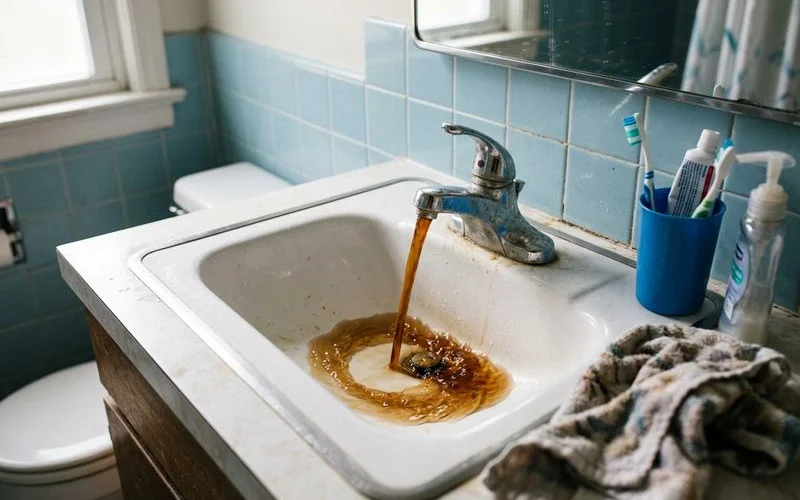
- Brown or orange water first thing in the morning that clears after a minute of running
- Pressure drops sharply when someone opens a second fixture
- Corrosion, crust, or weeping at threaded joints in the garage or under sinks
- Pinhole leaks in more than one place within a year or two
- Gray plastic supply pipe stamped “PB” near the water heater or the main
The last one is a material question, not a symptom. Polybutylene is usually replaced as soon as it’s found rather than repaired leak by leak.
How Galvanized Pipe Closes Itself Off
Galvanized pipe is steel with a zinc coating. Over the decades the zinc wears off from the inside, and the bare steel rusts into rough lumps that grow inward. The pipe gets narrower, pressure falls, and rust flakes come loose overnight. That’s the rusty first draw. Hard water adds mineral scale on top of the rust and speeds up the narrowing.
PEX, Copper, or Keep Patching
| Criterion | PEX | Copper | Patch the existing pipe |
|---|---|---|---|
| Wall openings needed | Fewer, flexible runs snake through cavities | More, rigid runs and soldered joints | Small, one location at a time |
| Hard-water pitting | Not affected | Can develop pinholes over decades | Already failing |
| Cold-night freeze tolerance | Better, flexes before splitting | Can split | Can split |
| Tolerance for ground or seismic movement | Flexible | Rigid | Rigid and aging |
| Install time | Typically fastest | Slower | Fast per leak, repeated often |
| Long-term outlook | New system | New system | Same old system |
For most Victor Valley homes PEX is the practical recommendation. It needs fewer wall openings, scale doesn’t pit it, and it handles a hard freeze better than rigid pipe. That said, no supply pipe is freeze-proof. Lines on exterior walls, in unheated garages, or above ground at the hose bibs still need insulation before winter nights drop below freezing.
Copper is a good material, and some owners prefer it for resale or because rigid runs fit their layout. It takes more labor to install and is less forgiving of hard water over the long run.
Patch or Replace: A Simple Rule
Patch it if there’s one failure, the rest of the house has strong pressure and clear water, and the piping material isn’t known to fail across the system.
Replace it if two or more of the system symptoms above are present, if leaks keep turning up in different places, or if the house has polybutylene.
Each patch has its own costs: access, labor, drywall repair, and the water damage the leak already caused. Three of those over two years and you’ve spent a good share of a repipe and still have old pipe in the walls.
The remodel window
If a kitchen or bathroom remodel will have walls open anyway, that’s the cheapest time to replace the supply lines in that area, or the whole system. A big part of the access cost is already being paid for.
What a Repipe Looks Like Day to Day
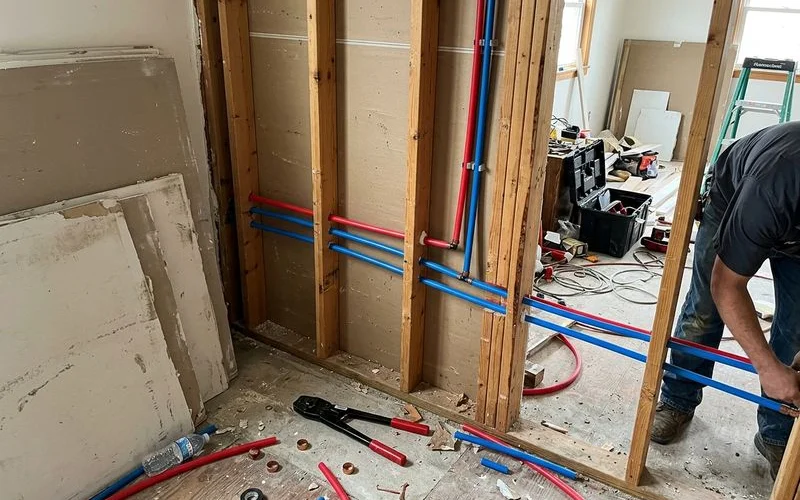
A typical PEX repipe runs new lines from a central manifold to each fixture, so every run can be shut off on its own. Access holes are cut where they’re needed rather than tearing out whole walls. Old pipe is usually abandoned in place, and the new system is pressure tested before the walls are closed. The house usually has water again at the end of each work day, with longer shutoffs only while the main connections are made. The work typically takes a few days, depending on the size and layout of the home.
If leaks are showing up under the floor rather than in the walls, read our guide to slab leak signs first. Rerouting supply lines overhead is often part of the same conversation.
Getting a Straight Answer
Victorville Plumbing Pros answers around the clock through a bilingual automated assistant that takes your details and routes them to a local plumber for leak detection and repiping. Request a free estimate, ask about any service call fee, and ask the plumber to explain whether your symptoms point to a patch or a system.