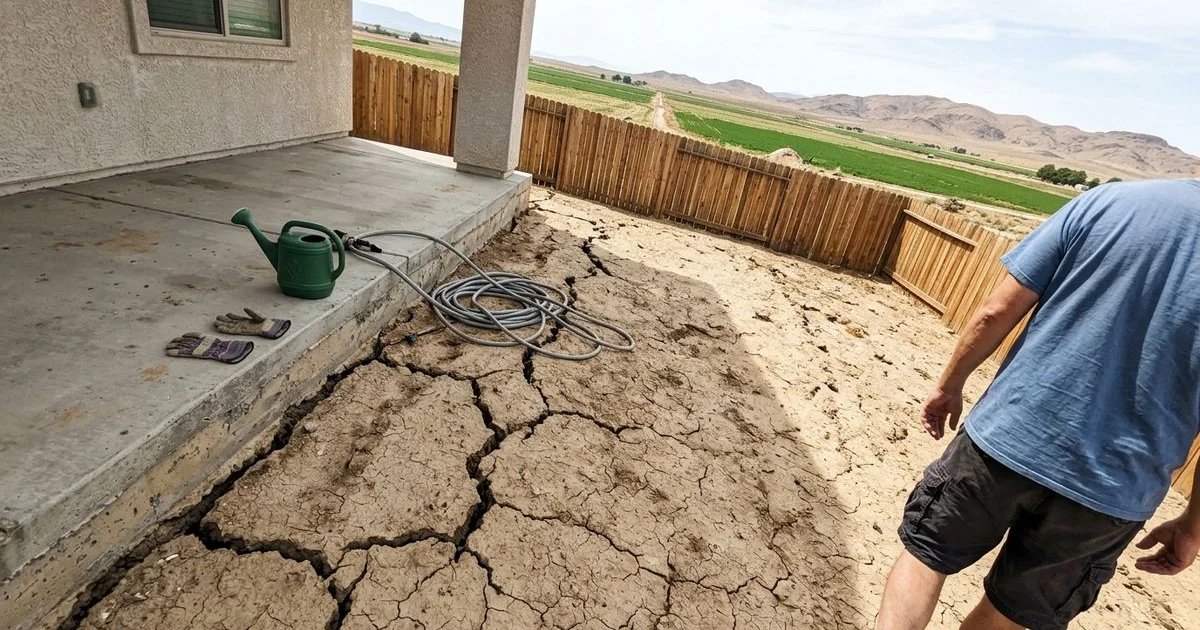
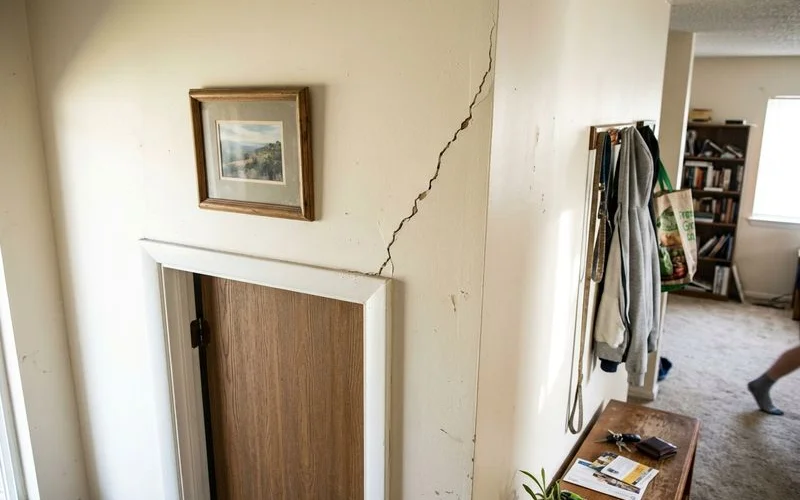
A crack across the tile, a door that suddenly sticks, a diagonal line running up the drywall from a doorway corner. In a slab-foundation home, these can come from two very different causes. One is a plumbing leak washing out the soil. The other is ordinary ground movement that the house is reacting to. Calling the wrong specialist first costs time and money.
Why They Get Confused
Many Victorville homes are tract houses built on concrete slabs, often with supply piping running through or under the slab. Two things can move that slab:
- Water from a leak soaks the soil under one area, softens it or washes it away, and that section shifts.
- Ground movement with no leak involved: fill that’s still settling, soil that cycles between wet and dry from watering, and earthquake movement.
The two can also cause each other. Movement can stress a buried pipe until it fails, and a leak can soften soil until the slab moves.
Clues That Point to a Leak
- A warm spot on the floor with no heat source under it
- A water bill that jumped with no change in use
- Running water sounds with everything turned off
- Damp flooring, baseboards, or carpet, or a musty smell
- Soil along the foundation that stays damp in dry weather
- Pressure loss along with any of the above
Leak symptoms are usually localized, concentrated around one spot.
Clues That Point to Ground Movement
- Cracks that are completely dry
- Cracks that widen and narrow over the year
- Doors and windows that stick, then free up
- Cracks fanning out from the corners of doors and windows
- Matching exterior cracks in stucco or the visible slab edge
- No change in water use or the bill
Movement symptoms tend to be spread out across a wall or the whole house.
Three Real-World Scenarios
Scenario 1: Warm hallway, higher bill. A tile crack near a hallway with a warm patch and a bill that has been creeping up. That’s a leak until proven otherwise, probably a hot line. Call for leak detection.
Scenario 2: Dry cracks after the first year. A newer home shows hairline drywall cracks at door corners, the bill hasn’t changed, and the floor feels normal everywhere. That’s typical of settling. Do a meter test for peace of mind, then keep an eye on whether the cracks grow.
Scenario 3: Cracks on the sprinkler side. Cracks are concentrated on the side of the house where sprinklers hit the foundation or a downspout drains against the slab. That’s likely water-driven movement, but from irrigation, not a supply leak. A leaking irrigation line can do the same thing, so check both.
Water management matters in the desert
Soil that alternates between soaked and dry moves more than soil kept evenly moist. Aim sprinklers away from the slab, fix irrigation leaks, and send downspouts several feet away from the foundation. Those small changes cut down on movement no matter what else is going on.
The Test That Settles It
| Step | What happens | What it tells you |
|---|---|---|
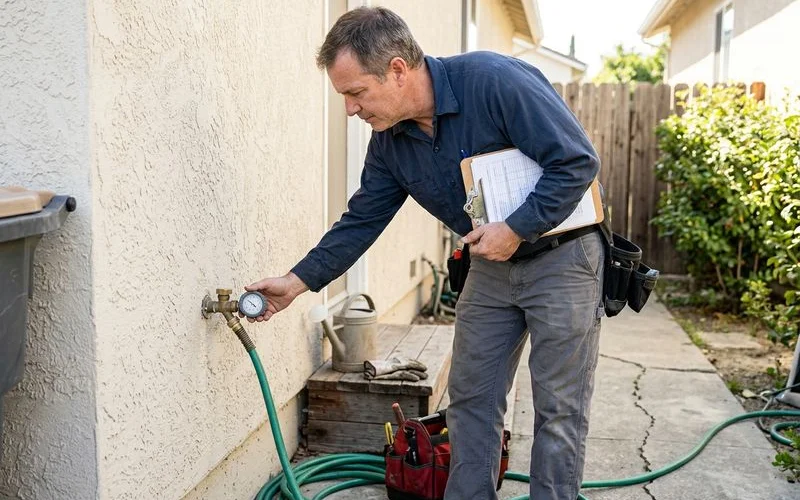
| Meter check | Every fixture off, watch the low-flow indicator | Any movement means water is leaving the system |
| Pressure test | Supply lines isolated and pressurized, gauge watched | Steady means no supply leak; a drop confirms one |
| Pinpointing | Acoustic listening, thermal imaging, line tracing | Finds the exact spot before any concrete is opened |
If the system holds pressure, a supply leak isn’t what’s cracking your floor, and that’s valuable information. A drain line problem is a separate question, answered with a camera. For anything beyond cosmetic cracking, a foundation professional is the right next call.
What to Do With the Answer
- Leak confirmed: locate and repair it. Options range from a spot repair through the slab to rerouting the line through walls or the attic.
- No leak: manage water around the foundation and call a foundation specialist if cracks keep growing.
- Both: fix the leak first. Ground movement can’t settle down while water is still feeding it.
For a full list of leak symptoms, see how to tell if you have a slab leak. Victorville Plumbing Pros answers 24/7 through a bilingual automated assistant that routes calls to a local plumber for leak detection and slab leak repair. Request a free estimate, and ask about any service call fee when you call.