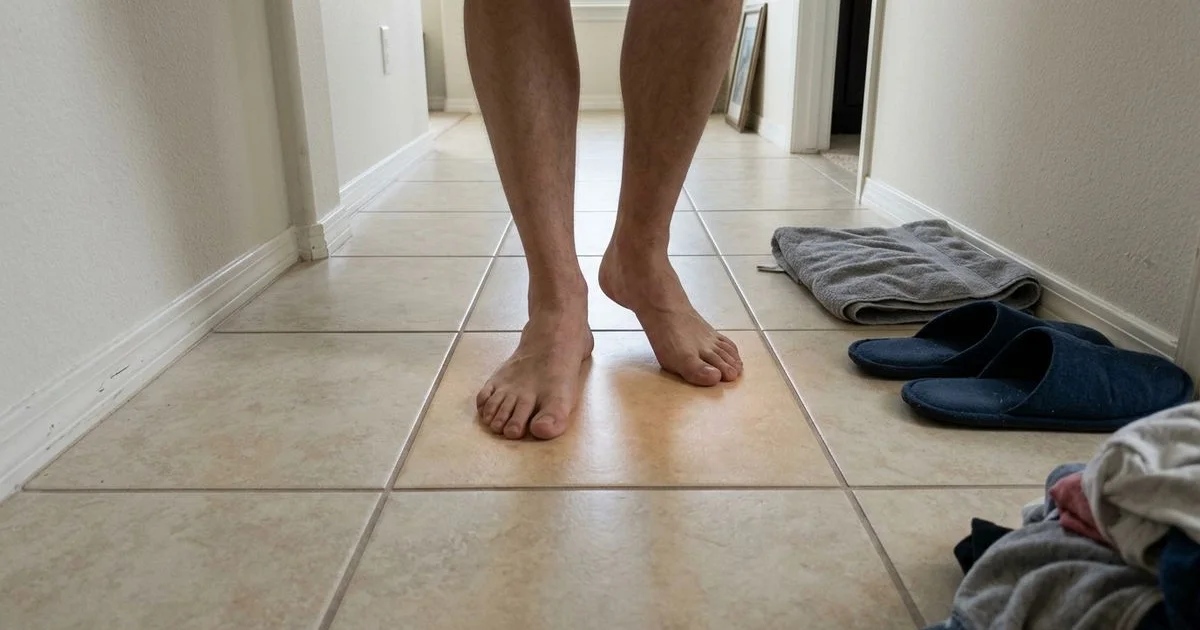
A large share of Victorville houses are newer tract homes built on concrete slabs, with supply lines running through or under the slab. When one of those lines springs a leak, the water has nowhere visible to go. It soaks into the soil under the house, sometimes for weeks. The signs are subtle, and the earlier you catch them, the smaller the repair.
Warning Signs, Ranked by How Fast to Act
Act today
- The sound of running water with everything off. Stand somewhere quiet at night with every tap, appliance, and irrigation zone off. A steady hiss or faint rush means water is moving where it shouldn’t.
- A meter that moves when nothing is on. See the test below. This is the closest thing to proof you can get without equipment.
- Water coming up through flooring or along baseboards. By the time water reaches the surface, the soil under that area is soaked.
- New cracks in floor tile or walls along with any of the signs above. Water washing soil out from under the slab removes support.
Act this week
- A warm spot on the floor. A patch of tile or flooring that feels warm with no heat source under it usually means a hot water line is leaking under the slab. Bare feet often notice it first.
- A water bill that jumped with no change in use. No new people in the house, no new landscaping, and the bill still went up. Compare it against the same month last year.
- Pressure that has dropped across the house. On its own this can mean several things. Combined with a high bill, it’s a strong signal.
Keep watching
- A musty smell near an interior wall with no visible water.
- A patch of soil against the foundation that stays damp in the dry desert air when nothing has been watered.
- The water heater running more often than usual, which can mean it’s refilling to replace hot water lost through a leak.
The Meter Test Anyone Can Do
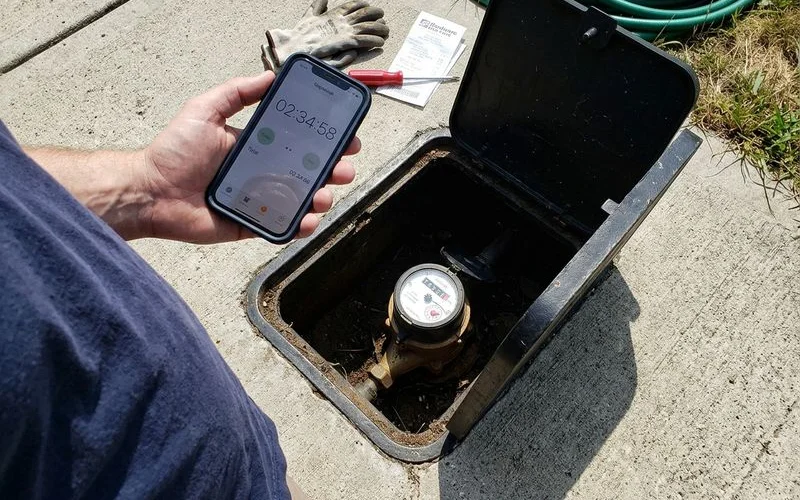
- Turn everything off. Every faucet, the dishwasher, the washer, the ice maker, and the irrigation controller.
- Open the meter box near the curb and find the low-flow indicator, a small triangle or dial that spins with even a tiny flow.
- Watch it for a couple of minutes. If it moves, water is passing the meter.
- Narrow it down. Close the main shutoff at the house and look again. If the indicator still moves, the leak is between the meter and the house. If it stops, the leak is inside the house’s plumbing, which includes under the slab.
Why tract slabs hide leaks so well
Supply lines in many slab homes run through or under the concrete, out of sight and out of reach. A small pinhole can leak into the soil underneath and never show at the surface. The meter test catches what you can’t see.
What Causes Slab Leaks
Pipes under a slab fail for a few common reasons:
- Hard water working on copper. The Victor Valley’s groundwater is hard, and over years minerals and water chemistry can pit copper from the inside until pinholes form.
- Hot lines expanding and contracting. Every heat cycle makes the pipe move slightly against concrete or bedding material, and that rubbing wears it down over time.
- Ground movement. Settling of fill under the slab and earthquake movement put stress on rigid pipe.
- Installation damage. A nick or kink made during construction can take years to become a leak.
When one pinhole shows up, others in the same run often follow, because the whole line has the same age and history. If you also see cracks in walls or floors, our guide to slab leak vs shifting soil explains how to tell a leak from settling.
How Professional Detection Works
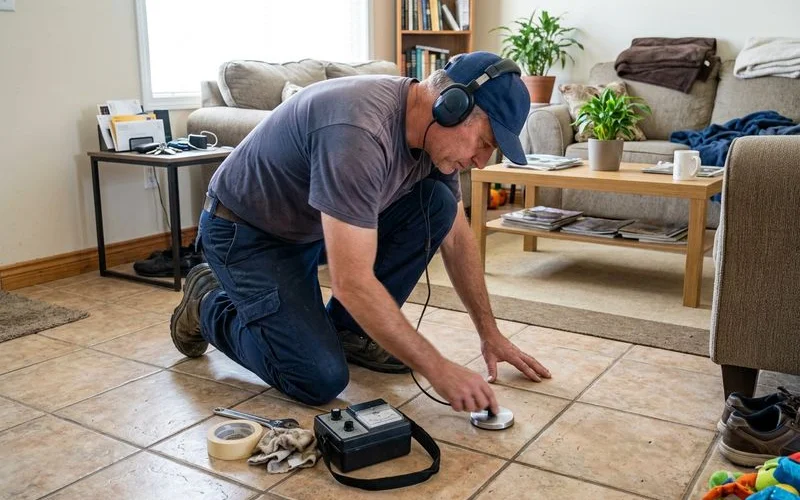
- Confirm. A meter check and an isolated pressure test show whether the supply system is losing water, and usually whether it’s the hot side or the cold side.
- Trace. A line tracer follows the pipe’s path under the floor, so the search is focused on where the pipe actually runs.
- Pinpoint. Acoustic equipment picks up the sound of water escaping under pressure, and thermal imaging shows the heat from a hot-line leak.
- Open once. Concrete is cut only at the located spot. In some homes, rerouting the line through walls or the attic makes more sense than opening the slab at all.
If You Think You Have One Right Now
Do the meter test. If the indicator is moving, close the main between uses to limit how much water goes under the house, and don’t start breaking up the floor yourself. Guessing on a slab usually means damaged flooring and a leak that’s still there.
Victorville Plumbing Pros answers 24/7 through a bilingual automated assistant that takes your details and routes them to a local plumber for leak detection and slab leak repair. You can request a free estimate, and ask about any service call fee when you call.