A rotten-egg smell that hangs around a hallway or bathroom, even after you’ve cleaned everything, usually isn’t a cleaning problem. It’s sewer gas getting past one of the barriers that are supposed to keep it in the pipes. The good news: there are only a handful of ways it gets in, and most of them are simple to find.
How the System Keeps Gas Out
Your drains connect to the sewer at one end and to roof vents at the other. Two things keep gas out of the house:
- Traps. The U-shaped bend under every sink, tub, shower, and floor drain holds a small amount of water that blocks gas.
- Sealed piping and vents. Every joint in the drain and vent system is supposed to be airtight, and the vents let air in so the traps don’t get siphoned dry.
When you smell sewer gas, one of those barriers has failed somewhere.
Sources, From Easiest Fix to Most Involved
1. A dry trap (try this first)
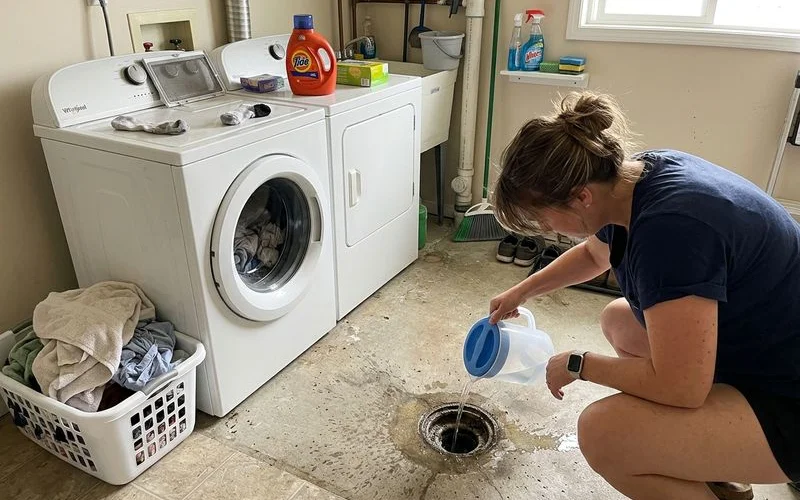
A guest bath tub, a garage floor drain, or a laundry sink that rarely gets used can lose its water to evaporation, and the dry High Desert air speeds that up. Pour a quart or two of water into every rarely used drain, wait a day, and see if the smell goes away. It’s free, and it solves a surprising number of cases.
2. A failed toilet wax ring
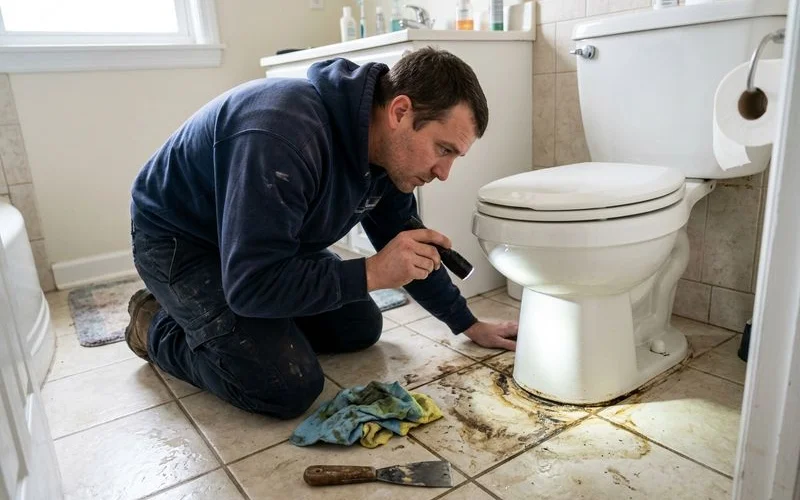
The wax ring seals the toilet to the drain under the floor. It fails when the toilet rocks, when it’s been reset carelessly, or simply with age. Signs include odor near the base, a toilet that shifts when you sit, or staining or softness in the floor around it. This one is urgent, because the same gap usually lets water into the subfloor too.
3. An unsealed vent or drain fitting in a wall
A fitting that was never glued, or one that cracked later, lets gas into the wall cavity, and from there it seeps into rooms. Newer Victorville tract homes aren’t immune; a missed joint during construction can go unnoticed for years. The smell often comes and goes with air pressure changes, like when the HVAC kicks on, a door opens, or the wind picks up.
4. A missing trap or a failed air admittance valve
Sometimes a fixture was installed without a proper trap. Under kitchen islands, a mechanical air admittance valve often takes the place of a roof vent, and its seal can wear out. Either one is a direct path for gas.
5. A cracked drain line
A cracked drain in a wall or under the slab can let gas up through the floor edges. If the odor comes with slow drains or gurgling, read our guide on signs of a broken sewer pipe under a slab.
Urgency at a Glance
| Situation | How soon |
|---|---|
| Strong odor plus headache, nausea, or dizziness | Get fresh air now, then call |
| Odor plus a rocking toilet or soft floor | This week; water damage is likely |
| Odor plus slow drains or gurgling | This week; possible drain line problem |
| Faint odor that comes and goes | Schedule a diagnosis |
| Odor gone after refilling traps | Keep rarely used drains topped up |
Intermittent doesn’t mean minor
A smell that shows up only some of the time usually means an opening that depends on air pressure, wind, or the HVAC. It’s the same problem as a constant smell; it just shows up some days and not others.
How Smoke Testing Finds It
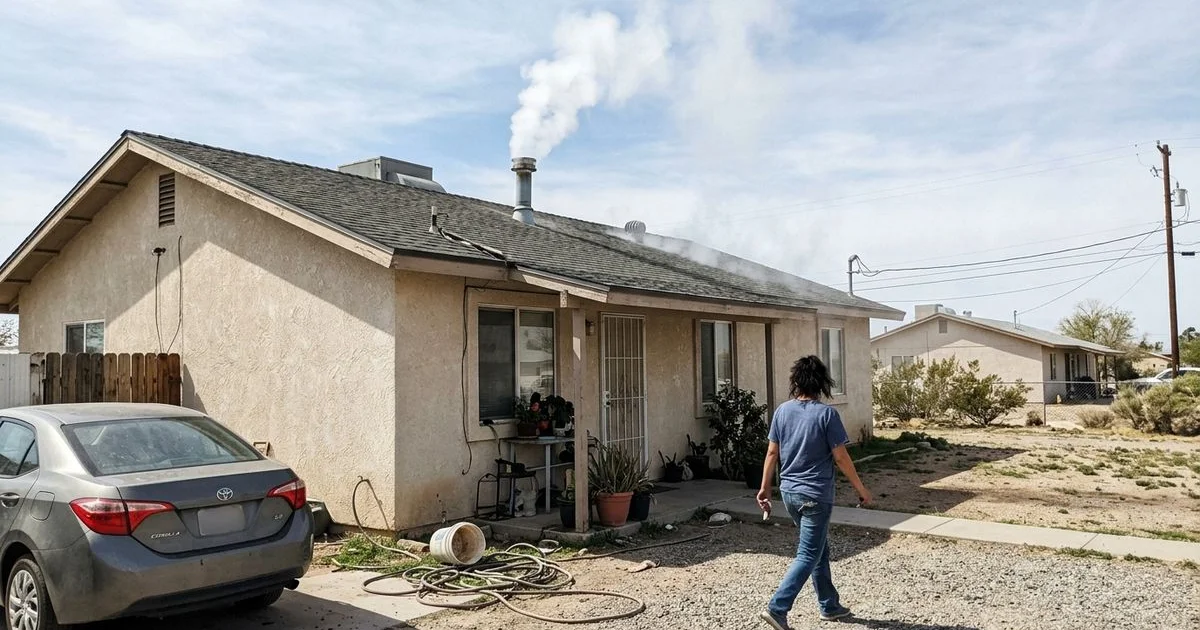
A smoke blower fills the drain and vent system with harmless, visible smoke at low pressure. The plumber then watches for where it comes out: a toilet base, a dry trap, a gap around a pipe in the wall, a crack in the slab edge. Smoke coming out of the roof vents confirms the system is filled. Instead of opening walls one at a time to look, you see the exact spot in one visit.
What to Note Before You Call
- When is the smell strongest: mornings, after showers, when the AC or heat runs?
- Which rooms?
- Did refilling the rarely used drains change anything?
- Does any toilet move when you sit on it?
Victorville Plumbing Pros answers 24/7 through a bilingual automated assistant that records those details and routes them to a local plumber for leak detection and sewer gas diagnostics. You can request a free estimate and ask about any service call fee on the same call.