A clog is something that happens once: a toy flushed down the toilet, a big wad of paper. Clear it and you’re done. A drain that backs up every few months is different. That’s a pipe condition, and clearing it only buys time until the next backup.
Warning Signs, by Urgency
Act now
- Sewage or wastewater coming up a tub, shower, or floor drain
- Several fixtures backing up at the same time
Book a diagnosis soon
- The same line has backed up more than once this year
- The drain slows down again within weeks of being cleared
- Gurgling in one drain when another one runs
- A sewage smell in the yard near the line’s path
Keep an eye on it
- One kitchen or laundry drain gradually getting slower
The Five Usual Causes
1. Roots at a joint
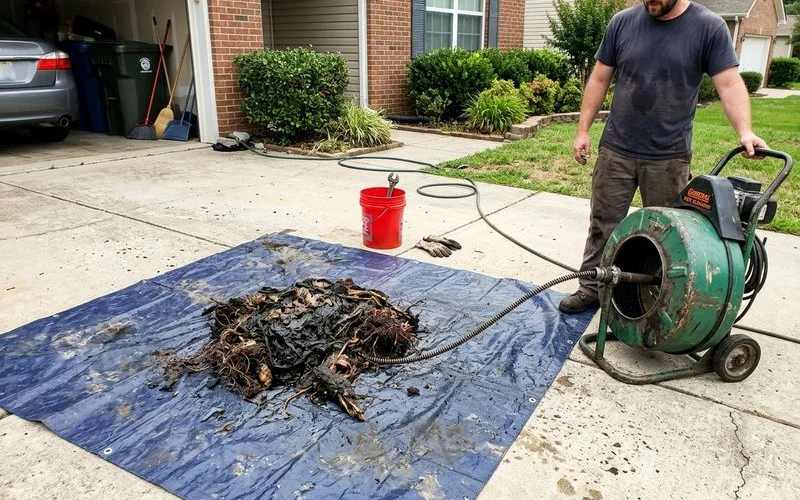
Roots go after moisture, and a tiny gap at a pipe joint is enough to get in. Irrigated landscaping in a desert yard is a strong draw. Once inside, roots grow into a mat that catches paper and waste. A cable cuts a hole through them, but they grow back, often within months.
2. Kitchen grease
Grease and cooking oil go down the sink as a liquid, then cool and coat the pipe walls. The pipe gets narrower until one more food scrap closes it. A cable punches through the middle and leaves the coating on the walls, so the drain closes up again on about the same schedule.
3. A belly (a sag in the line)
When the soil under a pipe settles unevenly, a section sags into a low spot that always holds water. Solids drop out there and build into sludge. Cabling stirs it up, the drain runs for a while, and then the sludge settles back. Newer tract homes aren’t immune; settled trench backfill is a common cause.
4. An offset joint
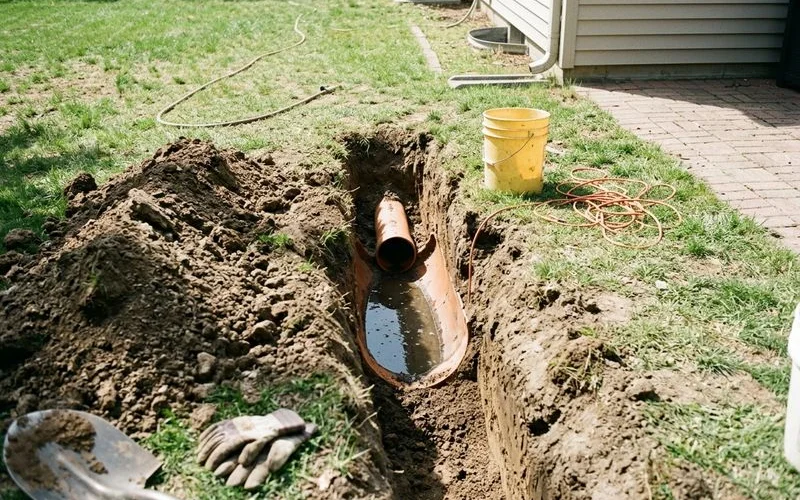
Ground movement, including earthquakes, can shift one pipe section out of line with the next, leaving a lip inside the pipe. Paper and wipes snag on it and build up.
5. Hard-water buildup
Victor Valley water is hard. Minerals combine with soap, grease, and lint into a rough layer inside drain lines, especially laundry and kitchen runs. That layer narrows the pipe and catches debris. Hydro jetting removes it; a cable doesn’t.
Matching the Cause to the Fix
| Cause | Short-term clearing | Lasting fix |
|---|---|---|
| Roots | Cable (they grow back) | Cut back by jetting, then lining or a joint repair |
| Grease | Cable (punches a hole) | Hydro jetting, then better kitchen habits |
| Belly | Cable (sludge returns) | Dig and re-slope that section |
| Offset joint | Cable | Spot repair, or lining if alignment allows |
| Mineral buildup | Cable (little effect) | Hydro jetting |
The quick self-check
If the same line has backed up twice in a year, or the gap between backups keeps shrinking, stop paying for clearings and pay once for a camera. The fifth clearing doesn’t cost less than the first.
What a Camera Changes
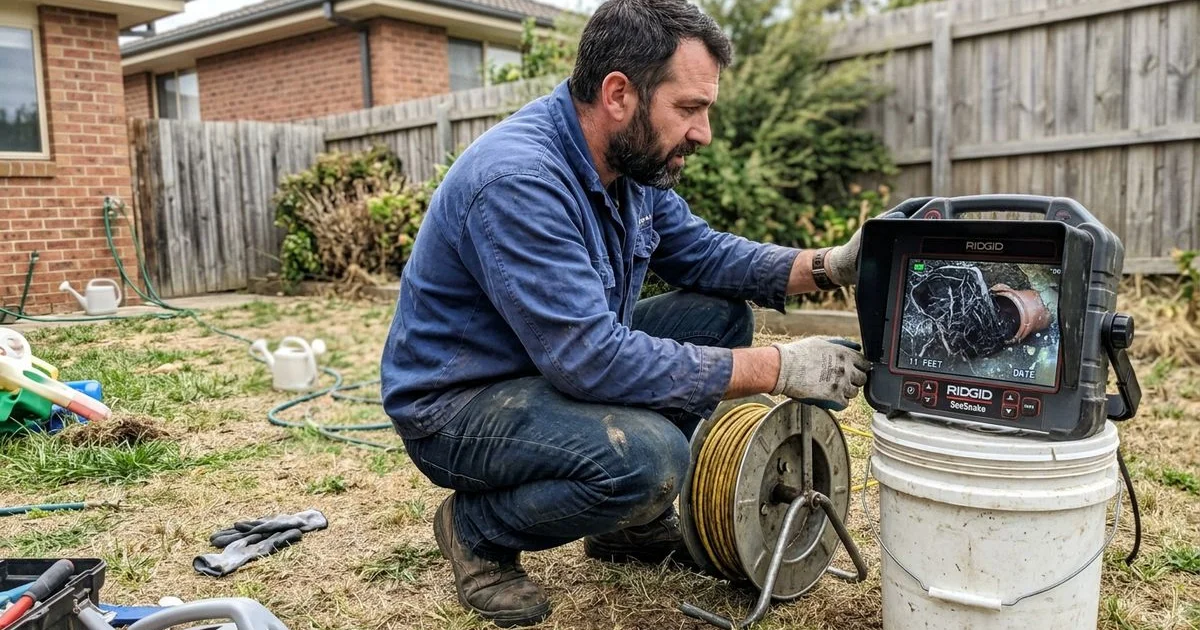
A camera on a flexible cable goes in through a cleanout and shows the inside of the line on a monitor while you watch. A transmitter in the camera head lets the plumber locate the problem from above and mark it with paint. That turns a vague “something’s wrong out there” into a specific defect at a specific spot, so any repair is targeted instead of exploratory.
Sometimes the footage shows a clean, sound pipe, which means the backup really was a one-time event. That’s worth knowing before anyone suggests digging. Our guide on what a sewer camera inspection finds shows what each defect looks like on the screen.
Why Waiting Costs More
A cracked or separated line lets wastewater leak out and lets soil wash in. That damage keeps getting worse between clearings, and under a slab or driveway it can undermine the ground beneath. A spot repair at the “twice a year” stage is far smaller than replacing a collapsed section later.
Victorville Plumbing Pros answers 24/7 through a bilingual automated assistant that routes calls to a local plumber for drain cleaning, including camera inspection, anywhere in Victorville and the Victor Valley. Request a free estimate, and ask about any service call fee when you call.