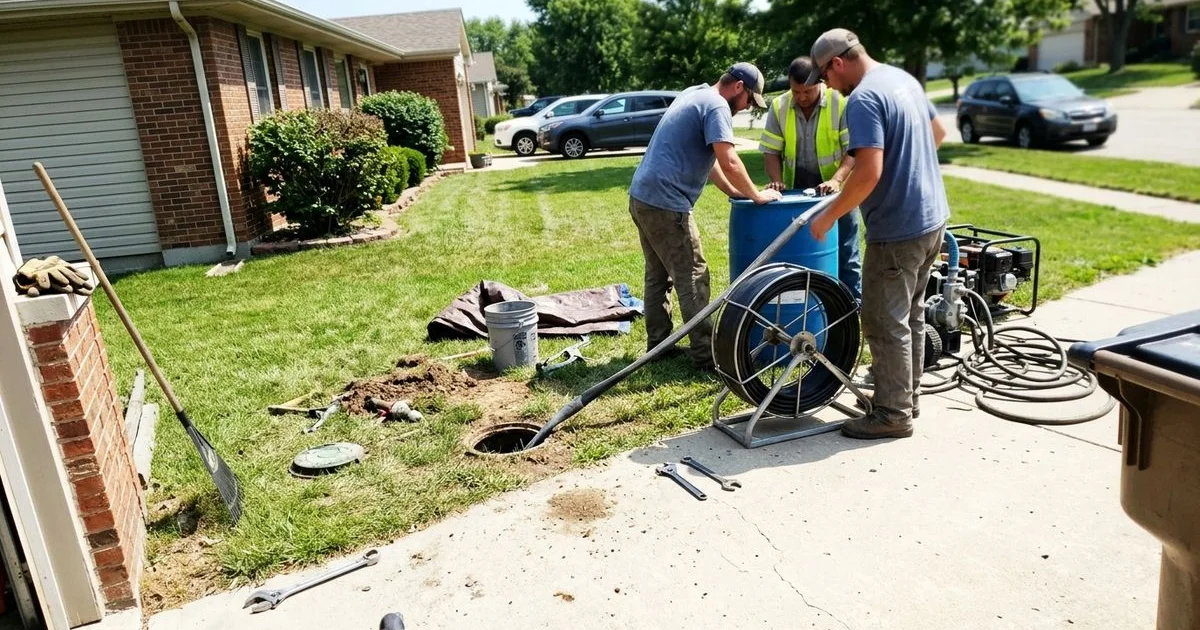
Once a sewer camera shows a crack, a root-filled joint, or a sagging section, the conversation changes from clearing the line to repairing it. There are two main ways to do that, and both can give you a working sewer line. The real differences are what each method can fix, and how much of your property gets torn up along the way. On a Victorville lot where the line to the street passes under a driveway or front landscaping, that second difference can be the bigger one.
How Each Method Works
Trenchless lining (CIPP)
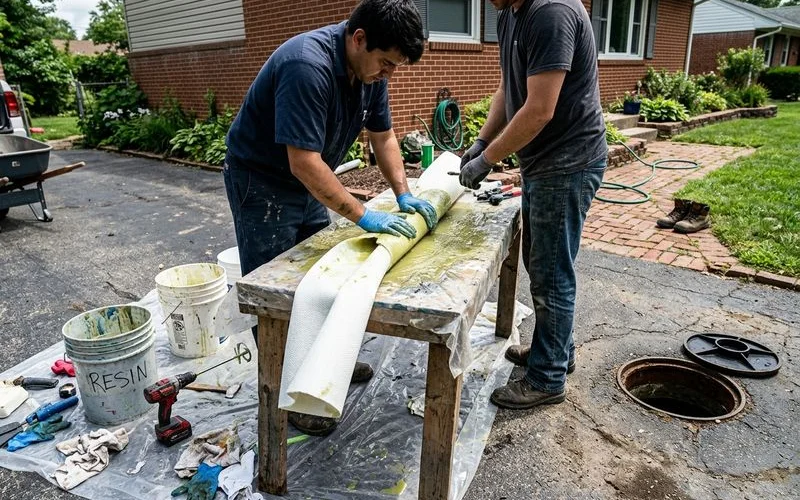
The line is cleaned first, often by hydro jetting, and checked with a camera. A felt or fiberglass liner soaked in resin is then pulled or inverted into the old pipe, inflated against the walls, and cured with heat, steam, or light until it hardens. You end up with a seamless new pipe inside the old one. It’s slightly smaller in diameter but smooth, with no joints for roots to get into. Access is usually through an existing cleanout or one small pit, and many jobs are done in a day.
Dig-and-replace
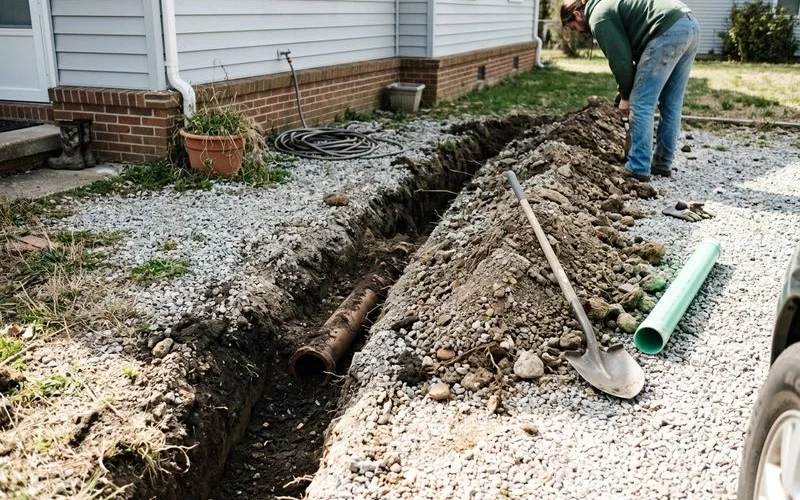
A trench is dug along the damaged run, the old pipe is removed, and new pipe is laid at the correct slope. Then the trench is backfilled and compacted, and the surface is restored. It’s straightforward and permanent, and it can fix problems lining can’t. It’s also much more disruptive, especially when the line runs under concrete or established landscaping.
Side by Side
| Factor | Trenchless lining | Dig-and-replace |
|---|---|---|
| Yard disruption | Access points only | Trench along the line |
| Driveway and walkways | Usually untouched | Cut and replaced if the line runs under them |
| Typical timeline | Often a single day | Several days including restoration |
| Fixes cracks and root entry | Yes | Yes |
| Fixes misalignment or offsets | No | Yes |
| Fixes a belly or wrong slope | No | Yes |
| Works on a collapsed pipe | No | Yes |
| Per-foot cost vs total cost | Higher per foot, often lower total under hardscape | Lower per foot, plus restoration |
The One Question That Decides It
Is the pipe still in the right shape and position?
If it’s cracked, leaking, or letting roots in but still round, aligned, and sloped correctly, lining usually works. If it has collapsed, shifted out of line, or sagged into a belly, it has to come out.
Ground movement is a big reason this question comes up. Settling soil, earthquake shaking, and old rigid pipe all combine to crack and shift buried lines. A seamless liner handles future minor movement better than rigid jointed pipe, but it can’t straighten a pipe the ground has already pushed out of line.
Where Each Wins
Trenchless makes sense when:
- The line runs under a driveway, patio, walkway, pool deck, or mature landscaping
- The pipe is cracked or root-infiltrated but still holds its shape and slope
- Access for digging equipment is limited
- You need the line back in service quickly
Excavation makes sense when:
- The line has collapsed, is crushed, or is badly offset
- A belly needs its slope corrected
- The damaged run is short and under open dirt or gravel
- The pipe is deteriorated from end to end and won’t support a liner
A hybrid sometimes works best: dig out and replace one badly failed section, then line the rest of a marginal run.
Questions to Ask Before You Approve Either
- Can I see the camera footage of the damaged section?
- Why this method, and why was the other ruled out?
- What restoration is included? Concrete, landscaping, irrigation repair?
- What about the rest of the line? Fixing eight feet of a pipe that’s failing along its whole length only puts off the next repair.
- Is a permit required, and who pulls it?
- What is the contractor’s license status? Check it at cslb.ca.gov before signing for major work.
If the inspection also turned up supply-side water leaks, those are a separate issue covered under leak detection and slab leak repair.
Start With the Diagnosis
Every good repair decision starts with camera footage. Victorville Plumbing Pros answers 24/7 through a bilingual automated assistant that routes calls to a local plumber for drain cleaning and sewer diagnosis anywhere in the Victor Valley. Request a free estimate, and ask about any service call fee when you call.