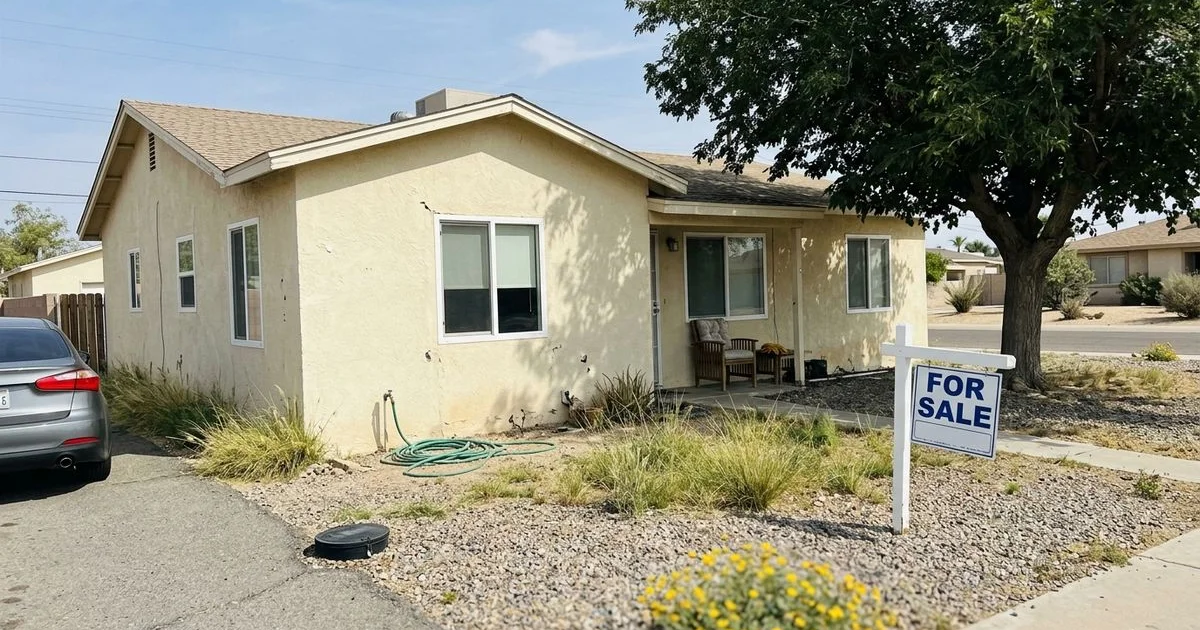
Buying a home in the Victor Valley usually means a general inspection, an appraisal, and a pile of disclosures. None of those tells you what’s going on in the buried pipe that carries everything from the house to the street. If that line has a problem, it becomes the new owner’s problem on closing day.
Two Common Buyer Scenarios
Scenario A: A newer tract home
Many Victorville neighborhoods are newer subdivisions with plastic drain lines, so it’s tempting to skip the scope. Plastic doesn’t rust, but these lines still have failure points:
- Bellies, where trench backfill settled and the pipe sagged into a low spot that holds water and waste
- Shifted or separated joints
- Construction debris left in the line during the build
- Damage from later work, like a fence post, landscaping, or an irrigation trench crossing the lateral
- Roots finding their way into a joint where watering keeps the soil damp
Scenario B: An older home
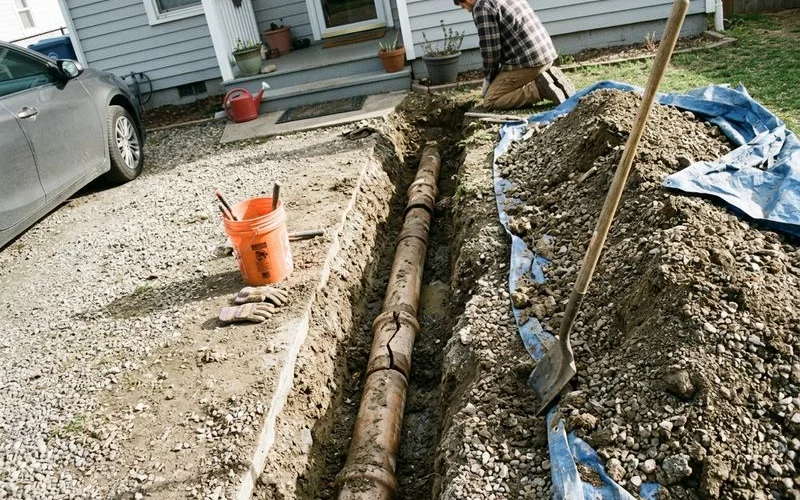
Older houses may still have original cast iron or clay. Cast iron corrodes from the inside and cracks. Clay joints let roots in. After enough decades, either can reach the end of its service life without any sign from inside the house. For these homes, a scope is close to essential.
What the General Inspection Leaves Out
A home inspector runs faucets, flushes toilets, looks under sinks, and notes whether water drains. That’s a legitimate scope of work, and it generally stops at ground level. Nobody puts a camera into the lateral. A line can drain fine during a 20-minute inspection and still have a belly or a crack that causes a backup a month after move-in.
The math behind the decision
A camera inspection is a small, known cost before closing. A sewer line repair after closing is a large, unknown cost that falls entirely on you. That imbalance is why the inspection is worth doing even when the line comes back clean.
What You Get From a Sewer Scope
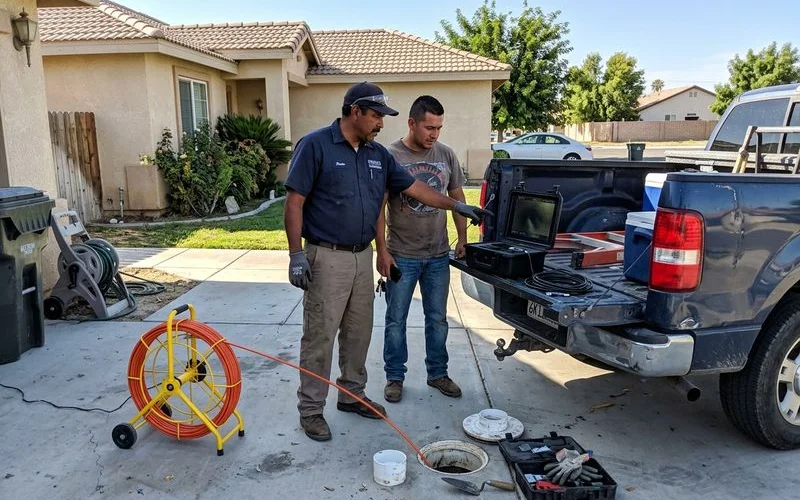
The camera goes in through a cleanout and travels toward the street while it records. A good inspection covers:
- Pipe material along the run: plastic, cast iron, clay, or a mix
- Cracks, breaks, and corrosion
- Bellies holding standing water
- Offset or separated joints
- Roots at joints
- Buildup of grease or scale narrowing the pipe
- Location and depth of any defect, marked from above with a locator
Ask for the video file, not just a written summary. Any contractor quoting a repair can then look at the actual footage without having to scope the line again.
Using the Findings
| Finding | Usual next step for a buyer |
|---|---|
| Clean line | Close with one less unknown |
| Light roots or buildup | Ask for a cleaning before closing |
| Single crack or bad joint | Ask for a spot repair or a credit |
| Belly or major offset | Get a repair quote, then negotiate |
| Collapse or deteriorated line end to end | Get a replacement quote; reconsider the terms |
Repair options range from lining the pipe from the inside to excavating and replacing a section. Our guide on trenchless sewer repair vs dig and replace explains which method fits which defect.
Found before closing, a problem is something you can negotiate over: a lower price, a repair by the seller, or a closing credit. Found after closing, it’s simply a bill.
Timing It Inside Escrow
- Book it inside the contingency window, the same week as the general inspection. Findings that come in after contingencies are released leave you with no leverage.
- Confirm access. Ask the listing agent where the cleanout is. If there isn’t one, the camera may have to go in through a pulled toilet, which needs the seller’s permission.
- Ask for the footage and the marked location of anything found.
Booking an Inspection
Victorville Plumbing Pros answers 24/7 through a bilingual automated assistant that takes your details, including the property address and your escrow timeline, and routes them to a local plumber for drain cleaning and camera inspection. You can request a free estimate and ask about any service call fee when you call.