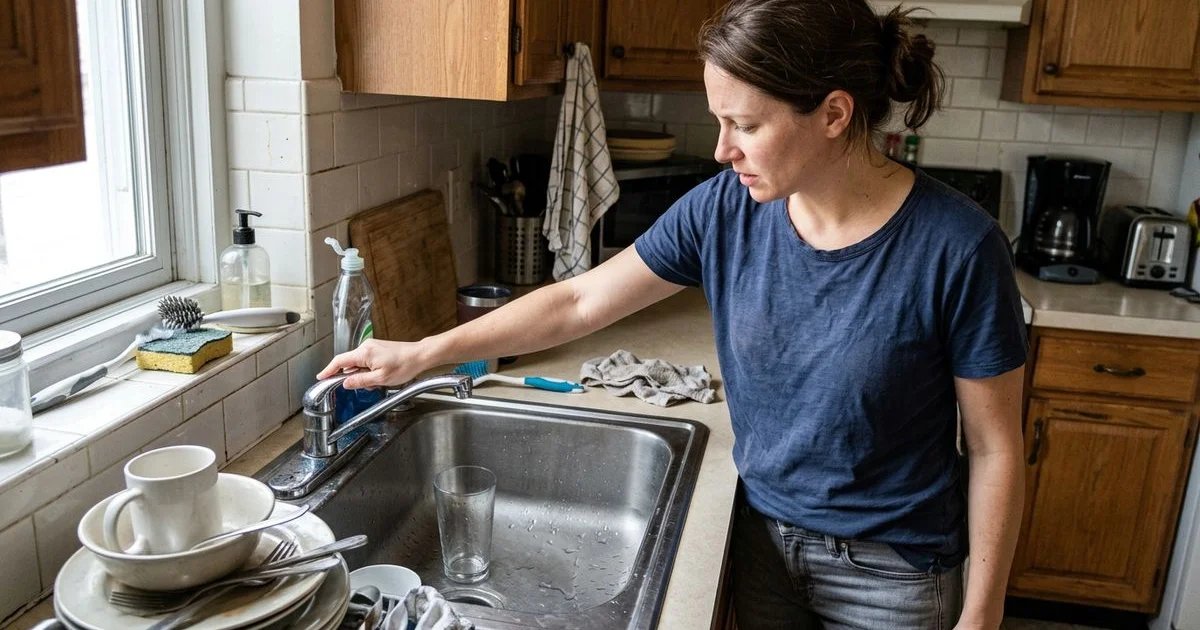
You turn on the faucet and nothing comes out. Before you assume the worst, know that most sudden water losses come from a short list of causes, and a few minutes of checking will usually tell you which side of the meter the problem is on. That decides who you need to call.
Minute One: Two Quick Checks
- Try a few fixtures, hot and cold. If only one tap is dry, the problem is that fixture or its shutoff. If the whole house is dry, keep going.
- Check with a neighbor. If the house next door has water, the problem is on your property. If the whole block is dry, it’s a utility issue.
For a street-side outage, contact your water provider. In Victorville that’s the Victorville Water District. Hesperia, Apple Valley, and Adelanto are served by other providers. No plumber can speed up a utility repair, so the call won’t help you in that case.
If Only Your House Is Dry: The Usual Suspects
A closed main valve
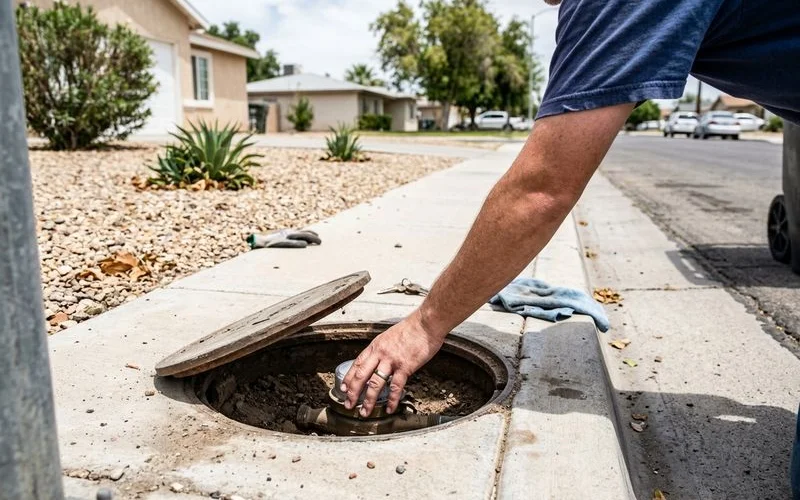
This happens more than people think. A landscaper working on irrigation, a contractor, or someone bumping a lever can close it. Check both the house main and the valve at the meter. A half-closed valve gives weak flow rather than none, which can be confusing.
A valve that failed shut
Older gate valves can break inside. The handle turns but the gate stays down, so the valve looks open and isn’t. Hard water speeds this up by scaling the stem.
A failed pressure regulator
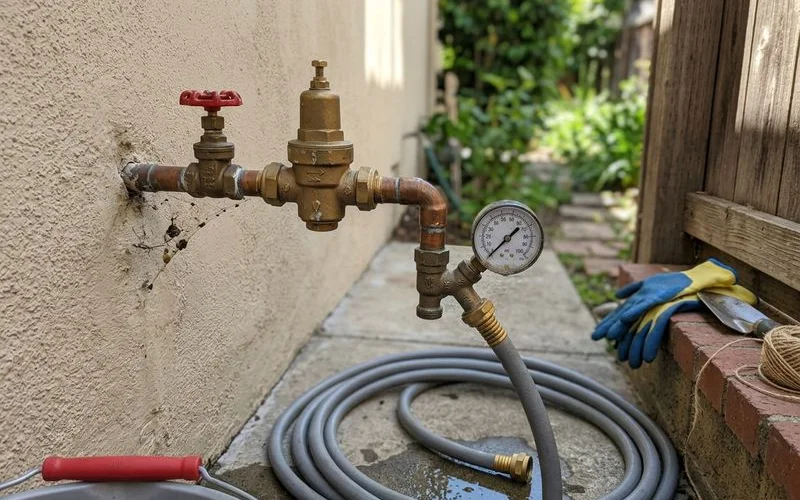
Many homes have a brass pressure reducing valve where the supply line enters. When its internal diaphragm or seat fails, pressure can drop to a trickle or stop. This usually happens gradually over days rather than all at once.
A frozen pipe
This one is a real possibility in the High Desert. Winter nights can drop below freezing, and lines on exterior walls, in unheated garages, near hose bibs, or running above ground are at risk. If the water stopped on a cold morning, a frozen section is likely. Open the affected faucet, warm the pipe gently with a hair dryer or warm towels, and never use an open flame. When it thaws, watch for leaks, because ice can split a pipe without anything showing until water flows again.
A broken service line
The buried pipe between the meter and the house can break. Signs include a soggy or unusually green strip of yard along its path, or a meter that keeps spinning with everything in the house turned off.
Pipes closed up by corrosion
In older homes with galvanized supply pipe, rust can slowly close the pipe from the inside. That usually means years of falling pressure before it stops completely. The fix is replacement, not a repair; see galvanized vs PEX repiping.
A meter test settles a lot
With every fixture off, watch the low-flow indicator in the meter box. If it’s spinning, water is leaving somewhere, probably through a break between the meter and the house. If it’s still, something is blocking the flow before it reaches your fixtures.
Matching Symptoms to Causes
| What happened | Most likely cause |
|---|---|
| Whole block dry | Utility outage or main break |
| Stopped suddenly, valves recently touched | Closed or half-closed valve |
| Faded over several days | Failing pressure regulator |
| Stopped on a freezing morning | Frozen pipe |
| Wet strip in the yard, meter spinning | Broken service line |
| Faded over years in an older home | Corroded supply pipe |
What to Tell the Line When You Call
Victorville Plumbing Pros answers 24/7 through a bilingual automated assistant. Having these answers ready helps it route the job to a local plumber with the right parts:
- Whole house or one fixture?
- Do the neighbors have water?
- Sudden or gradual? Did it stop this morning, or fade over days?
- Valve status. Are the main and meter valves open, and did the handles turn normally?
- Weather. Was it below freezing overnight?
- Home age and pipe type, if you know them.
A frozen hose bib line on a newer house and a failed regulator on an older one are very different jobs, and knowing which one it is ahead of time can save a second trip. For whole-house loss with no utility outage, emergency plumbing covers what happens next. You can ask about any service call fee before a visit is booked.