Main line backups seem to pick the worst times: a holiday weekend with family in town, a Sunday night, a houseful of guests after a big dinner. The steps for handling one don’t change with the hour, and getting the first ten minutes right does more to limit the damage than anything else.
Minute One: Stop All Water Use
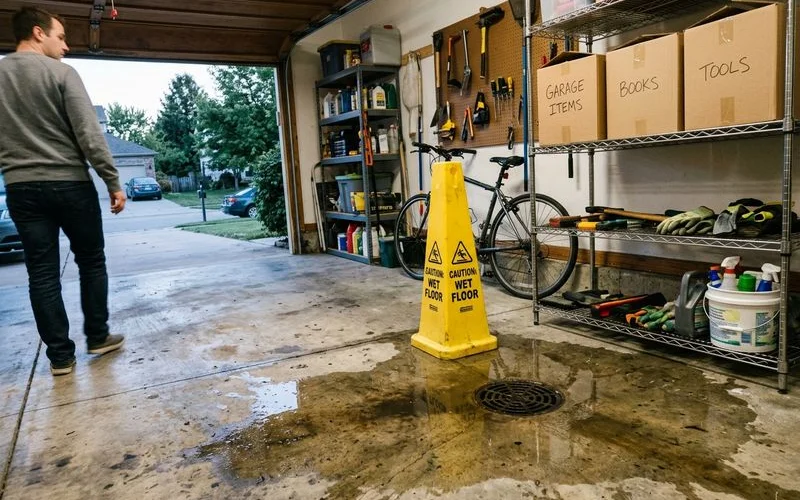
A main line backup means the blockage is downstream of every fixture in the house. Any water you use has nowhere to go but back up, usually through the lowest opening: a shower pan, a tub, or a garage floor drain.
- Stop running appliances. A washer or dishwasher pumping out mid-cycle sends a lot of water at once.
- No flushing, no showers, no sinks.
- Tell everyone in the house. One flush from someone who doesn’t know can undo the cleanup you just did.
Minute Two: Confirm It’s the Main Line
| What you see | Branch clog (can usually wait) | Main line (call now) |
|---|---|---|
| One sink or tub slow, the rest fine | Yes | |
| Toilet flush makes water rise in the shower | Yes | |
| Several fixtures backing up at once | Yes | |
| Floor drain overflowing | Yes | |
| Gurgling in one drain when another runs | Yes |
If it’s a single fixture, our guide on what counts as a plumbing emergency can help you decide whether it can wait until morning.
Minute Three: Find the Cleanout, but Leave the Cap On
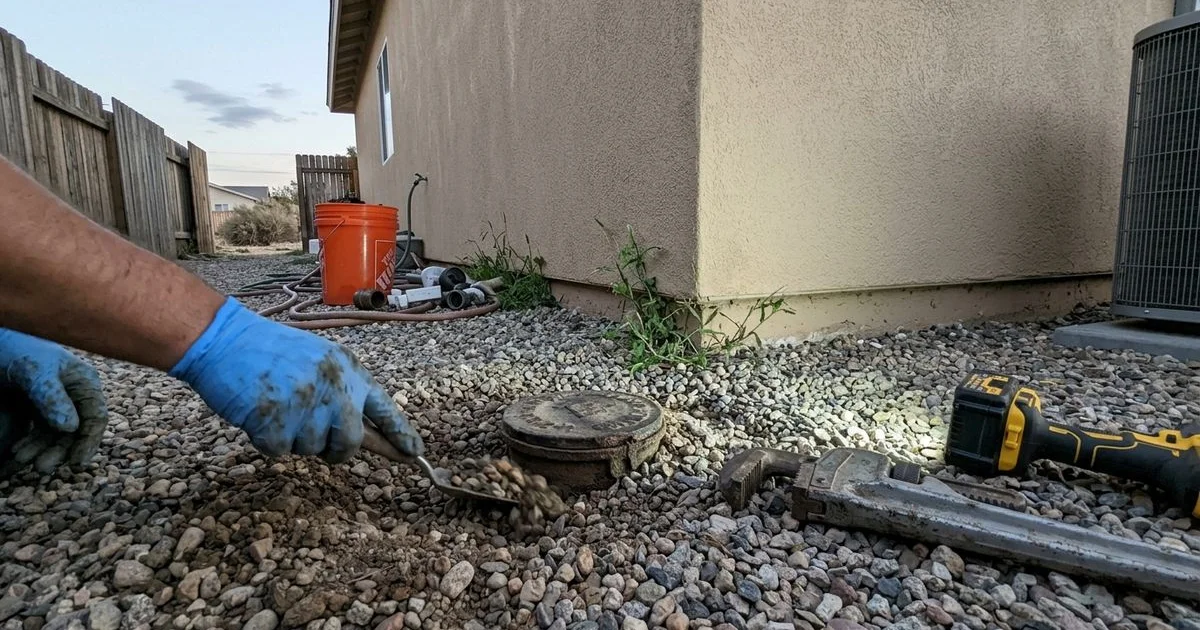
The cleanout is a capped pipe, usually three or four inches wide, sticking a few inches out of the ground near the foundation or along the line’s path to the street. Finding it saves time on the call. Tell the line where it is.
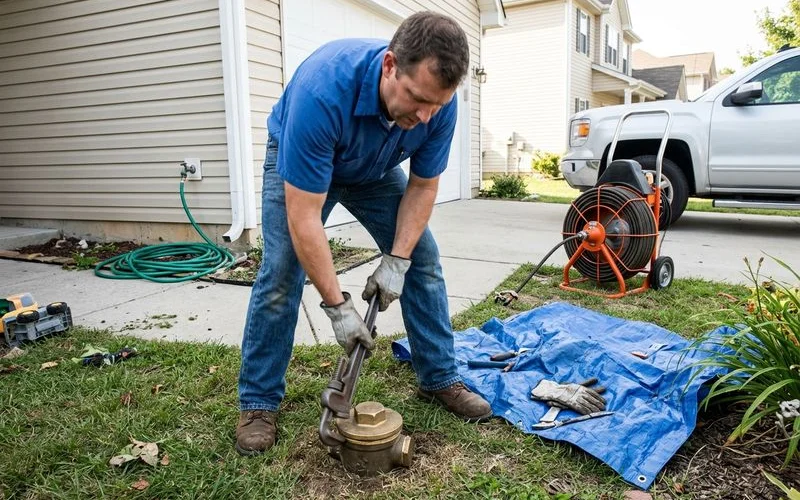
Don’t open it yourself
A blocked line can hold a column of sewage under pressure. Taking the cap off can release all of it at your feet, and then you have a contaminated yard on top of a blocked line. Leave it for the plumber, who can open it under control.
If there’s no cleanout, the plumber can usually get in through a pulled toilet or a roof vent. Having a cleanout installed afterward makes every future clearing and camera inspection easier.
While You Wait: Stay Safe
- Keep kids and pets out of the affected area.
- Wear rubber gloves and boots if you have to go through it.
- Cut power to circuits if the water has reached outlets or appliances, but only if you can reach the panel without stepping in water. Garage outlets are often low on the wall.
- Don’t use a shop vac you’ll want to use for anything else later.
- Wash hands and clothing thoroughly, and launder clothes separately.
- Take photos before cleanup if you’ll be filing an insurance claim.
Porous items that got soaked, like carpet, padding, cardboard, and particleboard furniture, usually can’t be saved. Hard surfaces can be cleaned and disinfected once the line is open.
What to Expect When the Plumber Arrives
- Controlled opening. The cleanout is opened in a way that releases the backed-up water safely.
- Clearing. A drain machine cable restores flow. If the line is heavily fouled with grease, scale, or roots, hydro jetting may be used.
- Finding the cause. A one-time blockage from something that shouldn’t have been flushed is the end of it. A line that has backed up before gets a camera inspection, ideally on the same visit, to look for a break, sag, offset, or roots.
- Next steps. If the camera finds damage, you’ll get the options for a permanent repair rather than a cycle of clearings. Our drain cleaning page covers camera inspection and repair options.
Help at Any Hour
Victorville Plumbing Pros answers every call, nights, weekends, and holidays included, through a bilingual automated assistant. It records what’s backing up, where, and since when, then routes the job to a local plumber for emergency plumbing anywhere in Victorville and the Victor Valley. Ask about any service call or after-hours fee on the same call.