A burst supply line can put a lot of water on the floor in a few minutes. The single most useful thing you can do about it happens before anything breaks: know where your main shutoff is, and know that it works. This guide walks through the steps in the order you’d use them.
Step 1: Find the House Main (Before You Need It)
Take ten minutes on a quiet afternoon. In most Victor Valley homes the main shutoff is in one of these places:
- On the street-facing exterior wall, where the supply pipe comes out of the ground, often near a front hose bib
- Inside the garage, sometimes next to the water heater or along the wall closest to the street
- Beside a pressure regulator, a bell-shaped brass fitting on the incoming line
Newer tract homes often put it in the garage or on the front wall. If you rent, ask the owner or property manager to show you. Once you find it, put a tag on it so anyone in the house can find it in a hurry.
Step 2: Identify the Valve Type
| Valve | What it looks like | How to close it | Watch out for |
|---|---|---|---|
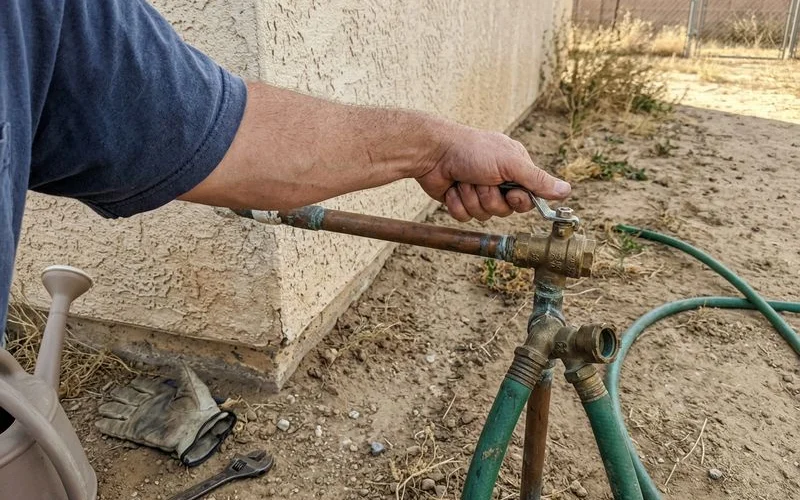
| Ball valve | Straight lever handle | Quarter turn until the lever is crosswise to the pipe | Rarely sticks |
| Gate valve | Round wheel handle | Turn clockwise several full turns until it stops | Stems seize in hard water and can snap |
If a wheel handle won’t move with firm hand pressure, stop. Forcing a seized gate valve can break the stem or crack the valve body, and then you have a leak you can’t stop at the house. Move on to Step 3.
Exercise it once a year
Close the main and reopen it once a year. With hard High Desert water, a valve that never moves can scale up and stick. Closing it once on a calm day is the best way to make sure it works on a bad one.
Step 3: Use the Meter Valve as Your Backup
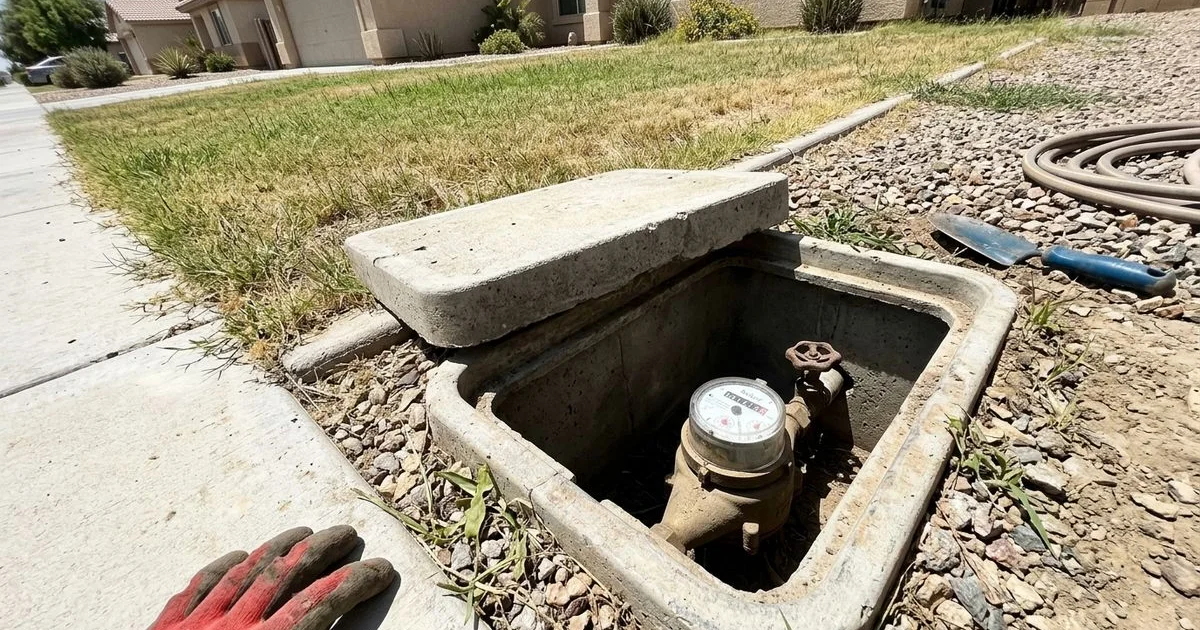
The water meter sits in a ground-level box near the street or sidewalk. Inside you’ll see the meter and a valve on each side of it.
- Lift the lid carefully. A long screwdriver helps pry it up. Look before you reach in, because spiders and other critters like these boxes.
- Find the valve on the house side of the meter. That’s the one you’re allowed to use.
- Turn it a quarter turn. Some have a lever you can turn by hand. Others have a flat tab that needs a meter key, a long T-handle tool sold at hardware stores. Turn the tab so it sits crosswise to the pipe.
- Leave the street-side valve alone. That one belongs to the water provider. If the only working valve is on the utility side, call your water provider.
Keeping a meter key in the garage is cheap insurance.
Step 4: Use Fixture Stops for Small Leaks
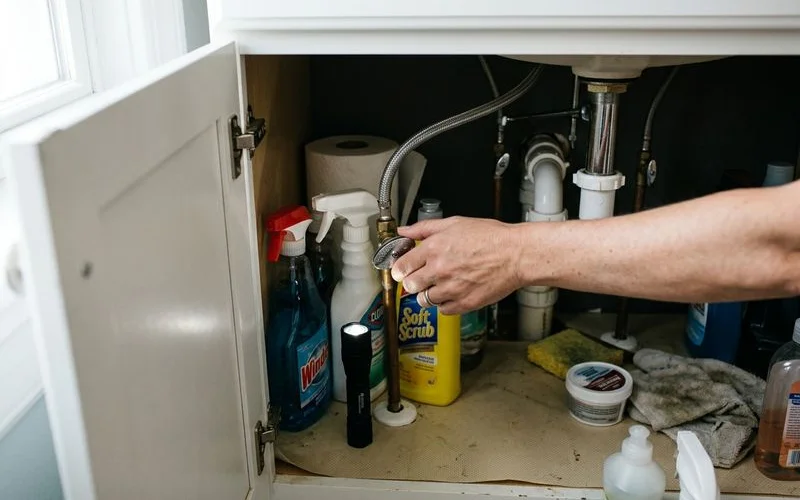
For a leak at one fixture, you don’t need to shut off the whole house.
| Fixture | Where the shutoff is |
|---|---|
| Sinks | Hot and cold angle stops inside the cabinet |
| Toilet | One valve on the wall behind the tank, near the floor |
| Water heater | Cold inlet valve on the pipe at the top of the tank |
| Washing machine | Two valves in the wall box behind the washer |
| Refrigerator ice maker | Small valve under the sink or behind the fridge |
Turn multi-turn stops clockwise gently. If one weeps at the stem or won’t close, shut the main and plan to replace that stop.
Step 5: Drain the Lines and Protect the Heater
Closing the main stops new water from coming in, but the pipes are still full and under pressure.
- Open the lowest faucet or hose bib so trapped water drains there instead of out of the break.
- Open one or two faucets elsewhere to let air in so the lines drain faster.
- If the water heater is involved, close its cold inlet and turn the gas to pilot or switch off its breaker, so it doesn’t heat a tank that’s draining.
Cold Nights: When the Water Stops on Its Own
Victorville winter nights can drop below freezing. If you get up on a cold morning and a faucet only trickles, a pipe may be frozen, often an exposed line, a hose bib, or a pipe on an outside wall. Don’t use an open flame. Open the faucet, warm the pipe gently, and keep the shutoff location in mind: a frozen pipe can split, and the leak often doesn’t show until it thaws.
Then Make the Call
With the water off, the urgency drops. For the full checklist after a break, including electrical safety and photos for insurance, see what to do when a pipe bursts.
Victorville Plumbing Pros answers 24/7 through a bilingual automated assistant. It records where the water is, how long it has been running, and whether the main is closed, then routes the call to a local plumber for emergency plumbing. Telling it the water is already off helps the job get routed correctly.