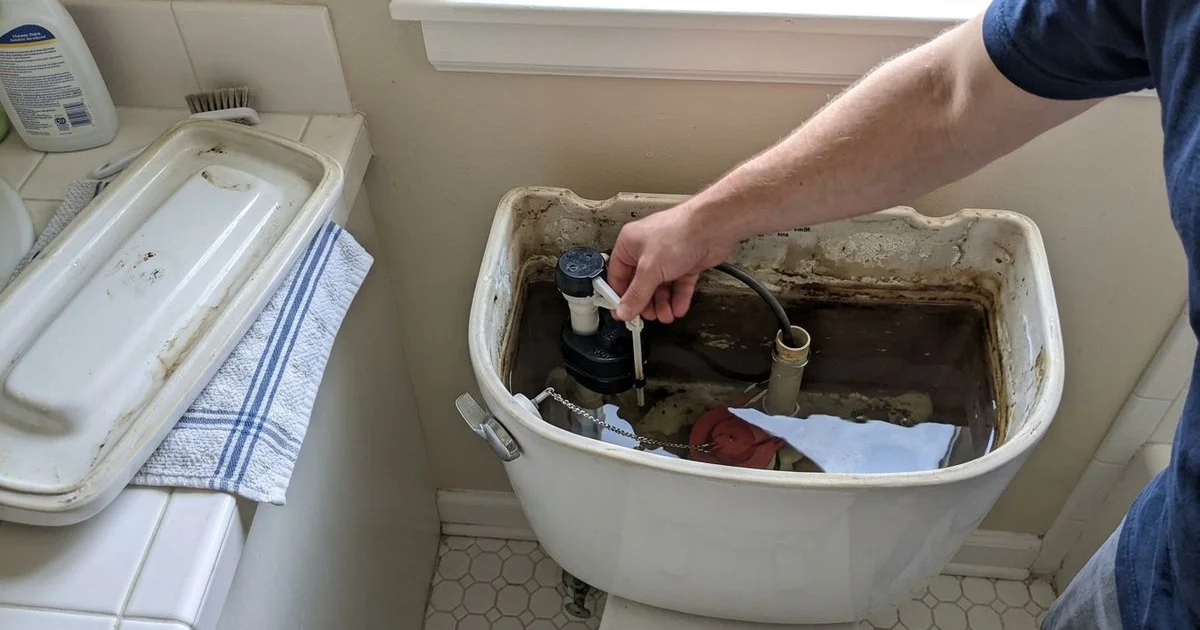
A toilet that runs, hisses, or refills by itself in the middle of the night is easy to ignore. It’s also wasting water every hour. The EPA’s WaterSense program estimates a leaking toilet can waste about 200 gallons a day, which adds up on any Victorville water bill. The fix is usually one of three parts, and finding the right one takes a few minutes.
Step One: Confirm the Leak
Put a few drops of food coloring in the tank and don’t flush. Come back in 15 to 20 minutes. If there’s color in the bowl, water is getting past the flapper or flush valve, even if you never hear it run.
Also listen for the “phantom flush”: the tank refilling for a few seconds every so often when no one has used it. That’s a slow leak into the bowl.
The Three Usual Culprits
| Symptom | Likely cause | What’s going on |
|---|---|---|
| Water trickles into the bowl constantly | Flapper | Rubber is warped, hard, or crusted and no longer seals |
| Water runs into the overflow tube | Fill valve or float | Valve doesn’t shut off, or float is set too high |
| New flapper and it still leaks | Flush valve seat | The rim the flapper sits on is scaled or pitted |
| Handle has to be jiggled | Chain | Too tight holds the flapper open; too loose gets caught underneath |
The flapper
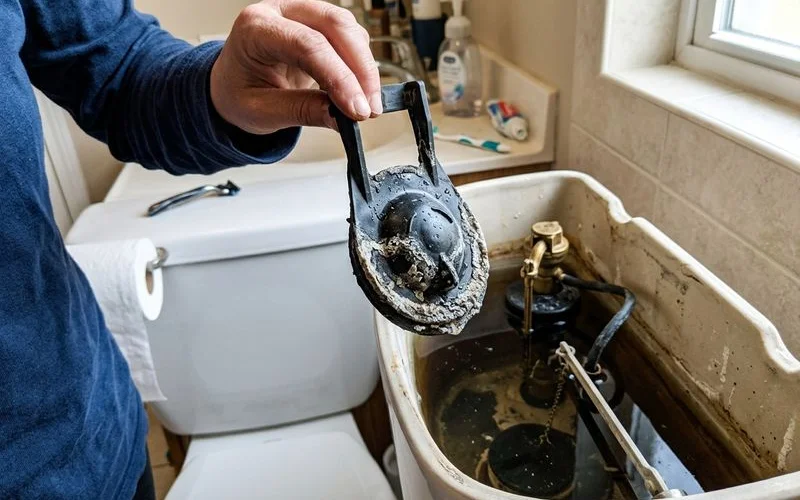
The flapper is the rubber seal at the bottom of the tank. Over time it hardens, warps, or picks up mineral deposits on its edge, and then it doesn’t close fully. Leave about one or two links of slack in the chain so it can close all the way.
The fill valve
The tall assembly on one side of the tank refills it after each flush. If its seal wears out or the float is set too high, water keeps rising until it spills into the overflow tube and runs into the bowl. Lowering the float sometimes fixes it. If not, the valve gets replaced.
The flush valve seat
This is the rim the flapper presses against. If it’s rough or pitted, no flapper will seal it. Gently cleaning it with a scouring pad can save it. If it’s badly pitted, the flush valve needs to be replaced, which usually means taking the tank off the bowl.
Why Hard Water Speeds This Up
Victor Valley water is hard, and minerals build up on every wet surface in the tank. The flapper edge gets a thin crust, the flush valve seat roughens, and the fill valve picks up deposits that keep it from closing cleanly. That’s why flush parts here often need replacing sooner than the package suggests, and why “I put in a new flapper and it still runs” is so common. It’s the same process described in our guide on hard water and fixture wear.
Where the DIY Line Sits
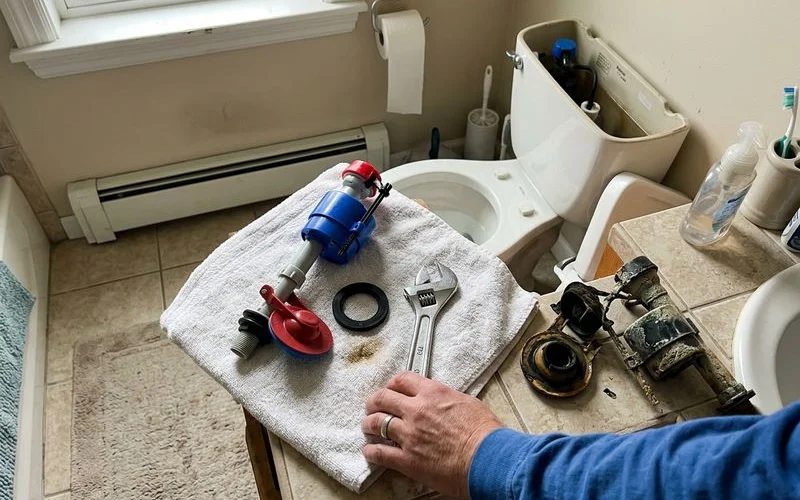
Reasonable to do yourself:
- Replacing a flapper (close the shutoff, flush to empty the tank, bring the old one to the store to match)
- Adjusting chain length
- Lowering the float
- Cleaning the flush valve seat
- Replacing a fill valve, if the connection under the tank is in good shape
Time to call:
- The shutoff behind the toilet won’t close or weeps at the stem
- The supply connection is corroded or crusted
- The flush valve seat is pitted and the tank has to come off
- Water is leaking at the tank-to-bowl bolts
- The toilet rocks on the floor
That last one matters more than it seems. A rocking toilet breaks the wax seal under it, which can let water and sewer gas escape at the floor. You often won’t see the damage until the subfloor is soft.
Rebuild once instead of three times
If the tank has needed two or three separate repairs, a full rebuild (flapper, fill valve, flush valve, and gaskets) usually makes more sense than replacing one more part. Replace a stiff angle stop at the same time.
Getting It Fixed
Victorville Plumbing Pros answers 24/7 through a bilingual automated assistant that takes your details and routes them to a local plumber for fixture repair. You can request a free estimate and ask about any service call fee before a visit is booked.