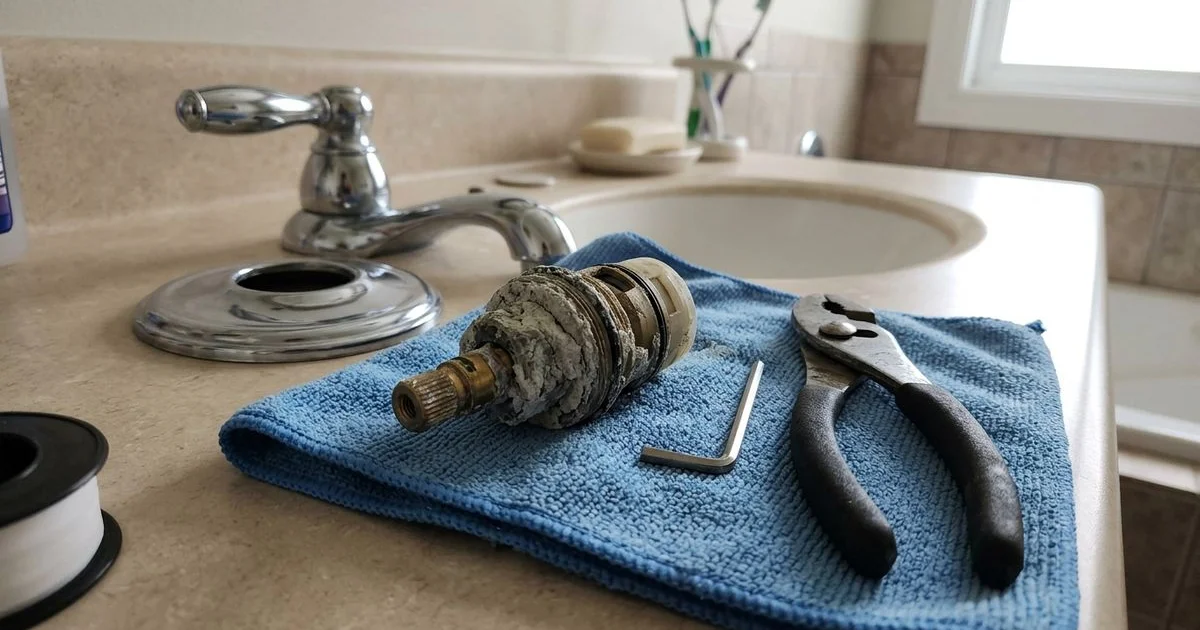
A faucet that starts dripping a few years after it was installed is easy to blame on cheap hardware. In most Victorville and Victor Valley homes, though, the brand isn’t the problem. The water coming through the faucet is. Knowing which part has failed helps you decide whether you need a small repair or a new fixture.
Three Small Parts That Do the Sealing
The cartridge. Most modern single-handle faucets use a ceramic disc cartridge. Two polished discs slide against each other, and when the openings line up, water flows. When they don’t, the faucet is shut. The seal depends on both surfaces staying perfectly smooth.
The valve seat. Older two-handle compression faucets press a rubber washer down onto a brass seat. The washer can only seal if the seat is flat and clean.
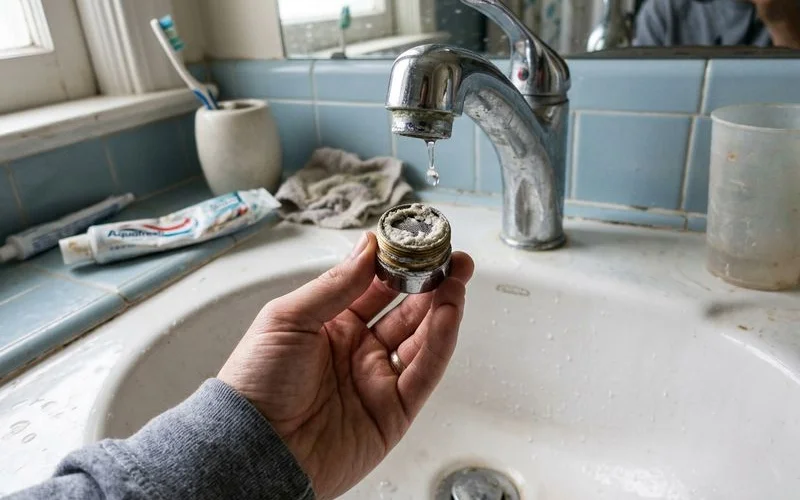
The aerator. The small screen at the tip of the spout breaks the stream up so it doesn’t splash. It also catches every loose flake of mineral that comes down the line.
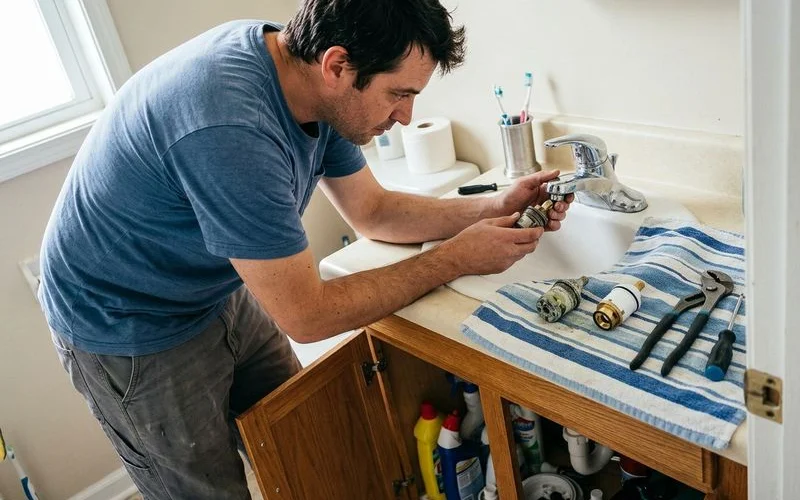
What the Minerals Actually Do
Victorville’s groundwater from the Mojave River basin is hard. If you want the current number, the Victorville Water District publishes it each year in its Consumer Confidence Report. Hardness is a plumbing and appliance problem, not a health problem, but it’s hard on anything with moving seals.
Deposits form wherever water sits or dries. Inside a cartridge, they get between the ceramic discs. Each time someone turns the handle, those grains act like fine sandpaper on the sealing faces. In time the discs are scored, and the faucet either drips steadily or gets stiff and hard to turn. On a compression faucet, a crust on the seat leaves a gap that no amount of tightening will close.
Hot water speeds this up, because heat pushes minerals out of the water faster. That’s why the hot side of a faucet usually goes first.
Reading the Symptoms
| What you notice | Most likely part | Typical fix |
|---|---|---|
| Steady drip from the spout | Cartridge or seat | New cartridge or seat and washer |
| Handle stiff, squeaks, or grinds | Cartridge | New cartridge |
| Weak or sideways spray | Aerator | Clean or replace the aerator |
| Leak around the handle base | Cartridge O-rings | Rebuild kit |
| Water under the sink | Supply line or angle stop | New supply line or stop |
The fixture is usually fine
If you’re on your second or third cartridge in a well-made faucet, the faucet isn’t defective. Hard water wears down sealing parts on a faster schedule. Keep that in mind before replacing a good brass body that only needs new parts.
Rebuild or Replace: How to Decide
Rebuild when the body is solid, the finish looks good, and parts for the model are still available. A new cartridge or seat kit restores the seal for much less than a new fixture.
Replace when the body is cracked or corroded, the finish is pitting or flaking, parts are no longer made, or the same faucet keeps coming back for repairs.
While someone is under the sink, check the angle stops too. Scale freezes their stems in place, and a shutoff that won’t close is a problem you don’t want to find during a leak. Replacing a stuck stop during a faucet repair is a small job that heads off a much bigger one. Toilets fail the same way, which is why the flapper and fill valve in a running toilet often wear out early too.
Habits That Slow the Wear
- Clean the aerators every few months. Unscrew the tip, soak it in white vinegar, rinse it, and put it back. This is the quickest fix for weak flow.
- Don’t force a stiff handle. Stiffness means scale is already building in the cartridge. Forcing it scratches the discs or snaps the handle.
- Dry the chrome after use. Water drops that evaporate leave the white rings around the base of the handles.
- Treat the water. A correctly sized softener removes most of the hardness before it reaches any fixture. Our water softeners page covers how sizing works.
When to Call
Call if a stop valve won’t close, if water is reaching the cabinet floor, or if you’ve rebuilt the faucet and it still drips. Victorville Plumbing Pros takes calls 24/7 through a bilingual automated assistant that routes your details to a local plumber for fixture repair and replacement. You can request a free estimate and ask about any service call fee before the visit is booked.