If you’ve lived in the High Desert for a while, you already know the signs: white crust on the shower head, spots on the glassware, a faucet that drips sooner than it should. Victorville’s water is hard. What matters for your house is what that hardness does once it’s inside your pipes and appliances.
Where Victorville’s Water Comes From
The Victorville Water District supplies the city with groundwater pumped from wells in the Mojave River basin. As water moves underground it picks up dissolved calcium and magnesium, which is all “hardness” means. Published hardness figures vary by source and well, so the reliable place to check is the district’s current Consumer Confidence Report, the water quality report each utility puts out every year.
Two practical notes:
- Neighboring cities differ. Hesperia, Apple Valley, and Adelanto are served by other water providers, so their reports, and possibly their hardness, are different.
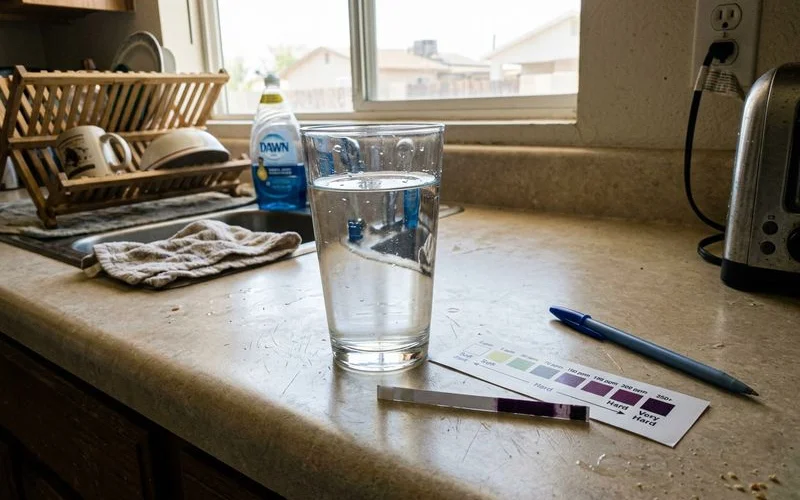
- Your tap can vary. A simple test strip or a plumber’s test at your fixture tells you what’s actually coming into your home, which matters if you plan to size a softener.
How Dissolved Minerals Turn Into Scale
Hard minerals stay dissolved while water is cold and moving. Heat the water, or let it sit and evaporate, and they come out of solution as solid scale. That’s why the damage shows up in two kinds of places: where water gets hot, and where it dries.
Where water gets hot: water heater tanks, tankless heat exchangers, dishwasher and washer heating elements.
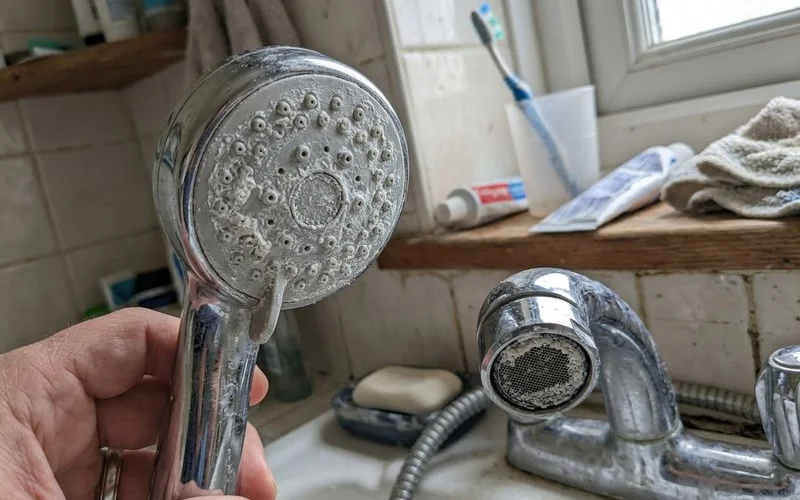
Where water dries: shower heads, faucet aerators, the base of fixture handles, glass shower doors.
Hard water isn’t a health or safety problem, and it doesn’t mean the utility is doing anything wrong. It’s a plumbing and appliance problem, and it costs money in the form of parts that wear out early.
The Water Heater Takes the Biggest Hit
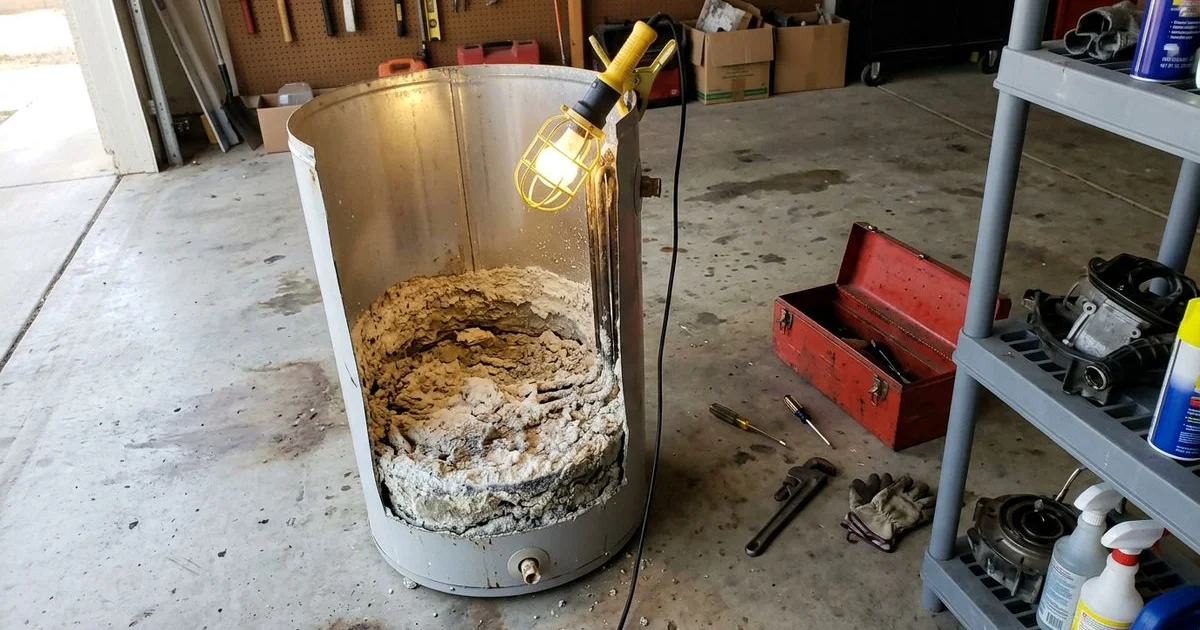
Every time a tank heater fires, some minerals drop out and settle on the bottom of the tank. Over months that loose sediment hardens into a crust sitting right over the burner or lower element. Steel passes heat into water well. Scale doesn’t.
The effects pile up from there:
- Hot water runs out sooner, because sediment takes up space and slows recovery.
- Burn cycles get longer, so gas or electric use goes up.
- The tank bottom overheats, because heat can’t get into the water fast enough.
- Corrosion speeds up, especially once the sacrificial anode rod is used up.
- The tank leaks, usually at the bottom seam.
Popping or rumbling during a heat cycle is the early warning. That’s water trapped under the crust flashing to steam. Our water heater repair page covers flushing, anode checks, and replacement. California also requires water heaters to be braced or strapped against earthquake movement, so a replacement involves more than swapping tanks.
Everywhere Else It Shows Up
| Where | What hard water does | What you notice |
|---|---|---|
| Faucet cartridges and seats | Scale scores the sealing surfaces | Drips, stiff handles |
| Angle stops and main valves | Deposits lock the stem in place | Valves that won’t close in an emergency |
| Shower heads and aerators | Crust blocks the openings | Weak, uneven spray |
| Dishwashers and washers | Elements and valves scale up | Spotty glassware, shorter appliance life |
| Tankless heaters | Narrow passages scale fast | Temperature swings, error codes |
| Drain lines | Minerals combine with soap and grease | Slower laundry and kitchen drains |
The valve row deserves a closer look. A shutoff that has sat unused for years in hard water may not turn when you need it most. Exercising the main and the fixture stops once a year is a free habit that pays off the day a pipe bursts.
What Actually Helps
A whole-home softener is the only option here that removes hardness from all the water entering the house. Sizing matters more than the brand. An undersized unit regenerates too often and lets hard water through, and an oversized one costs more than it should.
Reverse osmosis handles a different job. It improves drinking and cooking water at one tap by pushing it through a membrane. It does nothing for the water heater.
Salt-free conditioners change how scale forms so less of it sticks, but they don’t remove the minerals. That’s a partial measure, and it’s worth understanding before you buy one.
Maintenance without treatment still helps a lot: flush the water heater once a year, check the anode rod every few years, descale tankless units on schedule, and clean aerators every few months.
The short version
Check the Consumer Confidence Report for the current hardness figure, test at your tap if you’re sizing equipment, and treat the water heater as the appliance with the most at stake.
Victorville Plumbing Pros serves homes across the Victor Valley. Calls are answered 24/7 in English or Spanish by an automated assistant that takes your details and routes them to a local plumber. To compare treatment options, see water softeners and reverse osmosis or request a free estimate, and ask about any service call fee when you call.